Harmonizing Frequencies in the World of Band Pass Filters
Welcome to the intricate world of bandpass filters, where the marriage of electronics and signal processing gives rise to essential components in countless applications. Bandpass filters, designed to allow a specific range of frequencies to pass through while attenuating others, form the backbone of communication systems, audio processing, and medical imaging. In this exploration, we will unravel the types of bandpass filters, uncover their diverse applications, and delve into the critical design considerations that define their effectiveness. Whether you are an electronics enthusiast, a communication systems engineer who wants to learn about electrical engineering or a curious learner, join us on this journey through the fundamentals and advancements of bandpass filters.
What is a Band Pass Filter?
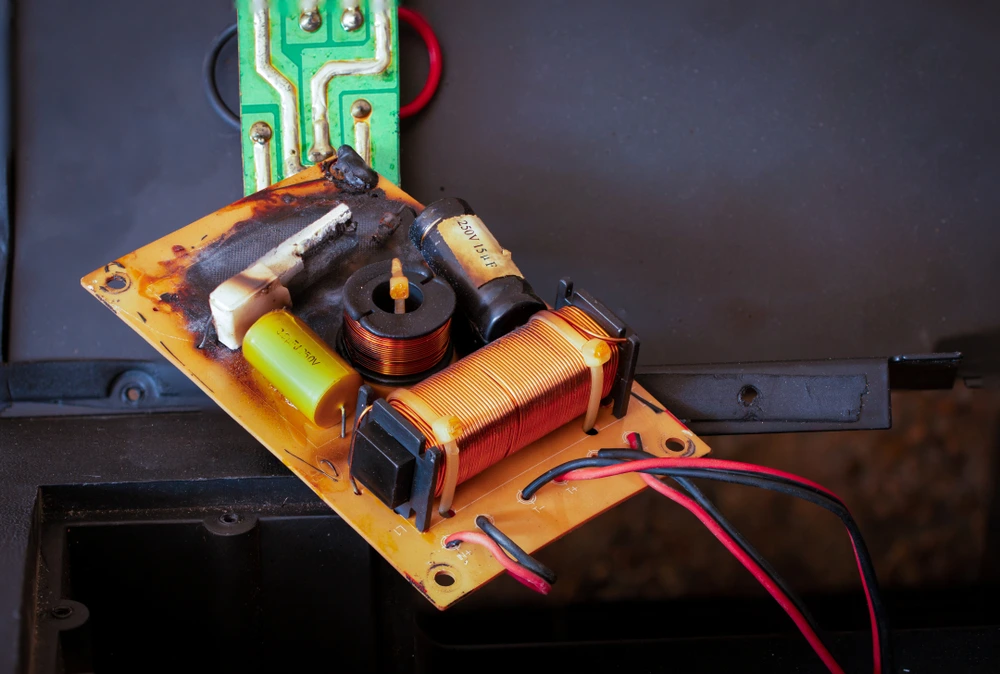
A band pass filter is an electronic circuit or device designed to allow a range of frequencies to pass through while attenuating frequencies outside of this range. It filters out unwanted signals, allowing only those within a defined frequency band to be transmitted or processed.
Key Components of Band Pass Filters
Bandpass filters typically consist of a combination of capacitors and inductors, forming a resonant circuit. The components are carefully selected to create a frequency response, allowing the desired band of frequencies to pass through.
Types of Band Pass Filters
Bandpass filters can be broadly categorized as active or passive, depending on the inclusion of operational amplifiers. Additionally, they may be analog or digital, processing continuous or discrete signals, respectively.
Active vs. Passive Band Pass Filters
Bandpass filters can be categorized into active and passive types. Active bandpass filters use active components like operational amplifiers to amplify and shape the signal. In contrast, passive bandpass filters rely solely on passive components such as resistors, capacitors, and inductors.
Analog vs. Digital Band Pass Filters
Analog bandpass filters operate on continuous signals, while digital bandpass filters process discrete signals using digital signal processing techniques. The choice between analog and digital depends on the specific application and the nature of the input signals.
Applications of Band Pass Filters
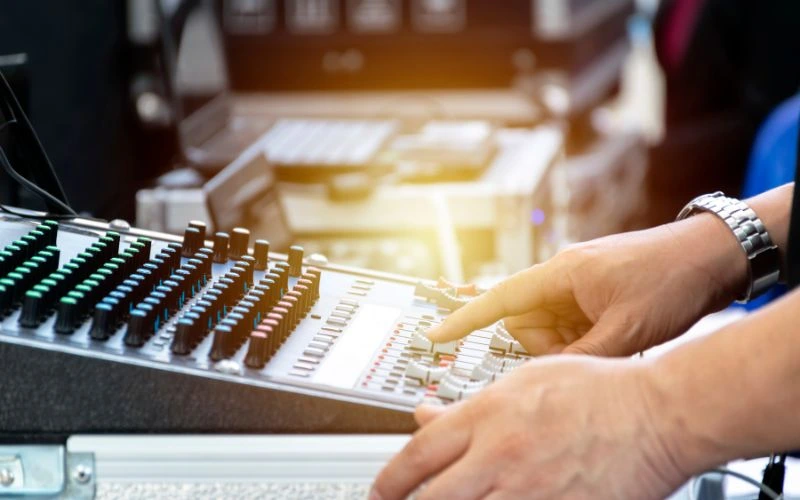
Bandpass filters play vital roles in communication systems for isolating specific frequencies, audio processing to enhance sound quality, and medical imaging to improve image clarity through selective frequency isolation.
Communication Systems
Bandpass filters are extensively used in communication systems to isolate specific frequency bands for transmission and reception. This ensures that only the intended signals are processed, reducing interference from other frequency components.
Audio Processing
In audio applications, bandpass filters are employed to isolate certain frequencies, enhancing the clarity and quality of sound. They are commonly used in equalization circuits and audio effects processors.
Medical Imaging
Bandpass filters have applications in medical imaging devices, which help isolate and enhance specific signal frequency components, leading to improved image quality in techniques like MRI and ultrasound.
Design Considerations for Band Pass Filters
When designing bandpass filters, crucial considerations include selecting the center frequency and bandwidth, balancing the Q factor for optimal selectivity, and determining the filter order to meet specific application requirements.
Center Frequency and Bandwidth
Selecting the center frequency and bandwidth is critical in bandpass filter design. These parameters determine the range of frequencies allowed through the filter. Precise calculations are essential to achieve the desired filtering characteristics.
Q Factor
The Q factor, or quality factor, measures the sharpness of the filter’s response. A higher Q factor results in a narrower bandwidth and increased selectivity. Designers must balance the Q factor with other specifications to meet the requirements of a particular application.
Filter Order
The filter order indicates the rate at which the filter attenuates frequencies outside the passband. Higher-order filters provide steeper roll-off characteristics but may require more complex circuitry. The choice of filter order depends on the specific application’s demands.
Advancements in Band Pass Filter Technology

With ongoing technological advancements, bandpass filter designs continue to evolve. Integrating microelectromechanical systems (MEMS) and surface acoustic wave (SAW) technologies has led to miniaturized and highly efficient bandpass filters for various applications.
Microelectromechanical Systems (MEMS)
Recent advancements in bandpass filter technology have been significantly influenced by the integration of Microelectromechanical Systems (MEMS). MEMS-based filters leverage the mechanical properties of microscale structures to create highly tunable and compact devices. This innovation allows for greater flexibility in adjusting center frequencies and bandwidths, making MEMS-based bandpass filters suitable for various applications.
Surface Acoustic Wave (SAW) Technology
Surface Acoustic Wave (SAW) technology is another area where bandpass filters have notably improved. SAW filters use acoustic waves propagating along the surface of a piezoelectric material to filter specific frequencies. The benefits include low insertion loss, high selectivity, and compatibility with various frequency ranges. SAW technology has found applications in mobile communication devices and wireless systems.
Integration with Artificial Intelligence
Integrating bandpass filters with artificial intelligence (AI) has opened up new possibilities in adaptive filtering. AI algorithms can dynamically adjust filter parameters based on real-time conditions, optimizing performance in changing environments. This adaptive capability is particularly beneficial in scenarios where the frequency characteristics of the input signals may vary unpredictably.
Emerging Applications in 5G Technology
As the rollout of 5G networks continues, bandpass filters are critical in ensuring efficient spectrum utilization. Advanced bandpass filter designs are necessary to accommodate the higher frequency bands used in 5G communication. The ability to handle millimeter-wave frequencies and provide sharp filtering characteristics is essential for the success of 5G networks.
Conclusion
Bandpass filters remain at the forefront of technological advancements, continually evolving to meet the demands of modern applications. The integration of MEMS and SAW technologies, coupled with the synergy with artificial intelligence, has paved the way for more efficient, compact, and adaptable filters. As industries continue to push the boundaries of what is possible in electronic design, bandpass filters will undoubtedly play a pivotal role in shaping the future of signal processing.
In conclusion, the journey through the world of bandpass filters has taken us from the fundamental principles of their operation to the latest innovations driving the field forward. Whether you are an engineer designing communication systems, an audio enthusiast refining sound quality, or a researcher exploring cutting-edge technologies, understanding bandpass filters cannot be overstated. Stay tuned for further breakthroughs in this dynamic field as we continue to explore the endless possibilities of signal processing.
FAQs
1. How do I choose the appropriate center frequency for my bandpass filter?
Choosing the center frequency involves understanding the specific application’s requirements. Consider the frequency range of the signals you want to pass through and select a center frequency that aligns with your desired band.
2. What is the significance of the Q factor in bandpass filter design?
The Q factor influences the selectivity of the bandpass filter. A higher Q factor results in a narrower bandwidth and increased selectivity, but it requires careful consideration to avoid potential trade-offs with other performance parameters.
3. Are there any considerations for implementing bandpass filters in digital signal processing applications?
In digital signal processing, considerations include the sampling rate, filter order, and computational complexity. Properly selecting these parameters ensures effective digital bandpass filter implementation for processing discrete signals.