

Auto Transformer – Efficient Voltage Regulation & Adjustment
When considering efficient voltage conversion, you might find yourself intrigued by the concept of an autotransformer. It’s a fascinating device uses a single winding with taps to adjust voltage, making it a compact and efficient choice for various applications. However, there’s more to it than just size and efficiency. The lack of electrical isolation raises safety concerns, meaning proper grounding and standards adherence are crucial. So, how do these factors balance out in real-world applications, and what exactly makes an autotransformer a preferred choice in certain scenarios?
Design and Operation

Utilizing a single winding with taps, auto transformers achieve voltage adjustment by linking primary and secondary functions electrically and magnetically. This design allows you to take advantage of the winding turns ratio to determine the output voltage. Applying a primary voltage across the winding results in two voltages—one of which is the output voltage, drawn from a specific tap point.
This clever setup enables efficient voltage transformation without the need for a separate secondary winding, which is common in conventional transformers.
Autotransformers work through electromagnetic induction, allowing the same current to flow through both primary and secondary sections when under load. The beauty of this is that autotransformers require about half the copper for the same power rating by using a single winding, making them more efficient and cost-effective.
However, it’s important to know that autotransformers don’t provide electrical isolation between input and output. This lack of isolation can pose safety risks, especially in applications where isolation is critical. Therefore, you must manage these devices properly to mitigate any potential hazards associated with their operation.
Technical Specifications
Now that you understand autotransformers’ design and operation let’s explore their technical specifications. An autotransformer consists of a single winding with two end terminals and several intermediate tap points. This unique design transforms voltage by sharing turns between the primary and secondary windings. You can adjust the voltage by selecting different tap points, achieving various voltage levels with a simple configuration.
Typically, autotransformers operate with voltage ratios of up to 3:1. This flexibility makes them highly cost-effective and efficient for applications needing different voltage levels. However, remember that autotransformers require alternating current (AC) to function. They rely on time-varying magnetic fields for power transfer so that they won’t work with direct current (DC).
One of the standout benefits of autotransformers is their efficiency, which is typically 3-5% higher than isolation transformers. This is due to reduced copper losses from the single winding design.
However, there’s a trade-off: the output current flows directly from input to output, with no electrical isolation between the primary and secondary. This lack of isolation can pose safety risks if a failure occurs, so safety measures should always be considered when using autotransformers.
Key Applications

Autotransformers’ versatility makes them invaluable across a range of applications. Power transmission and distribution seamlessly interconnect systems at different voltage classes, like stepping down from 132kV to 66kV. This ability enhances voltage regulation, making them preferred over traditional transformers. In these scenarios, you might think of them as a more efficient alternative to isolation transformers, providing similar functionality with fewer components.
In audio systems, autotransformers adapt speakers for constant-voltage setups, ensuring impedance matching between low-impedance microphones and high-impedance amplifiers. This ensures optimal sound quality, letting you enjoy crystal-clear audio.
For railway systems, autotransformers play a crucial role in powering trains operating at 25kV AC. They extend the distance between electricity grid feeder points, boosting transmission efficiency and ensuring trains run smoothly across long distances.
Autotransformer starters are your go-to solution for starting induction motors. Designs like the Korndörfer starter help prevent high inrush currents during motor startup, ensuring equipment longevity.
Lastly, variable autotransformers, like Variacs, are indispensable in labs and workshops. They allow for smooth voltage adjustments and provide precise control for testing and equipment calibration.
Advantages and Disadvantages
Exploring the benefits and drawbacks of autotransformers helps you understand why they’re favored in various applications. One major advantage is their efficiency. Because autotransformers use less copper, they’re typically smaller and lighter than conventional dual-winding transformers. This efficiency can be 3-5% higher, thanks to reduced I²R copper losses and fewer conducting materials.
Here are some key points to consider:
- Efficiency: Autotransformers provide greater efficiency with lower material requirements.
- Cost-effectiveness: They’re a more affordable choice for situations where electrical isolation isn’t necessary.
- Voltage Regulation: Their design is ideal for applications requiring precise voltage control, like motor starting.
- Safety Risks: The absence of electrical isolation between primary and secondary circuits poses potential safety risks.
While their efficiency and cost-effectiveness make them attractive, the lack of electrical isolation is a significant drawback. This direct connection means any failure could result in full input voltage appearing at the output, raising potential safety concerns.
Thus, proper measures are essential to mitigate shock hazards in applications where safety is paramount. Understanding these advantages and disadvantages lets you decide when an autotransformer is right for your needs.
Variable Autotransformers
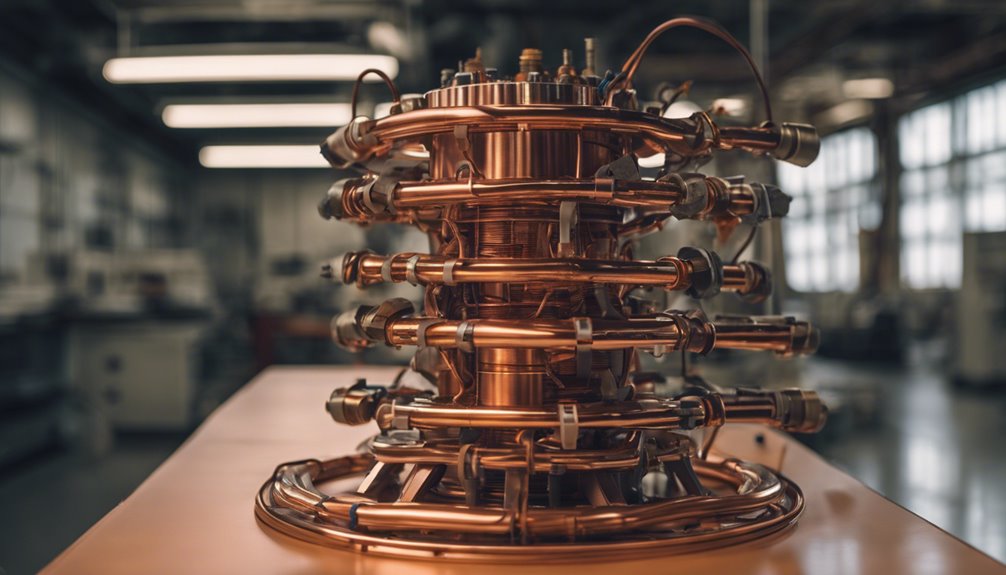
You’re about to explore the fascinating world of variable autotransformers, which offer continuously adjustable voltage for smooth output control.
These devices excel in versatile power applications, making them tools in both professional and hobbyist settings.
Whether you’re testing equipment or simulating various voltage scenarios, a variable autotransformer ensures precision and reliability.
Continuously Adjustable Voltage
When you need precise control over voltage levels, variable auto transformers, often known as Variacs, are the go-to solution.
These devices offer a continuously adjustable turns ratio, allowing you to finely tune the output voltage without the hassle of discrete steps. Utilizing a sliding brush connection will enable you to control the voltage smoothly and precisely, making these transformers essential for various applications.
Here’s why you might consider using a variable autotransformer:
- Versatile Input Range: They handle input voltages from 0 to 240V, making them ideal for testing electrical equipment or simulating abnormal line conditions.
- Safety and Efficiency: The brush mechanism prevents short-circuited turns, minimizing power loss and enhancing safety.
- Improved EMI Performance: Lighting dimmers outperform thyristor-based dimmers by providing better electromagnetic interference control.
- Laboratory Precision: They’re perfect for lab settings, where precise voltage adjustments are crucial for testing devices and managing resistive loads.
Smooth Output Control
Variable autotransformers, commonly called Variacs, consistently offer smooth output control by allowing you to adjust the output voltage continuously through a sliding brush connection. This mechanism glides along a single winding, ensuring you can fine-tune the variable AC output without abrupt changes.
Whether you’re working with 0V or the maximum specified voltage, Variacs delivers a seamless transition in voltage levels. These transformers are designed to handle a wide range of input voltages, maintaining precision and safety. The sliding brush introduces resistance to prevent short-circuited turns, ensuring your operation remains secure.
When situations demand precise voltage control, like lighting dimming or motor speed adjustments, Variacs shine because they can smoothly modify voltage without significant power loss.
Thanks to their single-winding construction, variable autotransformers boast high efficiency, often exceeding 95%, by minimizing copper and core losses. This efficiency ensures low energy wastage, making them an economical choice for various applications, such as laboratory testing and equipment calibration.
With such versatility and precision, you can rely on Variacs to provide the exact output voltage you need, delivering reliable and smooth performance every time.
Versatile Power Applications
In versatile power applications, variable autotransformers, or Variacs, stand out as indispensable tools. Whether you’re adjusting lighting or testing equipment, these devices offer unmatched flexibility and precision. Allowing smooth, continuous output voltage adjustments through a sliding brush connection makes it easy to tailor the power supply to your specific needs without significant power loss.
Here’s why you’ll find them so useful:
- Variable Voltage Supply: Variacs let you supply variable voltage to resistive loads, making them perfect for heating elements or voltage simulation in labs and workshops.
- Voltage Regulation: Acting as a voltage regulator, automatic variable autotransformers maintain stable output despite changes in load, boosting system efficiency.
- EMI Reduction: These transformers are ideal for applications like lighting dimmers, where electromagnetic interference (EMI) must be minimized.
- Safety Features: Their design includes built-in resistance, preventing short circuits when the brush contacts adjacent winding turns.
In practical terms, an autotransformer like a Variac is your go-to device for customized power solutions.
They’re widely used in scenarios where precision and adaptability in voltage control are critical, ensuring you get the performance and reliability you need.
Comparison With Isolation Transformers
You’ll notice their distinct winding configurations when comparing autotransformers to isolation transformers.
Autotransformers have a single winding with taps for voltage transformation, while isolation transformers use two windings to ensure electrical separation and safety.
If safety is your priority, especially for critical applications, isolation transformers offer galvanic separation to reduce shock hazards.
Winding Configuration Differences
Autotransformers and isolation transformers differ fundamentally in their winding configurations, impacting design and functionality. An autotransformer utilizes a single winding with taps that allow for voltage adjustment. This means the primary and secondary circuits share a portion of the winding.
In contrast, an isolation transformer consists of two separate windings that are magnetically coupled yet electrically isolated. This design distinction leads to several practical implications:
- Compact Design: Autotransformers have a more compact design because they share windings, whereas isolation transformers need more space and copper for double-winding construction.
- Efficiency: Autotransformers can achieve 3-5% higher efficiency due to reduced copper losses, especially when the transformation ratio is near unity.
- Cost-Effectiveness: Autotransformers offer a more cost-effective solution for moderate voltage adjustments than isolation transformers.
- Voltage Transformation: Isolation transformers are better suited for applications where electrical separation and safety are priorities, unlike autotransformers, focusing on efficient voltage transformation.
Safety and Isolation Considerations
Safety should be your top priority when choosing between autotransformers and isolation transformers. Autotransformers lack electrical isolation between primary and secondary circuits. If a fault occurs in the primary, the full input voltage could appear at the output, creating a significant shock hazard.
Because they use a single winding, autotransformers can’t provide the same level of safety as isolation transformers, which have two separate windings to ensure electrical isolation.
Isolation transformers are designed to provide a safer environment by reducing voltage spikes and offering electrical separation. Their higher impedance helps mitigate harmonic distortion and transient voltages, making them ideal for sensitive equipment where safety is crucial.
Unlike autotransformers, isolation transformers prevent simultaneous grounding of both circuits, thus reducing the risk of ground faults and electrical shocks.
While autotransformers are more efficient and cost-effective for non-critical applications, isolation transformers are essential when safety and voltage isolation can’t be compromised.
If you’re dealing with sensitive equipment or environments where electrical isolation is necessary, choosing an isolation transformer will provide the additional safety and peace of mind you need.
Historical Context
In the late 19th century, the autotransformer concept emerged as a crucial development in electrical engineering, driven by the pioneering work of figures like Nikola Tesla and William Stanley. These innovators explored efficient methods for voltage transformation, which led to the birth of the autotransformer.
Unlike traditional transformers, which use dual windings, the autotransformer uses a single winding to perform voltage adjustment, proving a more cost-effective solution for many applications.
As you delve into the history of autotransformers, consider these key points:
- Early Adoption: Initially used in power transmission and voltage regulation, autotransformers were instrumental in the burgeoning electrical infrastructure.
- Popularization in the 20th Century: By the early 20th century, autotransformers became an economical choice for industrial and commercial needs.
- Variac Introduction: In 1934, General Radio trademarked the Variac, a variable autotransformer that became the standard for voltage control in labs and workshops.
- Modern Evolution: Autotransformers have continuously evolved, improving design and efficiency, and play a critical role in modern applications like railway systems and audio equipment.
This evolution highlights the autotransformer’s enduring significance in electrical engineering and its profound impact on technology.
Additional Resources
As you explore autotransformers’ ongoing evolution and significance, consider delving into a range of additional resources to deepen your understanding. Begin with the “Transformer and Inductor Design Handbook” by Wm. T. McLyman, which provides thorough insights into the design and applications of autotransformers. Understanding that an autotransformer is a type of transformer, you can benefit from resources like the Variac trademark, which has been synonymous with variable autotransformers since 1934.
For practical applications, focus on guides that stress the importance of proper sizing and selection, especially in specialized fields such as solar energy and industrial machinery. These guides are essential for ensuring optimal performance and longevity of your equipment.
| Resource Type | Key Focus |
|---|---|
| Reference Text | Design and applications |
| Practical Guides | Proper sizing and selection |
| Online Standards | Important safety in operation |
Online resources also offer direct purchasing options and feature customer reviews that highlight performance and reliability. For important safety information, refer to safety standards and electrical codes like the National Electrical Code (NEC). These codes provide critical information on proper grounding and wiring practices, ensuring the safe operation of autotransformers. Engaging with these resources will help you make informed decisions and enhance your expertise.
Conclusion
When considering autotransformers, you’ve discovered their efficient design and operation, thanks to a single winding with adjustable taps. While they offer benefits like reduced size and material costs, they also come with safety concerns due to the lack of electrical isolation. You’ve explored their key applications, from power distribution to motor starters, and learned how they compare to isolation transformers. Always prioritize safety and proper grounding when using autotransformers, and consult additional resources for a deeper understanding.
FAQs
1. What Is an Autotransformer Used For?
You’re wondering what it’s used for, right? It interconnects different voltage systems, regulates voltage, adapts audio components, powers trains efficiently and starts motors smoothly while managing loads and ensuring stability in various applications. It’s pretty versatile!
2. Why We Don’t Use Auto Transformers?
You don’t use them because they lack electrical isolation, pose shock hazards, and risk equipment damage during faults. They’re unsuitable for applications needing strict isolation, like medical devices, and create complex ground paths, complicating safety compliance.
3. What Is the Disadvantage of an Auto Transformer?
You shouldn’t overlook the lack of electrical isolation, which poses safety risks. In case of failure, full input voltage might appear at the output. Additionally, larger primary currents during short circuits can damage connected equipment, limiting applications.
5. What Is the Main Advantage of an Auto Transformer?
The main advantage is cost-effectiveness. It uses less copper, making it smaller and lighter. This design boosts efficiency and offers excellent voltage regulation, perfect for precise adjustments without major power loss.
