Latest Technology in Transformer Security Systems
Imagine you’re managing a critical infrastructure, and the security of your transformers is a top priority. With the latest technology, AI algorithms and blockchain are revolutionizing how you protect essential assets. These advancements don’t just stop at digital solutions; they’re paving the path for robust predictive maintenance and seamless integration with smart grids. You might wonder how these technologies shape industry standards and what future innovations could mean for cybersecurity challenges. The answers lie in understanding the current trends and their transformative potential for enhancing security measures.
Key Takeaways
- AI technologies enable real-time threat detection and response, enhancing transformer security against evolving cyber threats.
- Blockchain technology ensures data integrity by maintaining tamper-proof records for transformer operation and maintenance.
- Multi-layered security protocols, including encryption and firewalls, significantly reduce the risk of transformer cyber incidents.
- IoT-enabled and fiber optic sensors provide continuous monitoring and early breach detection for transformer systems.
- Drone surveillance offers aerial perspectives for quick identification of security risks in transformer infrastructure.
Advanced Transformer Security Features
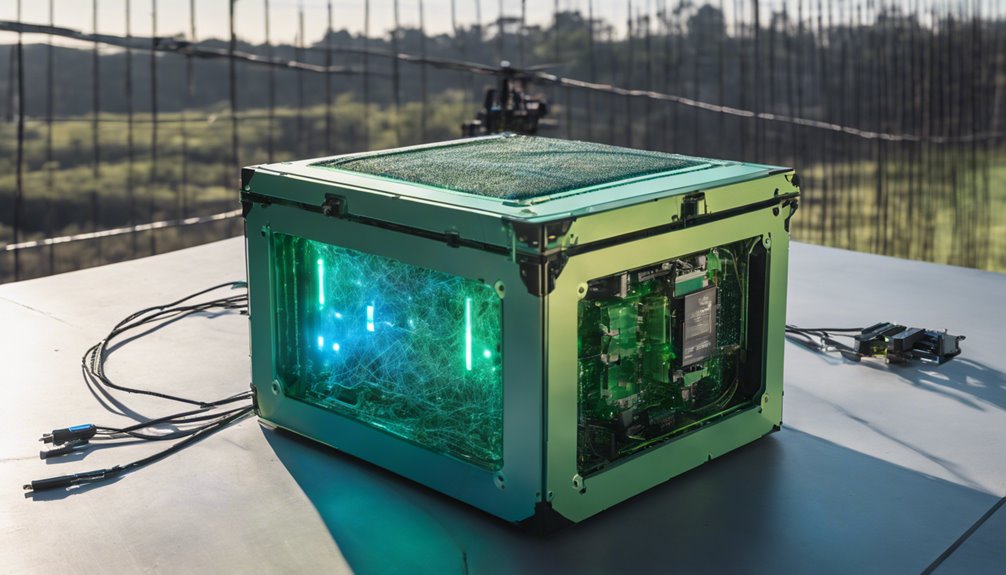
In today’s rapidly evolving energy landscape, safeguarding transformers with advanced security features has become crucial. You need to recognize the significance of advanced transformer technologies integrating protective components like varistors, as seen in Hitachi Energy’s TVP® technology. These features protect transformer coils from transient voltages without additional maintenance, offering a seamless defense mechanism.
Incorporating smart transformers with communication capabilities guarantees real-time monitoring and interaction with grid operators, enhancing security and responsiveness. These transformers allow for continuous transformer health monitoring, which means you can proactively manage the system’s performance and reliability.
Solid-state transformer (SST) technology plays a central role by providing rapid fault isolation within microseconds. This greatly boosts system safety and resilience against electrical faults, making SST crucial to modern transformer security.
In addition, advanced monitoring systems utilize IoT and AI technologies to facilitate immediate detection and analysis of anomalies. This guarantees timely interventions, protecting your transformer infrastructure against potential threats.
Digital Solutions for Monitoring
You can enhance transformer security and efficiency by embracing digital monitoring solutions that offer real-time data collection.
With these tools, you’ll access essential insights that enable predictive maintenance, minimize unexpected failures, and extend equipment life.
Real-time Data Collection
Although technology constantly evolves, advanced transformer monitoring systems have revolutionized how we manage electrical infrastructure. With IoT-enabled sensors, you can facilitate real-time data collection on critical parameters like temperature, voltage, and current. This immediate insight into transformer health allows you to make informed decisions swiftly.
Using data analytics, these systems provide instant alerts for anomalies and enhance overall system reliability by reducing response time to operational issues.
Here’s how real-time data collection benefits you:
- Continuous Monitoring: Keep an eye on transformer health 24/7, guaranteeing you catch issues before they escalate.
- Predictive Maintenance: Analyze historical and current data to foresee potential problems, minimizing unexpected failures.
- Remote Access: Use cloud-based platforms to monitor performance from anywhere, boosting operational flexibility.
- Pattern Recognition: Leverage machine learning algorithms to detect patterns and optimize maintenance schedules, prolonging transformer lifespan.
Accessing and analyzing data remotely guarantees you’re always connected to your equipment’s status, enhancing your decision-making process.
Real-time data collection isn’t just about information—it’s about transforming that information into actionable insights that protect and extend the life of transformers.
Predictive Maintenance Capabilities
Predictive maintenance capabilities represent a notable advancement in transformer monitoring. They utilize digital solutions to guarantee peak operational efficiency. By incorporating advanced sensors and IoT technology, you can achieve real-time remote monitoring of critical parameters like temperature, load current, and oil condition.
This continuous data collection lets you gain immediate insights into transformer performance, ensuring you address potential issues before they escalate.
Machine learning algorithms play a key role in predictive maintenance by analyzing historical and real-time data. This approach reduces the likelihood of unplanned downtimes by up to 30%, greatly enhancing energy efficiency and transformer performance.
As a result, you can extend the operational lifespan of your transformers by approximately 20%, minimizing the risk of sudden failures and maximizing asset longevity.
With digital monitoring systems, advanced analytics facilitate improved decision-making processes, leading to substantial cost savings. Adopting predictive maintenance strategies can expect an estimated return on investment (ROI) between 15% and 25%.
Furthermore, the integration of cloud computing offers seamless remote access to performance data, allowing utility companies to manage and maintain their assets efficiently from any location. This flexibility contributes to reduced operational costs and enhanced overall energy efficiency.
Enhancing Predictive Maintenance

You’re about to explore how real-time data analytics and AI-driven maintenance strategies can transform transformer management.
Leveraging sensor data, you can monitor critical parameters and predict failures precisely, significantly reducing unplanned downtime.
This proactive approach not only boosts reliability but also slashes maintenance costs, enhancing operational efficiency.
Real-Time Data Analytics
In transformer security systems, real-time data analytics emerges as a game-changer. It offers unparalleled insights into operational health and continuously tracks operational parameters like temperature and load current to guarantee timely detection of potential issues. This proactive approach enables predictive maintenance, reducing unplanned downtime by up to 30%.
Here’s how real-time data analytics enhances your monitoring and control:
- Continuous Monitoring: Sensors track key operational parameters, providing a constant data stream for analysis.
- Predictive Insights: Machine learning algorithms process data to identify patterns that signal future failures.
- Remote Access: Cloud computing allows you to access transformer data anywhere, guaranteeing quick response and decision-making.
- Enhanced Asset Management: Extending the transformer lifespan and boosting efficiency by 20% saves operational costs.
Real-time data analytics doesn’t just stop there. Its integration into advanced monitoring systems makes managing your assets more efficient and reliable, ultimately enhancing your overall system’s performance.
Leveraging these technologies will allow you to make informed decisions, guarantee your transformers operate at peak efficiency, and minimize risks.
AI-Driven Maintenance Strategies
Embracing AI-driven maintenance strategies revolutionizes predictive maintenance in transformer security systems. By leveraging machine learning algorithms, you can analyze real-time data from transformer health monitoring systems to identify patterns and potential failures before they occur. This proactive approach enhances your ability to prevent unexpected breakdowns, keeping your operations running smoothly.
Integrating AI with IoT sensors means you’re continually monitoring critical parameters like temperature, load current, and oil condition. This constant vigilance allows for timely interventions, effectively reducing unplanned downtimes.
You’ll also notice significant cost savings. After implementing these strategies, organizations have reported up to a 20% reduction in maintenance expenses and a 30% decrease in unplanned outages.
With AI technologies, you’re evolving from traditional reactive maintenance practices to a data-driven decision-making process. This shift not only extends the lifespan of your transformers but also improves overall system reliability.
Enhanced predictive maintenance strategies optimize resource allocation, minimizing energy loss and aligning with global sustainability goals. By adopting these cutting-edge technologies, you’re not just maintaining your systems—you’re future-proofing them, ensuring sustainable and efficient operation in the ever-evolving energy sector.
## Real-Time Data Analytics
Real-time data analytics revolutionizes transformer security systems by enabling continuous monitoring of transformer health. By leveraging advanced algorithms, you can process vast amounts of data collected from sensors, allowing for immediate detection of anomalies that might indicate potential failures. This capability is essential for predictive maintenance, helping minimize unplanned downtimes and maintain operational efficiency.
Here’s how real-time data analytics enhances transformer security systems:
- Predictive Maintenance: It allows you to identify and address issues before they escalate, reducing unexpected disruptions and costly repairs.
- IoT Technology Integration: Real-time analytics paired with IoT technology provides remote access to data, enabling swift responses to emerging issues from anywhere.
- Operational Efficiency: Data-driven insights help you make informed decisions by recognizing trends in transformer performance, ultimately leading to reduced maintenance costs.
- Machine Learning Optimization: Machine learning can help these systems adapt and evolve, improving monitoring processes and transformer reliability.
Real-time data analytics empowers you by transforming raw data into actionable insights, guaranteeing that your transformer systems aren’t only secure but also efficient and reliable.
This proactive approach guarantees you can maintain your systems effectively, optimizing performance and reliability in an ever-changing environment.
Integration With Smart Grids

The seamless integration of transformer security systems with smart grids marks a significant advancement in power distribution networks. Utilizing transformer technology with real-time monitoring and IoT, smart grids enhance safety and reliability. Predictive analytics within these systems allow you to detect anomalies instantly, reducing the risk of transformer failures and bolstering overall grid security.
Smart transformers have communication capabilities that enable seamless interaction with grid operators. This integration facilitates rapid responses to security threats and operational disturbances, swiftly addressing issues. Enhanced cybersecurity protocols are critical in this environment, safeguarding monitoring systems from potential cyberattacks that could jeopardize grid stability. These protocols are essential for maintaining a secure and reliable power distribution network.
Another advantage of these integrated systems is their modular design. This design allows for easier upgrades and maintenance, ensuring your infrastructure remains compatible with evolving security technologies in smart grid frameworks.
Adopting these advanced transformer technologies guarantees that your power distribution network remains robust and secure. You’ll be better equipped to face future challenges and maintain the integrity and efficiency of your grid.
With these innovations, the future of power distribution looks brighter and more secure than ever.
Benefits of New Technologies
Building on integrating smart grids, new transformer security technologies offer benefits that enhance reliability and efficiency.
Advanced monitoring systems that leverage IoT and AI can assess transformer health in real-time. This proactive approach allows for timely maintenance, reducing unplanned downtimes by up to 30%.
Here’s a quick rundown of the benefits:
- Enhanced Reliability: Technologies like Hitachi Energy’s TVP® protect transformer coils from transient voltage spikes, keeping them at predictable levels and boosting your system’s overall reliability.
- Improved Efficiency: Advanced thermal management systems prevent overheating, extending equipment lifespan and slashing maintenance costs tied to thermal failures. This translates to greater energy efficiency.
- Dynamic Energy Management: Smart grid integration allows your transformer systems to dynamically respond to load changes, improving grid stability and security. This capability is crucial for the seamless incorporation of renewable energy sources.
- Informed Decision-Making: Continuous data analytics provide better decision-making and risk management insights. Optimizing operational efficiency and cutting operational costs can improve return on investment (ROI).
Embracing these innovations guarantees your transformer systems are both future-ready and cost-effective.
Industry Adoption Trends
As the energy sector grapples with escalating cyber threats, the adoption of advanced transformer security systems is rapidly gaining momentum. You’re likely aware that utility companies increasingly recognize the need for robust protection.
Recent data shows that the adoption rate for these systems is projected to grow by 15% annually through 2025. This surge is largely fueled by the rising incidence of cyber threats targeting essential infrastructure.
Many utility companies have taken action, with over 60% implementing advanced security measures. These include real-time monitoring and AI-driven anomaly detection, guaranteeing that threats are identified and mitigated promptly.
Integrating IoT devices has become standard practice, with 40% of utilities reporting successful deployments. This enhances security and boosts operational efficiency.
Strategic partnerships between technology providers and utilities are imperative. Such collaborations have led to the creation of robust security frameworks, with 75% of early adopters noticing improved resilience against potential attacks.
Recognizing the stakes, investment in transformer security systems is set to exceed $1 billion by 2024. This trend highlights the growing emphasis on protecting essential electrical infrastructure from physical and cyber threats.
Future Innovations in Security
Imagine a future where transformer security systems effortlessly thwart cyber threats and physical intrusions. This future isn’t far off, thanks to groundbreaking innovations in security technology. Advanced AI algorithms will play a vital role, enabling real-time threat detection and response.
These algorithms will enhance the ability to prevent unauthorized access and potential sabotage, safeguarding transformers like never before.
Blockchain technology will provide an extra layer of security by maintaining tamper-proof records for operation and maintenance. This guarantees data integrity and traceability, which is essential for security audits.
You’ll appreciate how this makes your audit processes more transparent and reliable.
Emerging sensor technologies like fiber optic sensors will continuously monitor physical conditions and vibrations. They’re designed to detect potential security breaches or equipment tampering early, allowing prompt action.
Finally, drone surveillance will revolutionize remote monitoring of transformer sites. Here’s what you can look forward to:
- Aerial perspectives that quickly identify security risks.
- Faster response times due to real-time visual data.
- Improved coverage in hard-to-reach areas.
- Cost-effective monitoring without the need for large on-site teams.
These innovations promise a secure future for transformers, blending cutting-edge technology with practical solutions.
Addressing Cybersecurity Challenges
While future innovations promise a secure landscape for transformer systems, addressing current cybersecurity challenges is equally important. As transformers increasingly integrate with IoT and smart grid technologies, they’re more vulnerable to cyberattacks and unauthorized access. The global cybersecurity market for the energy sector is expected to reach USD 30 billion by 2025, underscoring the urgent need for robust protective measures.
Implementing advanced monitoring techniques, like AI-driven analytics and real-time threat detection, is essential for identifying and mitigating cyber threats. These techniques allow you to avoid potential issues, ensuring that transformer operations remain reliable and secure. Multi-layered security protocols, such as encryption and network segmentation, can greatly reduce the risk of cyber incidents, enhancing the overall security posture.
Moreover, compliance with regulatory frameworks is critical. Standards like the North American Electric Reliability Corporation’s (NERC) Critical Infrastructure Protection (CIP) emphasize cybersecurity measures for utilities. Ensuring your systems align with these standards is fundamental for maintaining security and reliability.
| Key Challenge | Solution |
|---|---|
| IoT Vulnerabilities | Multi-layered Security |
| Unauthorized Access | Advanced Monitoring |
| Compliance Requirements | Regulatory Frameworks |
| Cyber Threats | AI-driven Analytics |
Conclusion
You’ve seen how the latest transformer security systems are revolutionizing the industry with cutting-edge technologies. By integrating AI and blockchain, they’re ensuring real-time threat detection and data integrity. Fiber optic sensors and drone surveillance provide early breach detection and rapid risk identification. As these innovations continue to evolve, investing in these technologies is vital. Embrace this transformation to bolster security, enhance predictive maintenance, and seamlessly integrate with smart grids. Stay ahead by addressing cybersecurity challenges proactively.
FAQs
1. What Is the New Technology in Transformers?
You’ve got smart transformers that boost efficiency through digital monitoring and IoT integration. They offer predictive maintenance, minimizing downtime. Don’t forget the cybersecurity measures, ensuring these systems stay protected from potential threats. It’s a game-changer in energy management!
2. What Protection System Is Used in Transformers?
You guarantee transformer protection using electrical insulation, continuous monitoring, and fault detection systems. Surge protection, through technologies like varistors, safeguards against voltage peaks, maintains reliability, and prevents damage. Stay proactive to enhance safety.
3. What Are the Main Safety Devices Available With Transformer?
Voltage relays, overcurrent protection, and ground fault systems are among the main safety devices in transformers. Thermal sensors prevent overheating, while surge protectors shield against high-voltage spikes. These guarantee your transformer operates safely and efficiently.
4. Which Transformer Is Used as a Safety Device?
You’re wondering which transformer acts as a safety device. Current transformers and voltage transformers serve as key electrical safety devices. They incorporate safety transformer types and protection methods, aligning with safety regulations for ideal transformer safety features.