Types of Transducers: A Comprehensive Guide
When exploring the world of transducers, it is crucial to understand the different types and how they function. Transducers, devices that convert one form of energy into another, are classified based on various criteria like the quantitQuantityeasure, their operation principles, and power sources. Imagine discovering how these classifications impact your daily technology use and the specific applications they serve. Each type has unique characteristics and components that define its role and efficiency. So, what makes one transducer preferable over another in certain applications, and how does it all come together in practical scenarios?
Key Takeaways
- Transducers convert energy forms and are classified as input (sensors) or output (actuators) devices.
- Temperature transducers, like thermocouples and RTDs, monitor thermal changes.
- Pressure transducers, such as piezoresistive and capacitive, convert pressure changes to electrical outputs.
- Type classifications include resistive, capacitive, inductive, and piezoelectric based on their operating principles.
- Active transducers require external power, whereas passive transducers do not.
Understanding Transducers
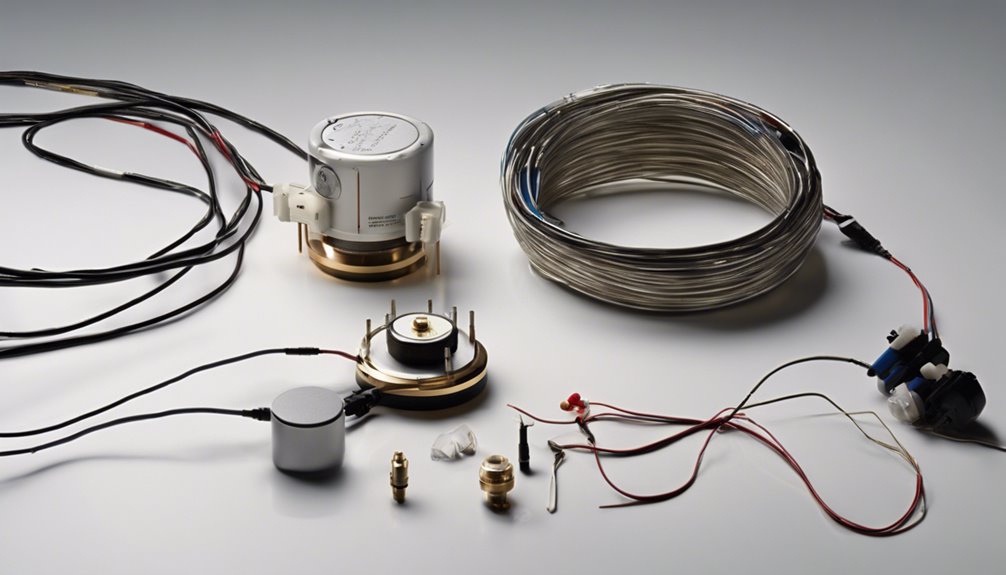
Transducers are indispensable in converting one form of energy into another. Based on their function and energy conversion needs, there are different types of transducers.
Input transducers, often called sensors, detect physical changes—like temperature, pressure, or light—and transform them into electrical signals. These electrical signals are vital for interpreting the physical environment and are used extensively to measure needs, such as temperature monitoring thermocouples or pressure with piezoelectric sensors.
On the other hand, output transducers, or actuators, take electrical signals and convert them into physical actions. This signal conversion enables systems to move a motor or activate a speaker.
Active transducers, such as photovoltaic cells, generate their electrical signals and don’t need an external power source. Meanwhile, passive transducers, like resistive sensors, require an external power source.
Whether measuring AC and DC currents with specialized transducers or utilizing Hall effect transducers to sense magnetic fields, understanding these devices’ roles and types helps you harness their potential for diverse applications, from industrial automation to everyday electronics.
Classification Criteria
Several criteria help classify transducers, which are versatile devices. Transducers can be classified as input or output devices. As input devices, they serve as sensors that convert physical quantities like temperature or pressure into electrical signals. As output devices, they act as actuators that transform electrical signals into physical actions. This dual role is essential for measuring different phenomena and initiating responses.
Here’s how the classification of transducers can be broken down:
- Operating Principles: Transducers are categorized by their mechanisms of energy conversion, such as resistive, capacitive, inductive, and piezoelectric types. Each has unique ways of converting input signals into output signals.
- Power Source Requirements: You’ll find active and passive transducers here. Active transducers generate output signals without external power, while passive ones require it.
- Physical QuantitQuantityed: These transducers are classified based on what they measure—temperature, pressure, or displacement.
- Output Signal Type: Finally, transducers can be analog, offering continuous signals, or digital, providing discrete output signals, impacting their application in control systems.
Quantity-Based Types
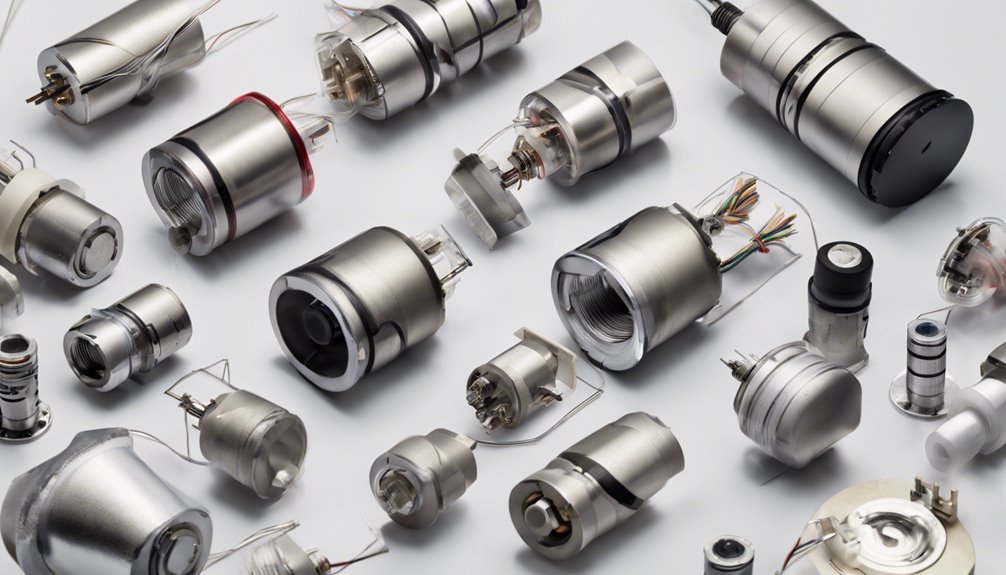
Having explored how transducers are classified, we can now focus on their specific applications based on the physical quantities they measure.
Temperature transducers, such as thermocouples and RTDs, convert thermal energy changes into electrical signals. They’re fundamental for monitoring and regulating temperature in various environments.
When measuring pressure, pressure transducers, such as piezoresistive and capacitive types, convert pressure changes into electrical outputs. These are priceless in automotive and industrial applications where pressure monitoring is essential.
Displacement transducers, including linear variable differential transformers (LVDTs), are imperative for measuring mechanical movement. They use inductive principles to measure linear displacement by converting mechanical movement into electrical signals.
Flow transducers, like electromagnetic flow meters, measure the flow rate of liquids or gases. They achieve this by converting flow velocity into electrical signals, crucial for precision in process control industries.
Lastly, level transducers, such as ultrasonic level sensors, are used to measure the level of liquids or solids. They convert the time delay of emitted sound waves into electrical signals, making them perfect for use in monitoring tanks and silos.
Operation Principle Types
Understanding how transducers function based on their operation principles is essential for identifying the right type for specific applications. Each type converts physical phenomena into signals differently, which can be critical depending on your needs.
Here’s a closer look at some operation principles:
- Resistive Transducers: These transducers rely on changing electrical resistance due to environmental factors. For instance, thermistors adjust their resistance with temperature changes, making them perfect for temperature measurements.
- Capacitive Transducers: These alter capacitance in response to distance or pressure changes, making them ideal for touchscreens and pressure sensors. They effectively convert physical displacement into readable signals.
- Inductive Transducers work by utilizing changes in inductance caused by moving magnetic fields. Devices like linear variable differential transformers (LVDTs) excel in displacement measurement and offer precise data.
- Piezoelectric Transducers: These generate electrical charges from mechanical stress. They’re particularly useful in sensors and actuators for sound and vibration detection, highlighting their versatility in varied applications.
Power Source Types
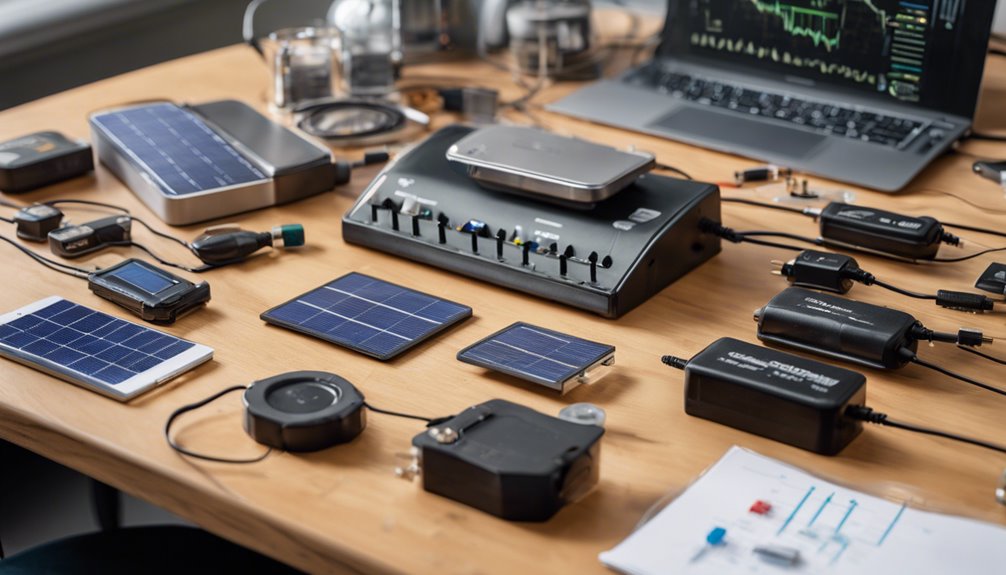
Understanding the distinction between active and passive transducers is vital in exploring power source types for transducers. Active transducers rely on an external power source to function. They generate output signals through an active process. For instance, a thermocouple produces a voltage when it detects a temperature difference. These devices are significant where precise energy conversion and accurate electrical signals are needed.
On the other hand, passive transducers operate without an external power source. They depend on physical phenomena to produce output signals. Strain gauges, a common example, change their resistance in response to mechanical stress, demonstrating how they work without additional energy input.
Self-generating active transducers, like piezoelectric transducers, are a fascinating category. They can produce electrical signals directly from mechanical stress, eliminating the need for an extra power source. This makes them highly efficient and versatile.
Power source considerations are important when selecting the right transducer. You need to evaluate the availability of power sources in your application environment, which impacts the transducer system’s functionality and design.
Whether you’re dealing with active or passive types, understanding their power needs guarantees peak performance and integration into your projects.
Components of Transducers
With a solid grasp of power source types, it’s time to explore the fundamental components that make transducers function effectively. Understanding these elements helps you appreciate how transducers convert physical changes into meaningful data.
- Sensing Element: At the heart of every transducer lies the sensing element. It detects physical changes like pressure, temperature, or force, setting the stage for conversion.
- The Transduction Element is where the magic happens. It converts the detected physical changes into electrical signals, vital for linking the physical world with electronic systems.
- Signal Processing Circuitry: Transducers often include signal processing circuitry to guarantee measurement precision to guarantee measurement precision. This circuitry amplifies, filters, and digitizes the signals, making them accurate and reliable.
- Output Interface and Calibration Mechanisms: The output interface transmits the processed signals for further use, while calibration mechanisms confirm these signals align with known standards, enhancing precision.
The housing of transducers plays an important role in protecting sensitive components from environmental factors.
Active transducers require a power supply for operation, unlike passive transducers, which may work without additional power.
These components collectively guarantee transducers provide precise and reliable measurements.
Applications of Transducers

Transducers, integral to many modern systems, transform physical changes into actionable data across diverse fields. In industrial automation, they monitor and control essential processes like pressure, temperature, and flow, boosting efficiency and safety. You’ll find pressure sensors maintaining the delicate balance needed in manufacturing operations.
Transducers are indispensable in medical devices for monitoring critical signs. Examples include ultrasound transducers, which convert sound waves into images to aid in diagnostics, and thermocouples, which accurately gauge body temperature.
Automotive applications rely heavily on transducers, too. They’re used in systems like speedometers and tire pressure monitoring, ensuring your vehicle’s safety and performance by delivering precise data. These devices also benefit environmental monitoring, as transducers measure air quality, temperature, and humidity. This data is crucial for climate research and pollution control, helping you understand and manage environmental impacts.
In telecommunications, transducers handle signal conversion by transforming voice signals into electrical ones. This conversion makes long-distance communication possible using a smartphone or a landline.
Here’s a quick look at transducer applications:
| Field | Application Example |
|---|---|
| Medical Devices | Monitoring critical signs |
| Automotive | Tire pressure monitoring |
| Environmental Monitoring | Air quality measurement |
| Industrial Automation | Pressure sensors in processes |
| Telecommunications | Signal conversion for communication |
Key Characteristics
Although often overlooked, transducers’ key characteristics are fundamental to their functionality and reliability. Each characteristic plays a significant role in guaranteeing accurate measurements and effective performance. Understanding these traits can help you choose the right transducer for your needs.
- Sensitivity: This is a crucial feature, as it determines the transducer’s ability to detect small changes in the input quantity. High sensitivity guarantees precise and accurate measurements, vital for applications requiring detailed data.
- Linearity: A transducer with good linearity maintains a consistent and proportionate relationship between the input quantity and output signal. This consistency is necessary for delivering reliable readings across the entire range of operations.
- Hysteresis: This characteristic refers to the difference in the transducer’s output signal when the input quantity increases versus decreases. Minimizing hysteresis is fundamental for achieving repeatable and dependable measurements.
- Dynamic Response: The speed at which a transducer reacts to changes in input quantity is its dynamic response. Fast dynamic response is significant for applications that require real-time monitoring and quick adjustments.
Additionally, stability is vital for maintaining consistent output signals over time and under different conditions, guaranteeing long-term accuracy in your measurements.
Conclusion
You now have a clear understanding of transducers and their various types. By classifying them based on the quantitQuantitytion principle and power source, you can better choose the right one for your needs. Remember, knowing their components and applications enhances your ability to utilize them effectively. Keep in mind their key characteristics to guarantee peak performance in any project. With this knowledge, you can make informed decisions about transducers in any application.
FAQs
1. What Are 3 of the Most Common Transducer Types?
You often encounter piezoelectric sensors for pressure measurement, capacitive transducers for proximity detection, and optical sensors for light detection. These three types are widely used across various fields due to their precision and reliability in monitoring applications.
2. What Are 5 Examples of Transducers?
You’re exploring five transducer examples: piezoelectric sensors convert stress to electricity, optical sensors detect light, ultrasonic transducers measure distance, pressure transducers monitor force, and thermocouple sensors measure temperature differences using voltage. Each serves distinct, essential functions.
3. What Are the Different Types of Current Transducers?
You explore current sensing methods, such as Hall effect transducers and currsformer principles. For You, analog current converters, digital current transducers, and shunt resistors. Yo for isolated currents, enabling precision current monitoring for diverse current transducer applications.
4. What Are the Two Types of Transducers?
There are two main types of transducers: active and passive. Active transducers, like strain gauge transducers, require power, while passive ones, such as thermocouples, don’t. Transducers can be electrical, mechanical, thermal, optical, or even ultrasonic.