Sag in Transmission Lines: Causes, Effects, and Mitigation
When you’re working with transmission lines, understanding sag is essential. Sag refers to the vertical distance between the electric poles’ highest point and the conductor’s lowest point. This accurately guarantees proper tension and prevents damage to the conductor. But what factors should you consider when determining sag levels? Elements like conductor weight, span length, and tension play significant roles. Additionally, managing sag effectively can prevent issues during adverse weather conditions. So, how do you maintain the right sag to uphold safety and efficiency in your transmission lines?
Key Takeaways
- Sag is the vertical distance between the conductor’s lowest point and the electric pole’s highest point.
- Proper sag calculation ensures the structural integrity and durability of transmission lines.
- Factors affecting sag include conductor weight, span length, and tension.
- Wind and ice accumulation significantly impact sag by adding horizontal and vertical loads.
- Real-time monitoring and regular inspections help maintain optimal sag levels.
Understanding Sag
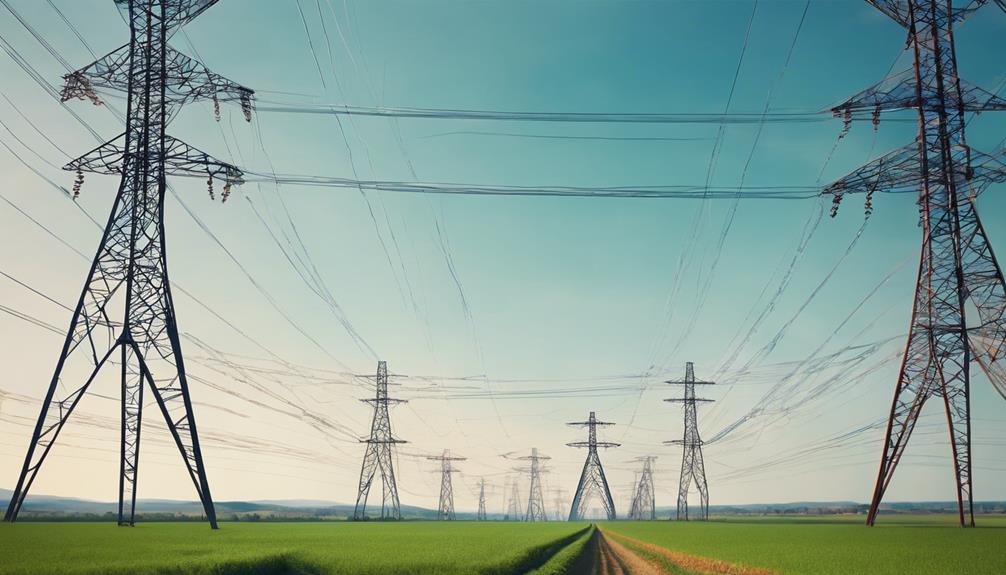
Understanding sag is essential for guaranteeing transmission lines’ safety and efficiency. Sag refers to the vertical gap between the highest point of electric poles or towers and the lowest point on the conductor. Accurately calculating sag is vital as it ensures the proper tension and durability of the conductor in the transmission line.
Several factors influence sag, including the conductor’s weight, the span length between supports, and the tension applied to it. If these calculations are incorrect, the transmission line’s structural integrity can be compromised.
For example, too little sag might result in excessive tension, leading to potential conductor breakage. On the other hand, too much sag can cause the conductor to droop excessively, posing risks to the surrounding environment and infrastructure.
Proper sag calculation isn’t just about keeping the conductor in place; it’s also about enabling it to withstand environmental forces like wind pressure and ice loading. By understanding sag and its effects, you can maintain the transmission line’s reliability and longevity.
This ensures that the conductor remains safe and functional under various conditions, ultimately contributing to the overall efficiency of the power transmission system.
Importance of Sag
A proper understanding of sag’s role highlights its importance in maintaining its structural integrity and safety. By recognizing sag’s vital role in transmission lines, you prevent excessive tension on the conductors, especially during high wind pressures. This is essential because safe tension helps to avoid potential conductor damage that could lead to costly repairs or dangerous failures.
When you guarantee proper sag, the conductor spans form a parabolic curve, optimizing their performance and durability. This balance between tension and sag isn’t just about maintaining the physical shape of the lines but also about preserving their functionality over time. Without sag, the tension on the conductors could become too high, risking breaks or other damage.
Additionally, keeping the support and mid-span tensions nearly equal enhances the transmission line system’s operational safety. This careful balance prevents uneven stress distribution, which could otherwise compromise the entire structure.
Therefore, understanding and implementing the correct sag in transmission lines directly contributes to their longevity and reliability, ensuring they function safely and efficiently.
Calculating Sag
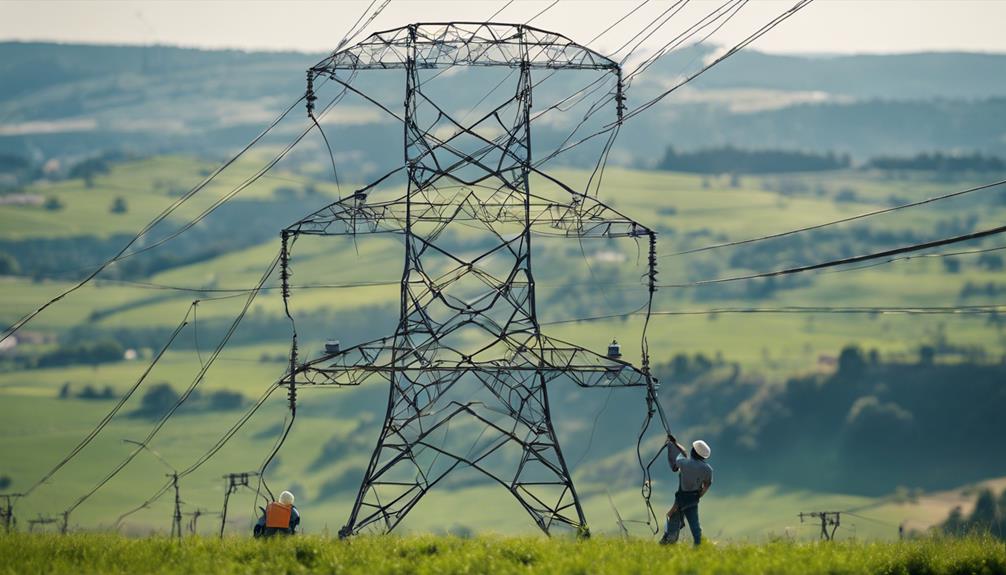
When calculating sag in transmission lines, factors like the conductor’s weight, span length, and line tension must be taken into account. These elements are important for determining the conductor’s point that experiences the maximum sag.
To start, measure the span length between the two support levels. Given the same tension and conductor weight, the longer the span, the more pronounced the sag will be.
Next, consider the conductor’s weight. Conductors will naturally sag more under the same tension and span length. The lifeline’s tension adjusted to balance the sag, ensuring stability and durability of the transmission line’s stabiltransmission line. The formula for sag often assumes a parabolic shape for the conductor span, simplifying the calculation.
You must adjust your calculations accordingly if the support levels are at different heights. Uneven support levels can lead to an asymmetric sag, affecting the overall tension distribution in the line.
Properly calculating the sag helps maintain the ideal tension, preventing excessive stress on the conductor and ensuring the transmission line operates efficiently. Accurate sag measurements are essential for the longevity and stability of your transmission system.
Factors Affecting Sag
When considering factors affecting sag, you should focus on:
- Conductor weight
- Environmental temperature variations
- Span length between supports
Each of these elements can greatly alter the sag, impacting the transmission line’s overall performance. Understanding how they interact will help you maintain the best tension and stability.
Conductor Weight Impact
Although often overlooked, the weight of the conductor plays a critical role in determining the sag in a transmission line. Conductor weight directly influences the amount of sag you’ll see. Remember, sag is proportional to the square of the span length and the weight of the conductor. So, if the conductor weight increases, the sag in a transmission line will also increase.
To balance this, you must carefully manage the tension in the line. Too much stress can strain the conductor and supporting structures, while too little can cause excessive sag. Properly calculating sag means considering the conductor weight’s impact on the overall structural integrity. This balance ensures that your transmission lines remain secure and efficient.
Here’s a quick comparison to illustrate:
| Conductor Weight | Sag Impact |
|---|---|
| Light | Lower Sag |
| Moderate | Balanced Sag |
| Heavy | Higher Sag |
Environmental Temperature Variations
Temperature changes can greatly impact transmission line sag by causing the conductor to expand or contract. When temperatures rise, the conductor undergoes expansion, leading to elongation and increased sag. Conversely, lower temperatures cause the conductor to contract, reducing sag. These temperature fluctuations can have a major impact on the performance and safety of your transmission lines.
Properly accounting for these variations is essential. If you overlook temperature changes, you might face excessive sag during hot weather, bringing the conductor dangerously close to the ground or other structures. On the flip side, cold weather can make the conductor too taut, increasing the risk of snapping. Hence, sag calculations must always consider temperature variations to maintain proper tension and uphold the conductor’s integrity.
Monitoring temperature changes becomes vital to effectively managing these challenges. By closely monitoring environmental conditions, you can make timely adjustments to maintain appropriate sag levels. This proactive approach enhances the reliability of your transmission lines and helps prevent costly damages and outages.
Tension and Span Length
Understanding the intricate interplay between tension and span length is essential for effectively managing sag in transmission lines. When you examine these factors, you’ll find that stress in the conductor directly affects sag calculations and the overall stability of the line.
If the tension is too low, the sag will increase, leading to potential clearance issues and mechanical stress on the supports. Conversely, too much tension can risk snapping the conductor.
The span length is equally important. The longer the span between supports, the greater the sag in the transmission line. This happens because the conductor’s weight has more distance to act upon, causing a more pronounced dip.
Proper tension management is vital for maintaining ideal sag levels, especially with varying span lengths. You must carefully balance these two factors to ensure the transmission line operates safely and efficiently.
Effects of Wind and Ice

When wind blows against a transmission line, it alters the horizontal weight distribution, increasing sag.
Ice accumulation adds vertical weight, further impacting the sag levels.
You must understand how these forces interact to maintain the line’s stability and performance.
Wind-induced Line Deflection
As wind and ice accumulate on transmission lines, the combined forces greatly impact the sag, necessitating meticulous calculation for stability.
Wind force increases the horizontal load on the conductor, while ice loading adds significant vertical weight. Together, these factors change the deflection angle, directly affecting the sag in overhead lines.
When wind hits the transmission line, it pushes the conductor sideways, increasing the horizontal tension. This wind force, especially during storms, can cause the conductor to sway, leading to greater sag and potential instability.
Ice loading is another critical factor, as it adds extra weight, causing the conductor to droop. The combined effect of wind and ice creates a complex scenario in which the total weight and angle of deflection must be accurately calculated to uphold the line’s stability.
Properly calculating the sag with both wind and ice loading is crucial. Understanding how these forces interact allows you to maintain the necessary clearance above the ground and other obstacles.
Accurate calculations prevent line breakage and power outages, safeguarding the transmission system’s reliability despite adverse weather conditions.
Ice Accumulation Impact
Ice accumulation on transmission lines substantially increases the vertical weight, greatly altering the conductor’s sag. When ice forms on the conductors, the added ice per unit of length causes a significant increase in the vertical load. This weight change impacts the sag span curve, making it imperative to account for these variations during design and maintenance.
Wind and ice don’t act independently; they combine their forces, leading to complex effects. Wind forces exert a horizontal load, while the ice’s weight adds a vertical load. Together, they create a resultant force vector that complicates the sag calculations. To visualize these combined effects, consider the following:
- Ice accumulation: Increases vertical weight, causing greater sag.
- Wind forces: Exert horizontal pressure, altering the conductor’s position.
- Resultant vector: The combined impact of wind and ice.
- Sag span curve: Adjustments to the sag span curve to ensure stability.
Properly managing sag under these conditions is essential to maintaining the transmission line’s stability and functionality. Incorporating both wind and ice impacts into your calculations is essential to predict and mitigate potential issues effectively. Neglecting these factors can lead to line failures and service interruptions, underscoring the importance of thorough and precise sag management.
Preventing Excessive Sag
Preventing excessive sag in transmission lines is essential for maintaining the reliability and safety of the power grid. Sag in the conductor can lead to numerous issues, such as power outages, conductor damage, and increased maintenance costs. By managing sag effectively, you can safeguard the conductor from experiencing excessive tension, which could otherwise lead to serious accidents and elevated repair expenses.
To achieve this, it’s important to properly fix the conductors after applying sag. This prevents the conductor from drooping too much, which can cause contact with trees or other structures, posing significant safety risks. Properly fixed conductors also ensure the tension is evenly distributed, avoiding weak points that could lead to breakage.
Utilities employ various methods to manage sagging, such as tensioning devices and adjusting tower heights. These methods help maintain the optimal sag levels, ensuring efficient and safe transmission line operation.
Regular inspections and adjustments are necessary to keep sag within safe limits. These steps can greatly reduce the likelihood of power failures and extend the lifespan of the transmission infrastructure.
Monitoring and Maintenance

Effective monitoring and maintenance are key to ensuring that the preventive measures you’ve implemented to control sag in transmission lines continue to function at their best. Regularly checking a conductor’s sag helps you catch potential issues before they escalate into major problems, guaranteeing safe and efficient operation.
Advanced technologies now allow real-time monitoring of transmission lines, which means you can immediately detect any deviations in sag levels. This proactive approach helps you take corrective actions swiftly, maintaining the system’s integrity. Additionally, continuous monitoring enables you to understand how weather conditions, temperature variations, and other external factors impact the sag of a conductor over time.
Proper maintenance practices are essential for preventing operational issues and reducing the need for frequent repairs. To enhance the overall reliability of your power transmission system, consider the following:
- Install sensors: Sensors provide real-time data on sag levels and environmental factors.
- Regular inspections: Schedule periodic inspections to verify the condition of the conductors manually.
- Maintenance scheduling: Develop a schedule based on data trends and historical performance.
- Training programs: Ensure your team is well-trained in monitoring technologies and maintenance procedures.
Conclusion
You’ve now got a solid grasp of sag in transmission lines and its significance. Proper sag calculation guarantees the system’s durability and safety, preventing damage from wind and ice.
By considering factors like conductor weight, span length, and tension, and maintaining regular monitoring, you can effectively manage and prevent excessive sag.
Always prioritize proper sag management to keep your transmission lines efficient and secure.
FAQs
What is sag in a transmission line, and why does it occur?
Sag in a transmission line refers to the vertical drop or dip in the conductors (wires) between two supporting structures, such as towers or poles. It occurs due to the weight of the conductor, environmental factors, and the tension applied to the line. Sag is a natural phenomenon in overhead transmission lines and is influenced by several factors, including temperature, conductor material, and span length between supports.
Causes of Sag:
- Weight of Conductor: Heavier conductors have more sag.
- Temperature: Higher temperatures cause conductors to expand, increasing sag.
- Span Length: Longer spans between supports result in more sag.
What are the effects of excessive sag in transmission lines?
Excessive sag in transmission lines can lead to several problems:
- Reduced Clearance: Increased sag can reduce the clearance between the conductors and the ground, buildings, or vegetation, which may pose safety hazards or lead to electrical faults.
- Power Loss: Sagging conductors can increase the line’s resistance, leading to higher power losses during transmission.
- Mechanical Stress: Excessive sag can place additional mechanical stress on the towers or poles, potentially leading to structural failure or additional maintenance.
Effects of Excessive Sag:
- Safety Hazards: Reduced clearance increases the risk of contact with ground or objects.
- Power Efficiency: Increased resistance can cause power loss.
- Structural Issues: Extra stress on supporting structures.
How can sag in transmission lines be mitigated?
Several methods can be used to mitigate sag in transmission lines:
- Proper Tensioning: Ensuring the correct tension is applied to the conductors during installation can minimize sag.
- Use of High-Strength Conductors: Materials like aluminum conductor steel-reinforced (ACSR) are stronger and can reduce sag.
- Tower Design: Designing transmission towers with optimal height and placement can help maintain appropriate clearance and reduce sag.
- Monitoring and Maintenance: Regular monitoring of transmission lines for sag, especially in areas with extreme temperatures or weather conditions, allows for timely adjustments and maintenance.
Mitigation Methods:
- Tensioning: Apply correct tension during installation.
- High-Strength Conductors: Use materials that reduce sag.
- Optimized Tower Design: Ensure proper tower height and spacing.
- Regular Monitoring: Inspect and maintain lines to manage sag.