Understanding Transformer Rating: Key Factors and Importance
When dealing with transformer rating, you’re looking at how much load a transformer can handle without compromising efficiency or safety. It’s measured in VA or kVA and matches a transformer’s capacity with your application’s power requirements. You risk overloading and inefficiency if you don’t align the rating correctly. But there’s more to it than just numbers. Have you ever considered how factors like load power factor and the management of core and copper losses come into play? Let’s explore how these elements impact your choice and use of transformers.
Key Takeaways
- Transformer ratings in kVA indicate the maximum load capacity, combining real and reactive power.
- Proper cooling systems are critical to manage heat from core and copper losses.
- Matching transformer ratings to application prevents overloading and enhances safety.
- Standard transformer sizes range from 3 kVA to 1,500 kVA, ensuring compatibility and efficiency.
- Voltage levels must be selected for optimal transformer efficiency and safety.
What Is Transformer Rating
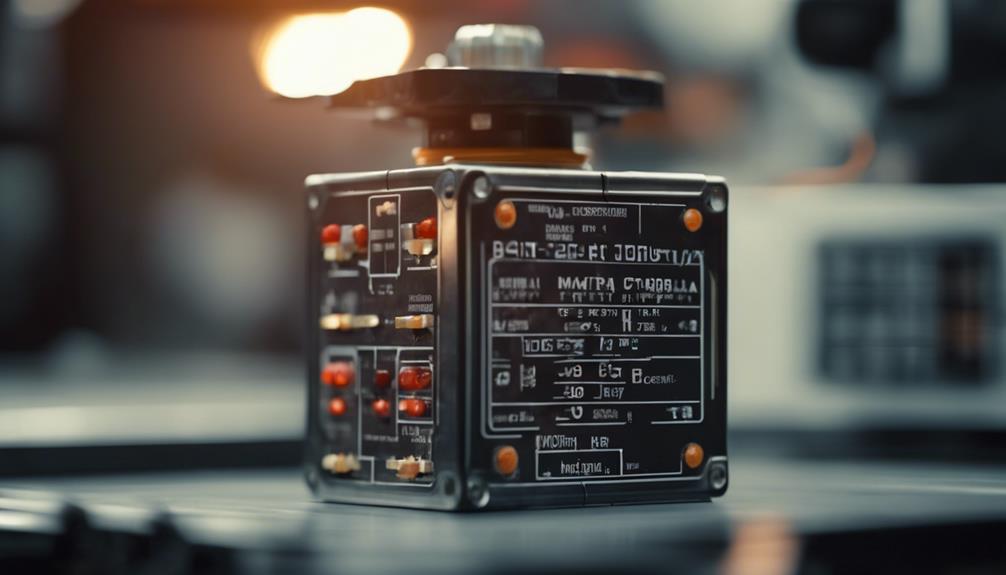
A transformer’s rating, specified in VA or kVA, tells you the maximum voltage and current it can handle safely. The kVA rating mentioned on a transformer’s nameplate indicates the rated input in kVA and the rated output in kVA, reflecting the maximum load the transformer can manage without overheating. This rating is important because the transformer’s capacity depends on the voltage and current (V×I) product, ensuring the load power factor is equal to the designed standards for best performance.
You should know that the total losses depend on the transformer’s constant and variable factors. These losses include core losses, which are continuous, and copper losses, which vary with the load. A transformer’s high efficiency hinges on minimizing these losses, which is why the load-side rating is so significant.
Proper cooling systems are essential for maintaining the transformer’s temperature, as effective cooling can increase the transformer’s rating by managing heat generated from losses.
Importance of Transformer Rating
Understanding the significance of transformer rating helps guarantee that your electrical systems operate safely and efficiently. Knowing your transformer’s kVA rating lets you ensure it handles the maximum voltage and current without overheating or failing. Transformers are rated in kVA because this accounts for the power factor, which impacts how the power is utilized in the system.
Proper transformer rating is essential for several reasons:
- Prevents Overloading: Ensures the transformer can handle the electrical load without risk of overheating.
- Enhances Safety: Reduces the likelihood of electrical fires or equipment damage.
- Optimizes Efficiency: Ensures that primary and secondary windings operate within safe limits, minimizing energy losses.
- Ensures Reliability: Supports stable and consistent power distribution across your electrical systems.
When a transformer’s rating accurately matches its application, you avoid unnecessary strain on the system. This involves careful consideration of the voltage and current requirements, both at the primary and secondary levels. Doing so lets you maintain the system’s stability and reliable operation, which is critical for any electrical infrastructure.
Kva Vs. Kw in Transformers
When dealing with transformers, it’s important to distinguish between kVA (kilovolt-amperes) and kW (kilowatts) to guarantee proper sizing and rating for your applications. Transformers are rated in kVA to reflect their apparent power capacity, including real (kW) and reactive power. The kVA rating on a transformer nameplate indicates its ability to handle the total energy required by the load, encompassing all components.
Understanding the difference between kVA and kW helps ensure your transformer delivers efficient power. While kW represents the power consumed by devices, kVA accounts for the total energy, including any reactive power, especially when the power factor is zero. This thorough approach is important because transformer performance depends upon losses, whether they’re high or low.
When selecting a transformer, consider the rated voltage and current your load requires. These ratings ensure the transformer can handle the load without exceeding its capacity. Additionally, the transformer’s efficiency and reliability depend on minimizing losses, including core losses.
Focusing on the kVA rating for single-phase and three-phase transformers helps you consider all power consumption aspects, ensuring your system operates smoothly and efficiently.
Single-Phase Transformer Ratings
Single-phase transformers come in various kVA ratings, ensuring you can find the right one for your specific application. These transformers are essential for converting electrical energy to a level suitable for your equipment. Understanding their ratings helps you choose a transformer that meets your load power demands and operates efficiently.
When selecting a single-phase transformer, consider:
- Rated kVA: This indicates the transformer’s capacity. Common ratings include three kVA, six kVA, and higher.
- Rated voltage: Determines the input and output V levels the transformer can handle.
- Load side kVA: The kVA requirement on the load side ensures that your transformer runs effectively under load.
- The transformer nameplate provides important information like the rated voltage, capacity, and specifications.
Single-phase transformers come in various types to meet different environmental needs to meet other environmental needs, including encapsulated, ventilated, and enclosed non-ventilated.
Specialty applications like motors or medical equipment often have specific kVA requirements. Calculating the required amperage involves the formula I = (kVA * 1,000 / V) / 1.732, ensuring you match the transformer’s rating to your load power requirements.
Always refer to the transformer’s nameplate to verify its ratings and ensure it meets your application’s demands. This careful selection process guarantees your transformer runs efficiently and safely.
Three-Phase Transformer Ratings
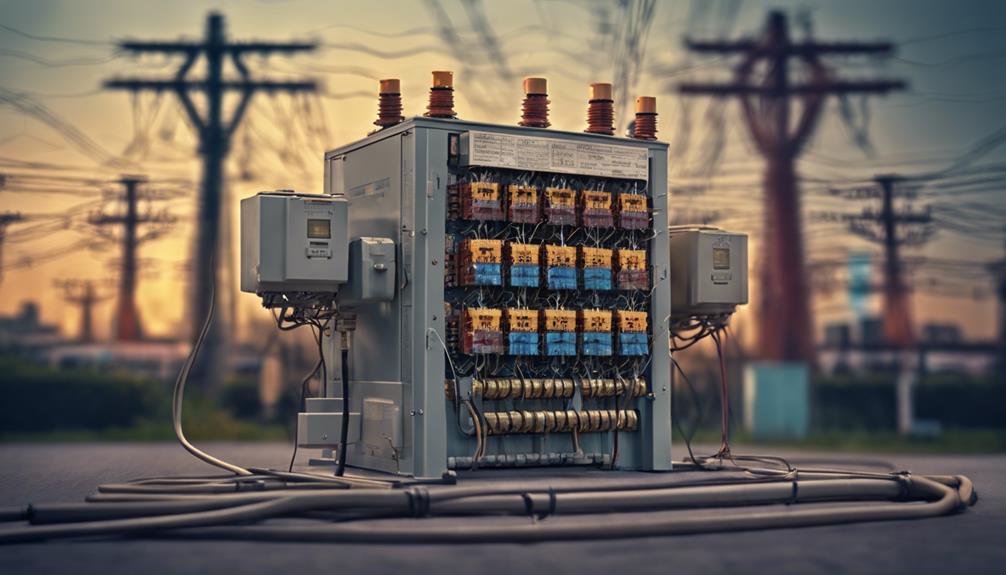
Three-phase transformers, rated in kVA, are essential for managing power in industrial and commercial electrical systems. These transformers help balance power flow and maintain system stability. The apparent power rating (VA) on the transformer’s nameplate reflects the total power capacity spread across all three phases. It considers factors like rated input voltage, rated current, and load power.
Here’s a quick overview:
| Parameter | Description | Importance |
|---|---|---|
| Apparent Power Rating | Total capacity in kVA | Determines load capability |
| Rated Voltage | The voltage level each phase can handle | Ensures compatibility |
| Rated Current | Maximum current each phase can carry | Prevents overloading |
| Cooling System | Method for dissipating heat | Reduces losses and prolongs life |
Understanding these ratings is essential for designing effective power distribution networks. The rated voltage ensures compatibility with your system, while the rated current helps prevent overloading. The cooling system is crucial for managing losses and sustaining efficiency. A transformer’s load power must align with its apparent power rating, considering the power factor to avoid inefficiencies. By paying attention to the transformer’s nameplate, you can optimize your system’s performance and reliability.
Calculating Kva Size
To determine the appropriate transformer size, you’ll need to calculate the kVA using the load voltage and required current using the formula kVA = (V x I) / 1,000. This is important for ensuring the transformer’s rated input matches your needs and prevents issues during the transformer’s operation.
When you calculate the required capacity, consider the following:
- Transformer’s nameplate in VA (Volt-Amps): Check this to understand the apparent power rating.
- Rated voltage and rated current: These values are essential in finding the product of voltage and current.
- Power factor of load: A lower power factor means a higher current for the same kVA, impacting a transformer’s rating.
- Transformers losses: Account for these to avoid undersizing.
The apparent power rating (VA or kVA) helps you understand the actual load the transformer can handle.
For instance, if your load voltage is 240V and the required current is 10A, the kVA would be (240V x 10A) / 1,000 = 2.4 kVA.
Always consider a start factor of 125% for additional current needed during startup. Consulting professionals are wise for specialized loads, ensuring you don’t overlook critical aspects.
Standard Transformer Sizes
Why are standard transformer sizes essential for guaranteeing compatibility and efficiency in electrical systems?
Standard sizes, ranging from 3 kVA to 1,500 kVA, cater to various load requirements, ensuring you can find a transformer that meets your needs. These industry-established sizes, like three kVA and six kVA, provide compatibility and interchangeability, making integrating transformers into existing electrical systems easier without extensive modifications.
In industrial settings, where higher power capacity is often required, standard sizes up to 1,500 kVA are available. This variety simplifies the selection process, allowing you to choose a transformer with the appropriate transformer rating for your application. Selecting the right standard size guarantees top performance and efficiency, minimizing energy losses and maximizing the lifespan of your electrical equipment.
Standard transformer sizes also make replacement processes straightforward. When a transformer needs to be replaced, a compatible unit can easily be found without needing custom solutions. This interchangeability is essential for maintaining operational efficiency and reducing downtime in industrial and commercial settings.
Converting Kva to MVA
Converting kVA to MVA is simple: divide the kVA value by 1,000. This conversion is important when dealing with large-scale electrical systems’ power capacity. A transformer is rated in kVA or MVA to express its capacity. For example, if a transformer’s nameplate regarding rated kVA output reads 1,000 kVA, it converts to 1 MVA.
Understanding this conversion helps in the following scenarios:
- Power Plants: Calculate the total power capacity required for various operations.
- Substations: Confirm transformers meet the requirements for maximum current.
- Industrial Facilities: Match transformers with the rated current and load power.
- Loss Analysis: Evaluate losses or ohmic resistance in high-power systems.
A kVA transformer might be rated for single-phase or three-phase power distribution. Knowing how to convert between kVA and MVA simplifies determining the rating of an electrical system.
When a transformer works under rated conditions, it’s important to ensure its capacity meets the demands without exceeding the limits. This ensures efficiency and prevents overloading, which can cause significant losses or damage to the equipment.
Determining Voltage Levels
Understanding transformer ratings in kVA or MVA is important, but determining the voltage levels dictated by the primary and secondary windings’ design and configuration is equally important. The primary winding voltage level is typically fixed based on the supply voltage, while the secondary winding voltage can be adjusted to meet your output requirements.
Common voltage levels for transformers include 120V, 240V, 480V, and 600V, and selecting the right one guarantees efficient power transfer and safe operation.
When you look at a transformer’s nameplate, you’ll see the rated voltage and rated current for both the primary and secondary windings. Transformer winding: This information helps you understand the voltage and current required for your application.
The transformer’s apparent power rating (VA) also comes into play, as it reflects the product of the voltage and current at full load. Transformers are rated to handle specific loads, and their rating must be expressed in terms of the voltage and current they can manage while working at the rated voltage.
A transformer is generally designed to operate efficiently at these specified levels, ensuring compatibility with your electrical systems. Proper voltage selection not only impacts performance but also guarantees the longevity and safety of your transformer.
Conclusion
Understanding transformer ratings guarantees your power system’s operation efficiently and safely. You prevent overloading and minimize energy losses by matching the right transformer rating to your application’s needs.
Remember, proper calculations and conversions from kVA to MVA are essential for dealing with single-phase or three-phase transformers.
Consider voltage levels and standard sizes to ensure long-term reliability and peak performance in your power distribution systems.
FAQs
What is transformer rating, and why is it important?
Transformer rating indicates the maximum electrical load a transformer can handle safely, measured in kVA or MVA. Ensuring the transformer operates efficiently without overheating or sustaining damage is crucial.
How is transformer rating determined?
The voltage and current determine the ratio and the transformer’s ability to dissipate heat. This ensures the transformer can handle its intended load without exceeding temperature limits.
What happens if a transformer operates beyond its rated capacity?
Operating a transformer beyond its rated capacity can lead to overheating, reduced efficiency, and potential failure. It can also shorten the transformer’s lifespan and increase the risk of electrical hazards.