Mastering Transformer Design – Powering the Future of Electronics
In electronics, the term “Transformer Design” holds a pivotal role. It’s a phrase that resonates with engineers, designers, and enthusiasts alike, as it represents the core of power distribution and voltage transformation in countless devices. In this comprehensive guide, we will delve deep into the intricacies of transformer design, exploring its significance and the key elements involved and answering frequently asked questions to provide a holistic understanding.
What is a Transformer?
Transformers are electrical devices that operate on the principle of electromagnetic induction. They consist of two or more coils of wire, known as windings, and a magnetic core. When an alternating current (AC) flows through the primary winding, it creates a magnetic field in the core. This magnetic field induces a voltage in the secondary winding, allowing for the transfer of electrical energy between the windings without a physical connection. This fundamental property of transformers makes them indispensable in various electrical applications.
Importance of Transformer Design
Transformer design is paramount because it directly influences the performance and reliability of electrical systems. Transformers are ubiquitous in power substations, electronic devices, and renewable energy systems. They serve to step up or down voltages, enabling efficient power transmission, voltage regulation, and adaptation of electrical energy to suit different applications. Without proper design and engineering, transformers can lead to energy losses, overheating, and operational inefficiencies, making them a critical component in electronics and power distribution.
Transformer Components

When it comes to transformer design, several key components come into play.
Core Materials
The core of a transformer is typically made from materials with high magnetic permeability, such as laminated iron or steel. These materials enhance the magnetic coupling efficiency between the primary and secondary windings. The core’s design and material selection are critical factors in determining a transformer’s performance and efficiency.
Windings and Coils
Windings are coils of wire wound around the transformer’s core. The primary winding, connected to the input voltage source, generates the magnetic field. The secondary winding, connected to the load, receives the induced voltage. The number of turns in each winding and their arrangement dictate the voltage transformation ratio. For example, a transformer with more turns in the secondary winding will increase the voltage, while fewer turns will step it down.
Insulation
Insulation materials, such as paper, oil, or plastic, are used to insulate the windings and prevent electrical breakdown between them. Proper insulation is essential for the safe and reliable operation of transformers, especially when dealing with high voltages.
Transformer Types
Transformers come in various types, each designed for specific applications.
Step-Up Transformers
Step-up transformers are designed to increase the voltage level from the primary winding to the secondary winding. These transformers are commonly used in power transmission systems, where high voltage is necessary to reduce energy losses over long distances. They play a pivotal role in delivering electricity from power plants to substations.
Step-Down Transformers
Conversely, step-down transformers are employed to lower the voltage from the primary to the secondary winding. They are widely used in homes and businesses to reduce the voltage from power lines to levels safe for household appliances and electronics.
Auto Transformers
Autotransformers have a single winding with multiple taps, allowing for variable voltage output. They are often used in applications requiring precise voltage regulation, such as industrial settings or voltage stabilizers.
Transformer Design Considerations
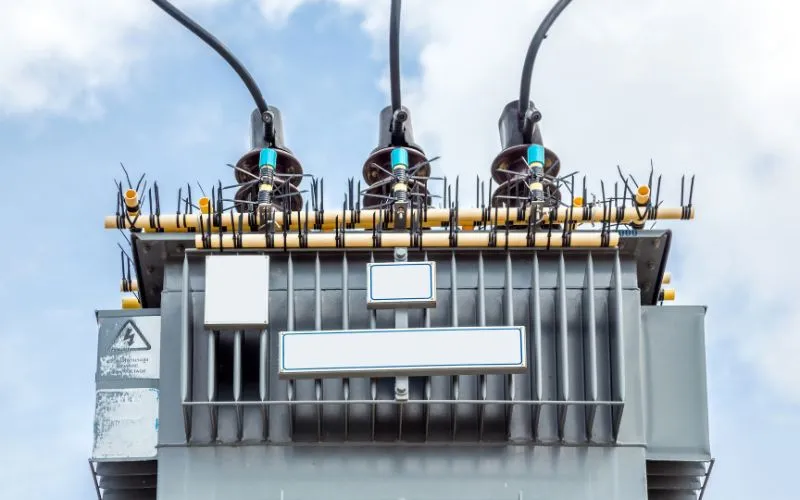
Designing a transformer requires careful consideration of several factors.
Voltage Rating
One of the critical design considerations is matching the transformer’s voltage rating to the application’s requirements. Using a transformer with the wrong voltage rating can damage equipment, cause power inefficiencies, and cause safety hazards.
Frequency
Transformers are designed to operate at specific frequencies, such as 50 or 60 Hz. Matching the transformer’s frequency with the application is vital for efficient performance. Using a transformer at a different frequency can result in energy losses and overheating.
Efficiency
Transformer efficiency is a crucial aspect of design. It is the ratio of output power to input power, typically expressed as a percentage. Higher-efficiency transformers waste less energy as heat, making them cost-effective and environmentally friendly. Design considerations, such as core material, winding techniques, and cooling mechanisms, directly impact a transformer’s efficiency.
Size and Weight
Transformers come in various sizes and weights, depending on their power ratings and applications. Compact and lightweight designs are essential for installations where space is limited, such as in urban substations or portable equipment.
Cooling Mechanisms
Transformers generate heat during operation, and effective cooling mechanisms are necessary to maintain safe operating temperatures. Common cooling methods include oil-immersed transformers, which use oil to dissipate heat, and forced air cooling, which uses fans to enhance heat dissipation.
Transformer Manufacturing
Transformers are manufactured through a meticulous process to ensure reliability.
Winding Techniques
Precision winding techniques are employed during manufacturing to ensure the coils are uniformly and tightly wound. Proper winding reduces energy losses and ensures efficient magnetic coupling between the windings.
Core Assembly
The core assembly process is critical to minimizing air gaps and maximizing the efficiency of the transformer. Precision machining and assembly techniques create a tight and efficient magnetic path within the core.
Testing and Quality Control
Manufacturers subject transformers to rigorous testing and quality control measures to ensure their performance and safety. Tests may include insulation resistance, turns ratio, and load tests. Compliance with industry standards and regulations is essential to guarantee the reliability of transformers.
Transformer Applications

Transformers find applications in various industries and sectors.
Power Distribution
Transformers are the backbone of power distribution networks. High-voltage transformers are used to step up the voltage for efficient long-distance transmission, while distribution transformers step down the voltage for safe delivery to homes and businesses.
Electronics
In electronics, transformers are used for various functions, including voltage conversion, signal isolation, impedance matching, and noise suppression. They are essential for power supplies, audio equipment, and telecommunications systems.
Renewable Energy
Transformers play a vital role in renewable energy systems, allowing the integration of solar panels, wind turbines, and other renewable sources into the electrical grid. They help maintain stable voltage levels and enable efficient energy transfer.
Conclusion
FAQs
What is the primary function of a transformer?
The primary function of a transformer is to transfer electrical energy between circuits through electromagnetic induction, either increasing (step-up) or decreasing (step-down) the voltage level while maintaining power conservation.
Can transformers be customized for specific applications?
Yes, transformers can be customized to meet various applications’ specific voltage, frequency, and size requirements. Customization ensures optimal performance and efficiency for the intended use.
How do you determine the efficiency of a transformer?
Transformer efficiency is determined by comparing the input power to the output power. It is calculated as the ratio of output power to input power and is usually expressed as a percentage. Higher-efficiency transformers waste less energy as heat and are more cost-effective in the long run.