

Steam Boiler | Industrial & Commercial Solutions
You’re in the right place if you’re curious about steam boilers. They are crucial in converting water into steam for heating, power, and industrial processes. With various designs, like fire tube and water tube, and key components ensuring safety and efficiency, there’s much to explore. How do these systems maintain energy efficiency and meet environmental standards? There’s a lot more beneath the surface worth discovering.
Key Takeaways
- Steam boilers convert water into steam using radiation, convection, and conduction.
- They are made from durable materials like cast iron and stainless steel for longevity.
- Fire tube and water tube designs are common for steam generation.
- Natural gas is a popular fuel choice for its efficiency and lower emissions.
- Regular maintenance ensures safety, efficiency, and compliance with regulations.
Understanding Steam Boilers

Steam boilers are fascinating devices that serve as heat exchangers. They convert water into steam through the efficient use of radiation, convection, and conduction.
Steam boilers, especially Gas steam boilers, are popular in residential and commercial settings due to their high efficiency. They often use natural gas as the primary fuel type, though Oil Boilers are also prevalent.
Construction materials like cast iron and stainless steel enhance durability, while the Chimney Vent and fire tube designs improve combustion.
Residential Gas boilers efficiently heat water, providing hot water for various applications. The Steam Gas Boiler’s efficiency is measured by AFUE ratings, ensuring ideal performance.
Understanding the fuel and power equipment involved is vital for maximizing operational efficiency.
Exploring Different Steam Boiler Designs
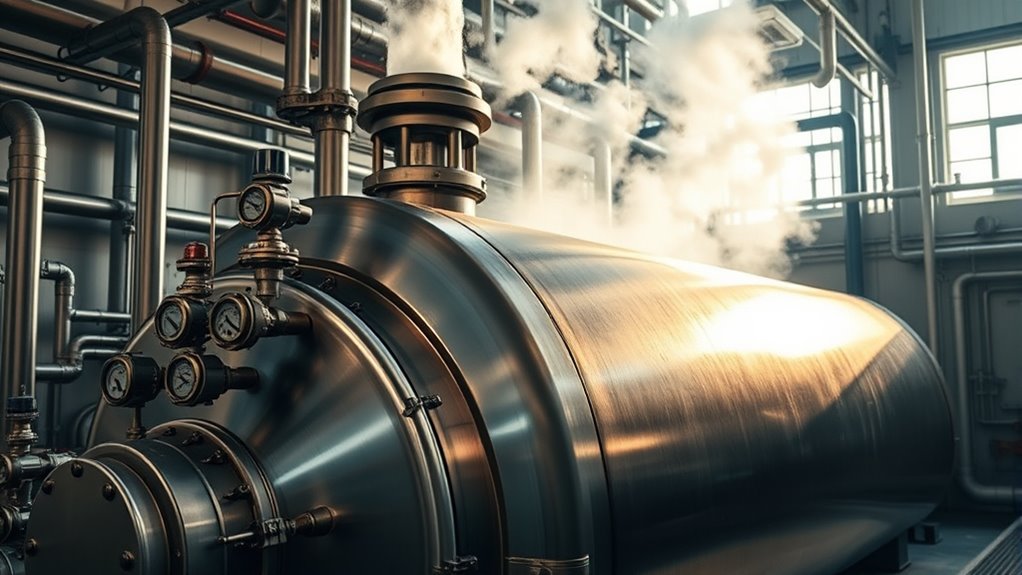
When delving into steam boiler designs, you’ll discover a diverse array tailored for specific needs and applications. Fire tube and water tube boilers are the two primary types. Fire tube boilers channel hot gases through tubes surrounded by water, while water tube boilers circulate water through tubes heated by external gases.
For high-pressure applications, specialized designs like La Mont, Benson, and Loeffler boilers employ forced circulation, boosting efficiency. These boilers operate between 15 and 800 psi and demand vigilant monitoring and advanced safety measures.
Integrating economizers into designs enhances efficiency by using flue gases to preheat feedwater, reducing fuel consumption. The fuel type—natural gas, propane, or electricity—also impacts the boiler’s design and efficiency, with natural gas being common for industrial use.
Key Components of Steam Boilers
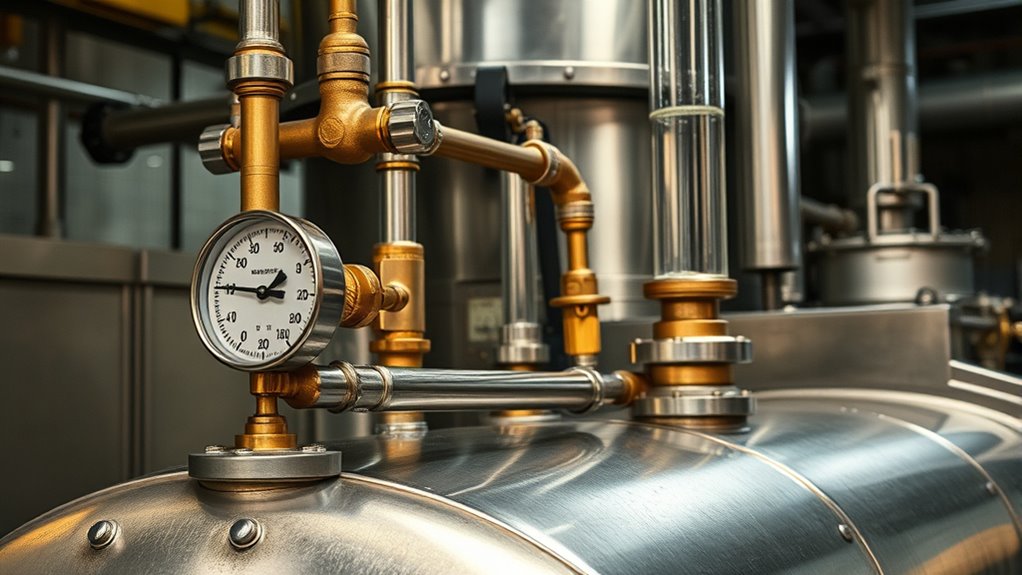
When examining steam boilers, focus on the key components like the combustion chamber and water reservoir.
These parts work together with heat transfer mechanisms—radiation, convection, and conduction—to efficiently convert fuel into steam.
Remember essential safety features like pressure gauges and relief valves that keep operations smooth and safe.
Essential Boiler Components
A steam boiler’s efficiency and safety hinge on its essential components working harmoniously.
First, you’ve got the combustion chamber, where fuel burns to create the heat necessary for steam production. This heat is then transferred to the reservoir, turning water into steam.
The burner’s role is critical here. It mixes fuel with air for efficient combustion, which directly impacts your boiler’s efficiency and emissions.
Safety devices, such as pressure relief valves and water level controls, are fundamental to preventing overpressure and guaranteeing safe operation.
Insulation and lagging reduce heat loss, ensuring the heat generated is used effectively.
Finally, heat exchangers play a pivotal role, although we’ll explore their specifics separately.
Heat Transfer Mechanisms
Steam boilers rely on three primary heat transfer mechanisms—radiation, convection, and conduction—to efficiently generate and distribute steam.
Radiation transfers heat via electromagnetic waves, and boiler tubes soak up radiant heat from combustion. This initial heat absorption is essential for kickstarting the steam generation process.
Next, convection takes over, where heated fluids circulate, transferring heat to the surrounding water, boosting the boiler’s overall efficiency.
Conduction, the third mechanism, involves direct contact. Here, heat moves from the combustion chamber straight through the boiler’s metal walls to the water.
These mechanisms are critical in determining your boiler’s efficiency, often measured by the AFUE rating, which typically ranges from 82% to 97%.
Understanding these will help you maximize your boiler’s potential.
Heating Mechanisms in Steam Boilers

Understanding the heating mechanisms of steam boilers is key to maximizing their efficiency.
Steam boilers rely on three primary heat transfer methods: radiation, convection, and conduction.
Radiation allows tubes to absorb heat via electromagnetic waves, which is essential for efficient steam generation.
Convection occurs as heated fluids move, with warmer steam rising and circulating, ensuring even heat distribution throughout the system. This movement balances the temperature and boosts the boiler’s overall efficiency.
Meanwhile, conduction facilitates direct heat flow through the boiler materials, quickly heating water to produce steam efficiently.
Applications of Steam Boilers Across Industries
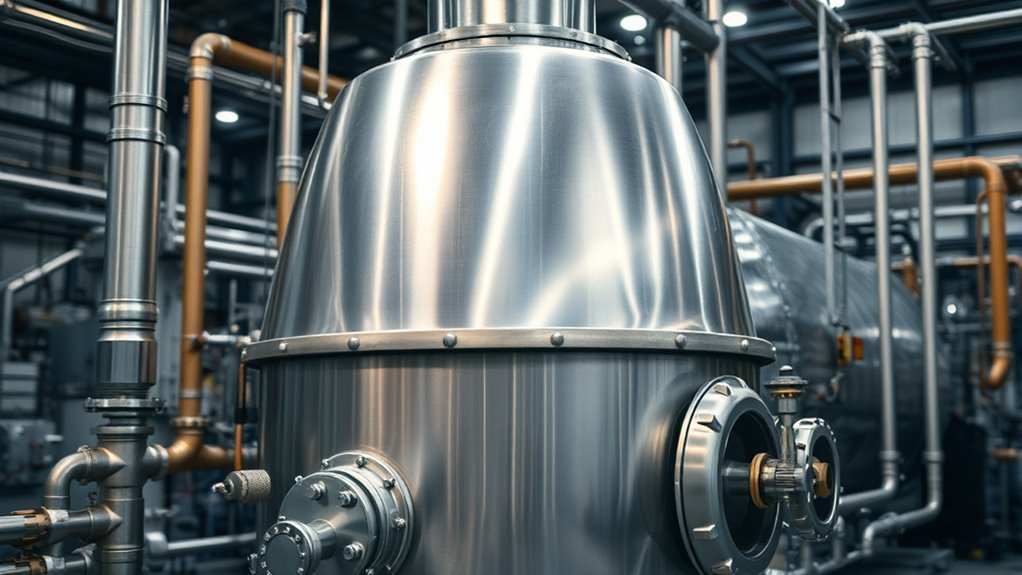
Steam boilers play pivotal roles across various industries, from providing essential heating in homes and hospitals to powering large-scale industrial applications.
They’re indispensable in the food and beverage industry for tasks like pasteurization, ensuring cleanliness and safety.
Additionally, steam boilers offer efficient solutions in power generation and lumber processing, highlighting their versatility and importance in modern industry.
Industries Utilizing Steam Boilers
Although often overlooked, steam boilers are essential in various industries, driving important processes efficiently and reliably.
In the food and beverage sector, steam boilers are indispensable for pasteurization and cleaning, guaranteeing that high-quality products remain safe. In the brewing industry, steam boilers are important for heating and sanitizing kettles, which helps maintain beer quality and allows you to repurpose spent grain as fuel.
Steam boilers guarantee consistent heating through radiators at home, offering comfort with minimal upkeep.
In healthcare, they sterilize medical equipment essential for hospital hygiene.
Additionally, if you’re involved in power generation, steam boilers can produce up to 20 megawatts of electricity, sustaining energy demands across various areas.
Diverse Boiler Applications
When exploring the diverse applications of steam boilers across industries, you’ll quickly notice their integral role in various sectors. They’re essential for central heating systems, keeping homes and offices warm with steam-based radiators. Steam boilers guarantee safety through pasteurization and thorough cleaning in the food and beverage industry. Aquariums depend on them to regulate temperature and maintain water currents, which are vital for the well-being of aquatic life. Furthermore, these boilers produce up to 20 megawatts of electricity in power generation, showcasing their energy efficiency.
| Industry | Application |
|---|---|
| Residential/Commercial | Central heating through radiators |
| Food and Beverage | Pasteurization and cleaning |
| Aquariums | Temperature and water current regulation |
| Power Generation | Producing up to 20 megawatts of electricity |
Steam boilers control kiln conditions in lumber drying, enhancing product quality and reducing drying times.
Fuel Types and Efficiency Considerations

Choosing the right fuel type for a steam boiler is essential as it directly impacts efficiency and performance.
You’ve got options like natural gas, propane, electricity, wood, coal, and alternative fuels like biomass. Each affects how well your boiler operates.
The Annual Fuel Utilization Efficiency (AFUE) ratings, which range from 81% to 97%, show how much fuel is converted into heat during the heating season.
High-pressure boilers need more careful monitoring, while low-pressure ones offer quicker steam delivery.
Your fuel choice and boiler design also influence how heat is transferred—whether through radiation, convection, or conduction.
Emissions and Environmental Impact
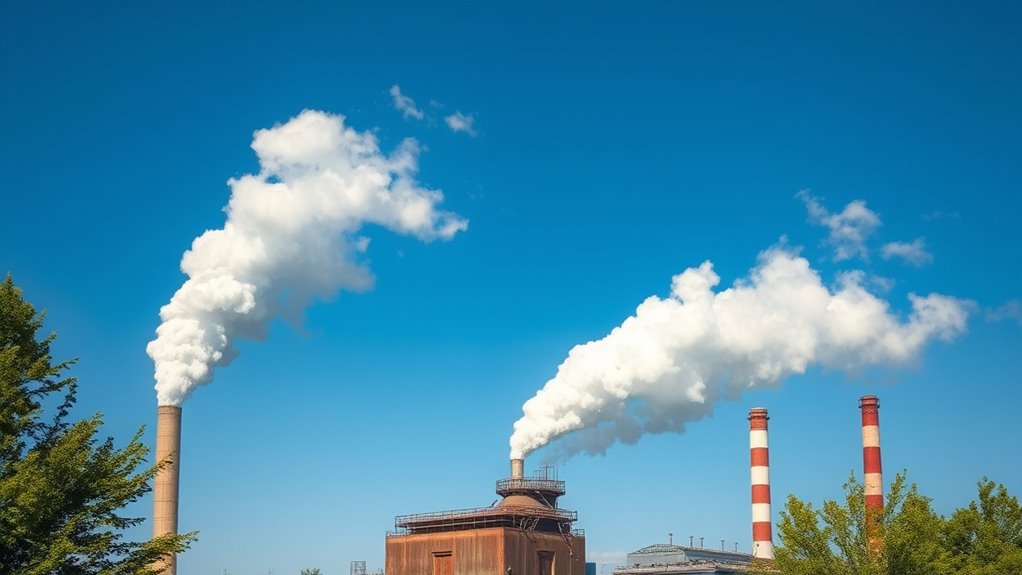
Reducing emissions is essential when it comes to steam boilers, and higher efficiency models help achieve this while also cutting costs.
To meet environmental regulations, consider adopting ultra-low NOx technology and exploring alternative fuels like biomass.
Regular maintenance is key to ensuring your steam boiler operates efficiently, complies with emissions standards, and minimizes its environmental footprint.
Emission Reduction Strategies
While addressing the environmental impact of steam boilers, it’s crucial to focus on effective emission reduction strategies.
First, consider implementing ultra-low NOx burners, which can dramatically cut nitrogen oxide emissions to just 10 nanograms per Joule. This meets stringent standards in many areas.
You can also enhance energy efficiency by installing economizers to recover heat from flue gases, reducing fuel use and greenhouse gas emissions.
Switching from coal or oil to natural gas greatly lowers particulate matter and sulfur dioxide emissions by over 90%, improving air quality.
Regular maintenance and tuning optimize combustion efficiency, leading to lower emissions and up to 97% Annual Fuel Utilization Efficiency.
Finally, alternative fuels like biomass minimize your carbon footprint while utilizing waste materials.
Environmental Regulations Compliance
Having explored emission reduction strategies, it’s important to understand the regulatory landscape governing steam boilers.
You’re facing stringent emissions regulations, especially for nitrogen oxides (NOx), measured in nanograms per Joule. Certain regions demand compliance with ultra-low NOx standards.
To comply with these regulations, focus on boilers with high Annual Fuel Utilization Efficiency (AFUE) ratings—95% or 997% % —which help lower emissions and minimize environmental impact.
The American Boiler Manufacturers Association (ABMA) provides significant guidelines to guarantee your operations don’t harm the environment.
Regular inspections, as mandated by OSHA, are crucial to maintaining compliance and guaranteeing efficiency.
Consider alternative fuels like biomass and refuse-derived fuel to meet emissions targets and lessen your environmental footprint.
Regulatory Standards for Steam Boilers
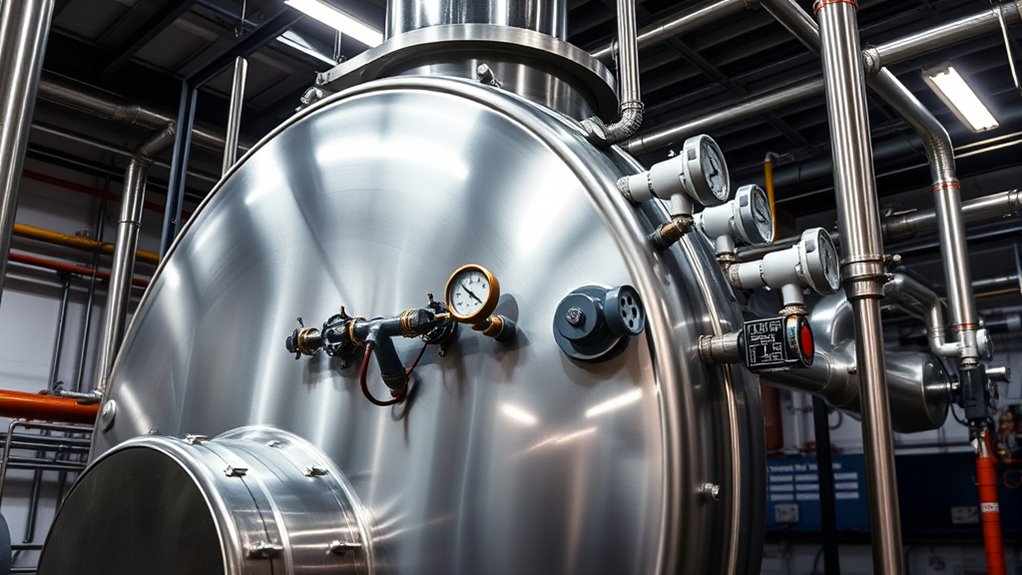
How do steam boilers guarantee safety and efficiency in their operation? They must comply with the Boiler and Pressure Vessel Code from the American Society of Mechanical Engineers (ASME). This code sets the foundation for safe design and operation.
As mandated by the Occupational Safety and Health Administration (OSHA), regular inspections ensure that safety devices work and check for leaks and proper combustion.
The American Boiler Manufacturers Association (ABMA), active since 1888, promotes industry safety and education.
Regulations may also require adherence to emissions standards like Ultra Low NOx, limiting nitrogen oxide emissions. Compliance with these standards is vital for operational safety, efficiency, and minimizing environmental impact.
You can’t ignore these regulations if you want a reliable steam boiler system.
Maintenance and Safety Practices
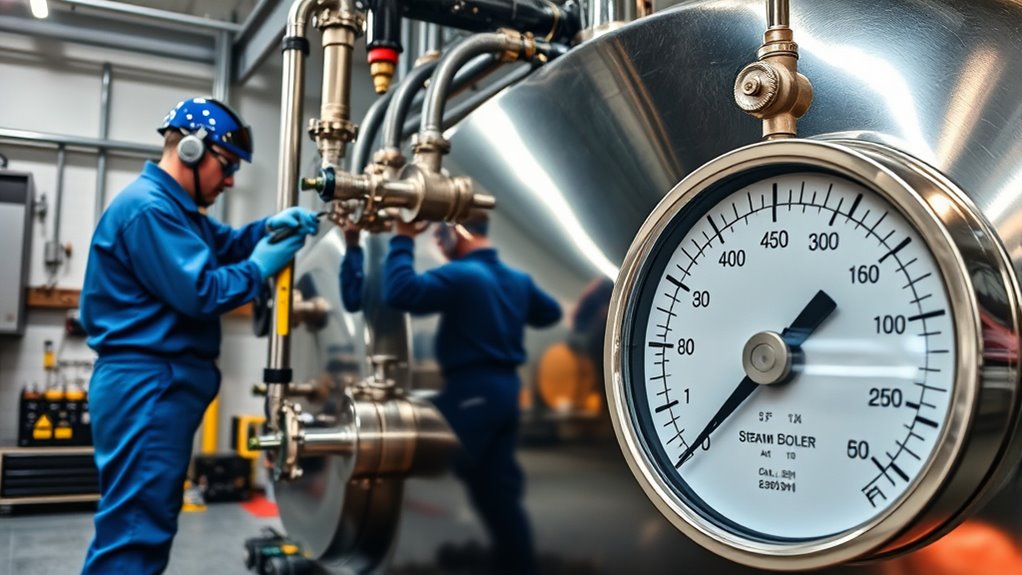
Guaranteeing regulatory compliance lays the groundwork for safe and efficient steam boiler operation, but maintaining that efficiency and safety requires continuous attention.
Regular inspections are essential to catch leaks and verify that combustion functions and safety devices work properly, as OSHA requires. You should check water levels, inspect pressure gauges, and test safety valves routinely to avoid failures and boost efficiency.
Performing blowdown procedures is vital for removing sludge and sediment, which can impair heat transfer. Establish a regular schedule to clean heat transfer surfaces, improving efficiency and cutting operational costs.
Adhering to the Boiler and Pressure Vessel Code (BPVC) by ASME guarantees your steam boiler consistently meets safety standards and performs at its best throughout its lifespan.
Choosing the Right Steam Boiler for Your Needs
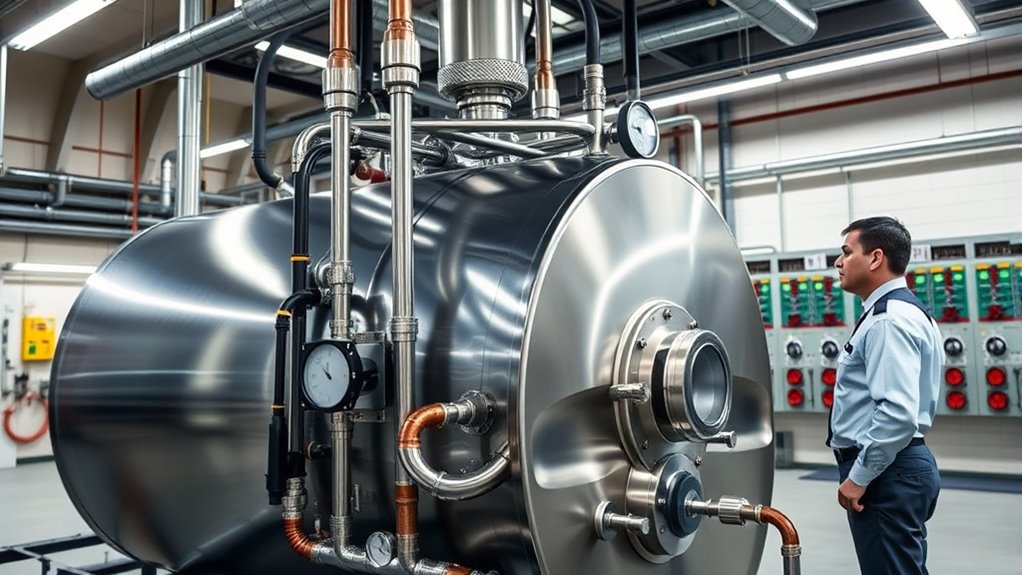
Why is choosing the right steam boiler so essential for your operations? The right boiler guarantees efficiency, reliability, and cost-effectiveness. Start by considering fuel type—natural gas, propane, or electricity—as it impacts efficiency and costs. Evaluate the BTU capacity to ensure it meets your application’s demands. You also need to assess operating pressure; low-pressure boilers (10-15 psi) are ideal for homes, while high-pressure ones (up to 800 psi) suit industrial needs. High AFUE ratings (95% or 97%) mean better energy efficiency and lower costs. Consider the material, too; cast iron offers durability and longevity.
| Fuel Type | BTU Capacity | Operating Pressure |
|---|---|---|
| Natural Gas | Sufficient | Low or High |
| Propane | Required | Depends |
| Electricity | Evaluated | Application-based |
Conclusion
When choosing a steam boiler, consider your specific needs and the boiler’s design—fire or water tubes. Understand the key components and heating mechanisms and guarantee the boiler meets regulatory standards. Regular maintenance is essential for safety and efficiency. Also, the environmental impact and emissions should be considered. By making an informed choice, you’ll guarantee that your boiler operates efficiently and safely, effectively serving your industrial or heating applications while complying with environmental regulations.
FAQs
1. Why Isn’t Steam Heat Used Anymore?
You might not choose steam heat because it’s less efficient and costlier to maintain. Modern systems like forced air or heat pumps heat spaces faster and more uniformly, pose fewer safety risks, and are more energy-efficient.
2. What Are the Pros and Cons of Steam Boilers?
You’ll find they offer efficiency, quick steam generation, and durability. However, they demand careful maintenance and monitoring for safety. Emissions and compliance with environmental regulations can be challenging, requiring attention to local standards for operation.
3. What Is the Difference Between a Water Boiler and a Steam Boiler?
Water and steam boilers are differentiated by their output; water boilers provide hot water, while steam boilers produce steam. Steam boilers operate at higher pressures and temperatures, making them suitable for industrial applications rather than residential use.
4. Where Are Steam Boilers Used?
You’ll find them in homes for heating, food and beverage industries for pasteurization and cleaning, power plants generating electricity, labs for experiments, and lumber kilns and breweries for drying wood and sanitizing kettles.
