A Guide to Single Phase Induction Motor and Their Applications
You’ve likely encountered single-phase induction motors frequently, perhaps without even realizing it. These motors are the unsung heroes behind your household appliances—think blenders, fans, and washing machines. They operate on a simple principle: a single alternating current passes through the motor, generating the necessary torque to drive your devices. However, their design’s simplicity belies their operation’s complexity and the nuance involved in choosing the right motor for the job. Considering their efficiency and the various starting mechanisms, you might wonder about their most suitable applications and limitations. What factors should you consider to harness their full potential?
Key Takeaways
- Single-phase induction motors are essential for operating household appliances efficiently.
- They utilize starting methods like split-phase, capacitor start, and shaded pole to initiate motion.
- The motor operates by inducing an electromotive force in the rotor via the stator’s electromagnetic field.
- Common types include split-phase, capacitor-start, and shaded-pole motors, each suitable for different application needs.
- These motors are simpler and more cost-effective than three-phase motors, though they may have higher energy consumption under heavy loads.
Understanding Single Phase Motors
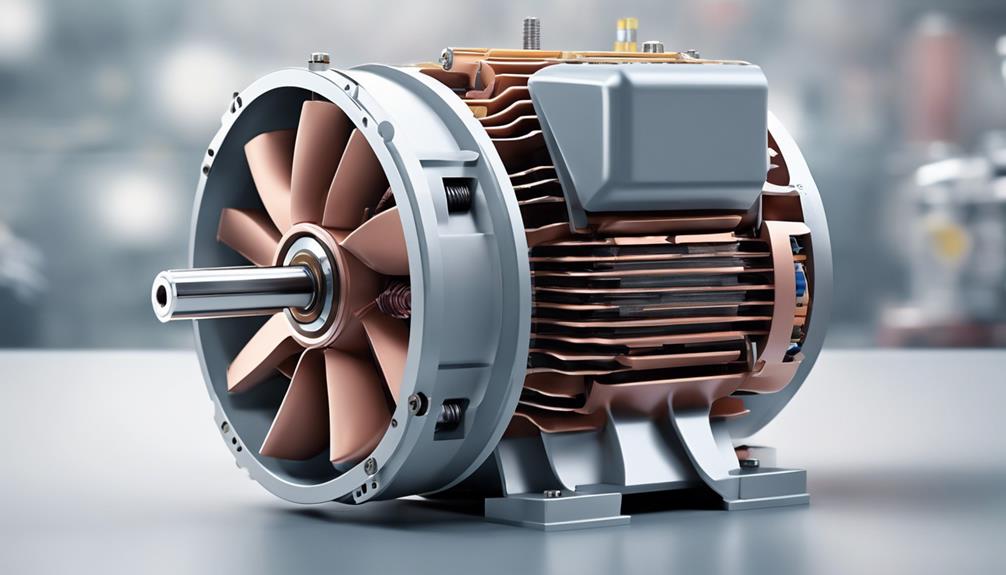
While single-phase induction motors are simpler than their three-phase counterparts, they play an important role in everyday appliances. You’ll find them in everything from your fridge to your fan, where high efficiency isn’t always crucial, but reliability is essential. Let’s explore why these motors are favored for such applications.
Firstly, single-phase motor efficiency is a key attribute that makes them suitable for household devices. They don’t need the complex setups that three-phase motors require, simplifying installation and maintenance. This efficiency mainly comes from their design and the way they operate using domestic AC power sources.
Moreover, the starting methods employed by single-phase motors greatly influence their performance. Unlike three-phase motors, they can’t start independently because they lack a rotating magnetic field. Different starting methods like the split-phase, capacitor start, and shaded pole techniques are used to overcome this. Each method adjusts the motor’s initial phase to create a temporary rotating field, kick-starting the motor. You’ll notice this when your air conditioner begins with a hum, or your washing machine starts with a jerk. These methods ensure that the motor starts reliably and runs efficiently once it reaches its operating speed.
Core Operating Principles
It’s fundamental to grasp their core operating principles to understand how single-phase induction motors function. These motors rely on a single-phase power supply but inherently can’t create a rotating magnetic field, which is important for continuous rotation. Here’s how they overcome this challenge:
- Rotor Design: The rotor, often a squirrel-cage type, is ingeniously designed to interact with a fluctuating magnetic field, allowing it to rotate despite the absence of a natural phase shift in the supply.
- Starting Methods: Various methods, such as using a start capacitor, a run capacitor, or both, are crucial. These components temporarily shift the phase of the current, enabling the motor to start and then run efficiently.
- Electromagnetic Induction: As the AC passes through the stator, it induces a current in the rotor. This interaction creates torque, the force needed to turn the rotor.
- Magnetic Synchronization: Once running, the rotor speeds up to nearly synchronize with the magnetic field’s frequency, minimizing slippage and optimizing performance.
Understanding these principles isn’t just academic—it’s a gateway to appreciating the ingenuity behind your everyday appliances. From your air conditioner to the blender in your kitchen, these motors are silently powering your life, hidden yet indispensable.
Common Types and Configurations
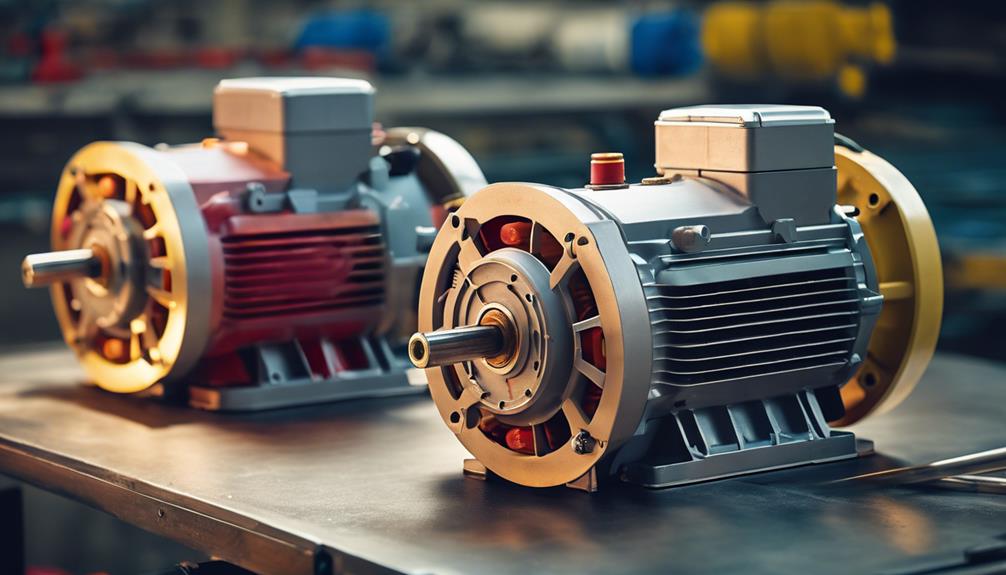
Single-phase induction motors come in various types and configurations, each suited to specific applications. You’ll find that the split-phase motor, capacitor-start motor, and shaded-pole motor are among the most common. Let’s explore how these types can impact motor efficiency and the role of winding materials.
The split-phase motor, known for its simple design, uses two windings, the start and the run winding, made from copper or aluminum. These materials are important in determining the motor’s efficiency and performance. Copper, having lower resistance, enhances efficiency but comes at a higher cost than aluminum.
Next, the capacitor-start motor, which includes a capacitor in the circuit to improve starting torque. This type is ideal for heavy-load situations. The capacitors and high-quality winding materials greatly enhance motor efficiency by ensuring a smoother and more powerful start.
Lastly, the shaded-pole motor, often used in low-power applications like fans and blowers, uses a copper ring to create a rotating magnetic field. While it’s the least efficient of the three, its construction is more economical and better suited for devices where high torque isn’t necessary.
Understanding these configurations helps you choose the right motor, balancing cost against efficiency and output requirements.
Key Components and Functions
Understanding the various types and configurations of single-phase induction motors, let’s now explore their key components and functions to see how they operate effectively. As you delve into the world of these motors, you’ll discover the essential parts that guarantee they run smoothly and efficiently.
- Stator: The motor housing coils’ stationary part that creates a magnetic field when energized. It’s pivotal for the effective transformation of electrical to mechanical energy. Your heart might race as you imagine the stator’s coils humming to life, a silent yet powerful force.
- Rotor: Positioned within the stator, the rotor rotates due to the magnetic field, ultimately driving the motor’s shaft. You can almost feel the spin, can’t you? It’s the very essence of motion and energy conversion in your motor.
- Capacitor: This component is often used to start the motor and keep it running efficiently. It is a lifeline, boosting the motor’s start and ensuring smooth operation.
- Bearing and Shaft: These ensure stable and balanced motion. Like the backbone of the motor, they support and carry the operational load, which is critical for longevity and performance.
Remember these components during motor maintenance to guarantee longevity and optimal functioning. Don’t overlook the installation requirements to secure safety and efficiency.
Advantages and Limitations
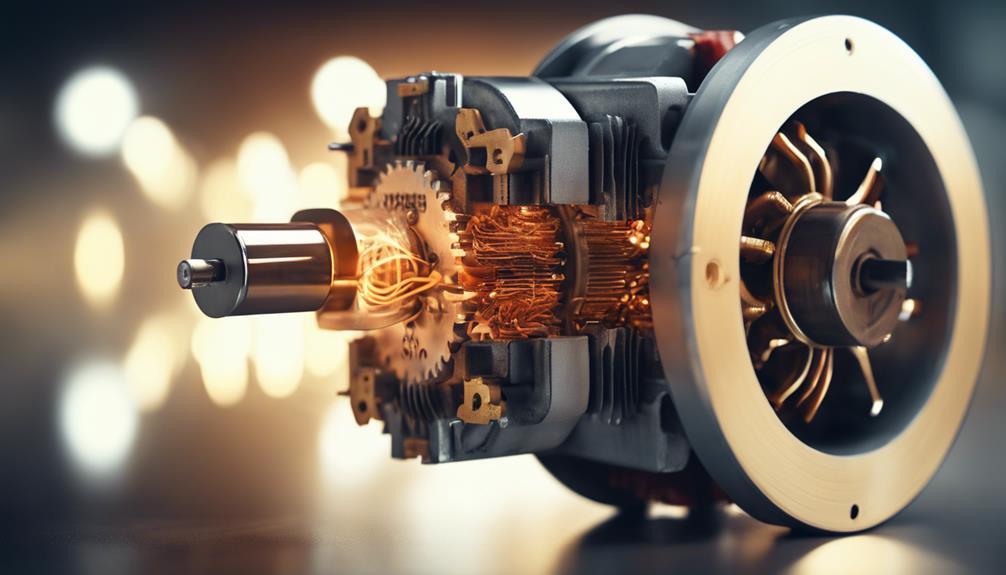
Let’s explore the advantages and limitations of single-phase induction motors to better understand their practical applications and constraints.
One of the major perks you’ll find with these motors is their simplicity and cost-effectiveness. They’re less complex than their three-phase counterparts, which means they’re not only easier to manufacture but also lighter on your wallet when it comes to initial purchase costs.
However, when considering efficiency factors, single-phase motors often lag behind. They tend to have lower efficiency and higher energy consumption, especially under heavy load conditions. This can lead to increased operational costs over time, a vital point if you’re aiming to optimize energy usage and cost.
Another limitation is their starting mechanism. Single-phase induction motors generally require additional starting circuits to initiate motion, as they can’t generate a rotating magnetic field on their own. This necessity adds to the overall cost implications and complexity of the system.
Despite these drawbacks, their simplicity offers a reliable solution in applications where high power isn’t essential. Yet, you’ll need to carefully weigh these efficiency and cost factors against your specific needs to determine if a single-phase induction motor is the right choice for your project.
Practical Applications and Uses
Due to their simplicity and cost-effectiveness, single-phase induction motors are frequently used in household appliances like fans, washing machines, and air conditioners. These motors not only power your daily conveniences but also enhance the quality of life with their efficiency and easy installation.
The applications of these motors extend beyond just household gadgets; they’re integral in tools and equipment that shape your surroundings. Imagine a world without these silent yet powerful helpers. Here are a few places where single-phase induction motors make a big difference:
- Ceiling Fans: They cool your rooms on sweltering summer days, quietly circulating air and providing comfort without a fuss.
- Microwave Ovens: Quick meals wouldn’t be as quick without these motors spinning the turntable, ensuring your food cooks evenly.
- Garden Tools: These motors help maintain your garden’s beauty, from lawn mowing to trimming hedges.
- Garage Door Openers: They lift heavy garage doors effortlessly, greeting you after a long day’s work.
The motor efficiency in each application guarantees that energy consumption is kept to a minimum, while the straightforward installation procedures mean you won’t have to worry about extensive setups. These motors are unsung heroes, making life easier and smoother.
Conclusion
You’ve discovered that single-phase induction motors are not only cost-effective but also integral to many of the devices you use daily. From household appliances to industrial machines, these motors adapt through various starting methods to meet specific needs.
While they have some limitations compared to three-phase motors, their simplicity and efficiency make them an excellent choice for many applications. Remember, choosing the right motor type is essential for the best performance and energy efficiency in your projects.