Exploring the Depths of RLC Circuit: What Secrets Does It Hold?
Delving into the intricate world of electrical engineering, RLC circuits stand as enigmatic entities, holding the key to a myriad of technological marvels. The innovation potential lies within their coils and capacitors as engineers unravel the complexities of their dynamics and applications. Let us embark on a journey to uncover the mysteries of the RLC circuit and glimpse the wonders it conceals.
What is an RLC Circuit?
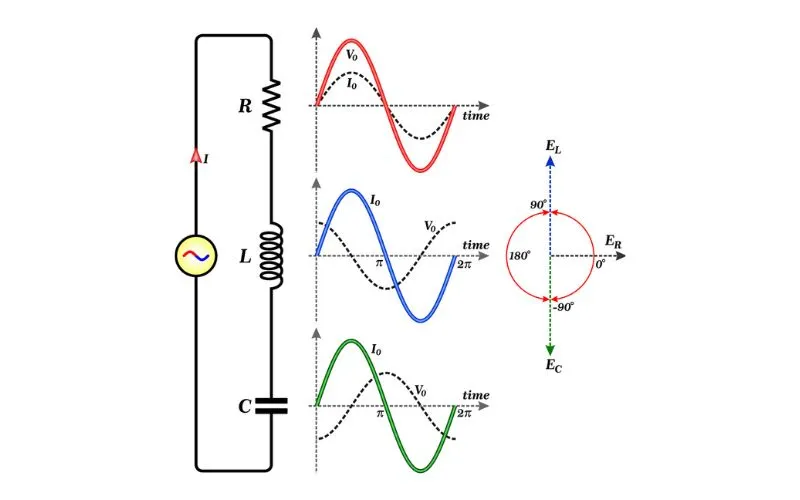
At the heart of electronic systems lies the RLC circuit, a cornerstone of electrical engineering. Comprising resistors, inductors, and capacitors embody the fundamental interplay between these components in shaping the flow of electrical currents. The RLC circuit serves as a conduit for energy, exhibiting dynamic behavior influenced by the unique characteristics of its constituent elements. But what exactly defines an RLC circuit, and how does it differ from its components? Let us delve deeper into the essence of the RLC circuit and unravel its essence.
Understanding the Components of an RLC Circuit
RLC circuits have three primary components: resistors, inductors, and capacitors. Each component plays a distinct role in shaping the behavior of the circuit:
- Resistors: Resistors impede the current flow in the circuit and dissipate electrical energy in the form of heat. They contribute to controlling resistance and damping effects within the RLC circuit.
- Inductors: Inductors store energy as a magnetic field when current flows through them. They resist changes in current and exhibit behaviors like self-induction and mutual induction.
- Capacitors: Capacitors store electrical energy in an electric field. They resist changes in voltage and exhibit properties like capacitance and reactance.
Analyzing RLC Circuit

Impedance: The impedance of an RLC circuit determines its response to alternating current (AC). It is a complex quantity, incorporating both resistance and reactance. The impedance of an RLC circuit can be calculated using the following formula:
Z=R2+(XL−XC)2
Z is the impedance, R is the resistance, inductive reactance, and XC is the capacitive reactance.
Frequency Response: RLC circuits exhibit varying responses to different alternating current frequencies. This behavior is characterized by resonance, where the circuit reaches maximum impedance at a particular frequency. The resonant frequency () of an RLC circuit can be calculated using the formula:
The Dynamics of RLC Circuit
RLC circuits exhibit dynamic behavior governed by the interaction of resistors, inductors, and capacitors. Understanding these dynamics is crucial for analyzing circuit performance and designing optimized systems. Let’s delve into the key aspects of the dynamics of the RLC circuit:
Underdamped Regime
In the underdamped regime, the damping factor is less than critical, leading to oscillatory behavior in the circuit. When subjected to a sudden change in input, such as a step function, the circuit responds with transient oscillations before settling into a steady-state condition. These oscillations decay over time, but the circuit exhibits periodic behavior.
Overdamped Regime
In contrast, the overdamped regime occurs when the damping factor exceeds the critical value. In this scenario, the circuit response lacks oscillations, and a gradual approach to equilibrium characterizes the transient behavior. The damping effect dominates the system, exponentially causing the response to decay without oscillatory motion.
Critically Damped Regime
The critically damped regime occurs when the damping factor is precisely at the critical value. This results in the fastest possible approach to equilibrium without oscillations. The circuit response transitions rapidly from the initial to the steady state, minimizing overshoot and settling time.
Applications of RLC Circuits
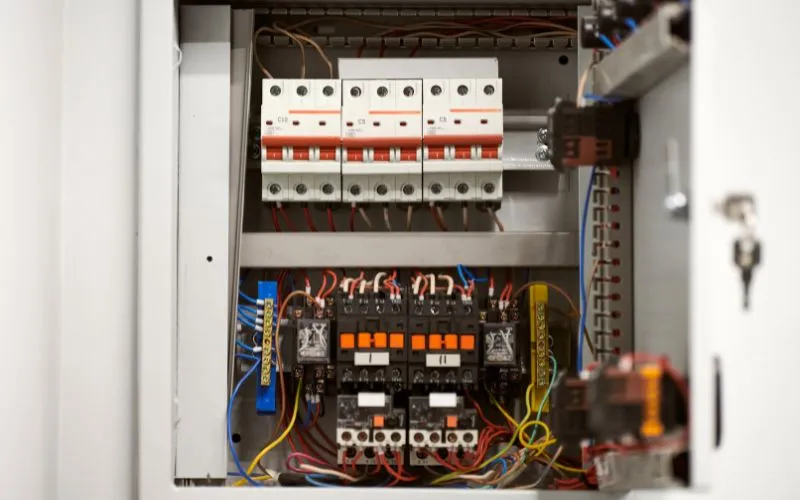
RLC circuits are fundamental building blocks in various technological domains, finding applications in various systems and devices. Let’s explore some key areas where RLC circuits play a crucial role:
Electronics
RLC circuits are pervasive in electronic systems, contributing to the functionality of numerous devices:
- Filters: RLC circuits are employed in the design of filters to pass or attenuate specific frequencies of electrical signals selectively. They find applications in audio processing, communication systems, and signal analysis.
- Oscillators: Oscillators generate periodic waveforms in clock circuits, frequency synthesizers, and radio frequency (RF) transmitters. RLC circuits form the core components of oscillators, facilitating stable and precise frequency generation.
- Amplifiers: RLC circuits are utilized in amplifiers to boost the amplitude of electrical signals while maintaining signal integrity. They are integral to audio, radio frequency, and instrumentation amplifiers.
Communication Systems
Communication networks rely on RLC circuits for signal processing, modulation, and transmission:
- Signal Processing: The RLC circuit processes and conditions electrical signals in communication systems. It helps filter out unwanted noise, enhance signal quality, and ensure reliable transmission.
- Modulation: The RLC circuit modulates signals for transmission over communication channels. It assists in techniques such as amplitude modulation (AM), frequency modulation (FM), and phase modulation (PM), enabling efficient data transmission.
- Transmission Lines: The RLC circuit models the behavior of transmission lines, guiding the design and optimization of communication infrastructure. It helps analyze signal propagation, impedance matching, and signal attenuation in transmission mediums.
Power Distribution
RLC circuits play a vital role in electrical power systems, contributing to efficiency, stability, and reliability:
- Power Factor Correction: RLC circuits are utilized for power factor correction in electrical networks, improving the efficiency of power distribution systems. They mitigate reactive power consumption, reducing energy losses and enhancing system performance.
- Impedance Matching: RLC circuits facilitate impedance matching between power sources and loads, optimizing power transfer efficiency. They ensure maximum power delivery by minimizing reflections and mismatch losses in transmission lines.
- Voltage Regulation: RLC circuits are employed in voltage regulation circuits to stabilize and control voltage levels within electrical grids. They help maintain consistent voltage output, safeguard sensitive equipment, and ensure reliable operation.
In summary, RLC circuits play indispensable roles in electronics, communication systems, and power distribution, driving innovation and advancement across various technological domains. Their versatility and effectiveness make them indispensable components in modern engineering applications.
Conclusion
In conclusion, the dynamics of RLC circuits encapsulate a rich and intricate interplay between resistors, inductors, and capacitors, shaping the behavior of electrical systems across a spectrum of applications. Whether navigating the oscillatory realms of underdamped regimes, the gradual equilibriums of overdamped scenarios, or the finely tuned transitions of critically damped conditions, engineers unlock a realm of possibilities in optimizing circuit performance. Understanding transient and steady-state responses, coupled with a mastery of frequency-dependent behavior and resonance phenomena, empowers designers to craft systems that deliver efficiency, stability, and reliability.
As technology advances, the insights gained from delving into the dynamics of RLC circuits serve as a cornerstone for innovation, driving progress in fields ranging from electronics and communication systems to power distribution. Embracing the complexities of RLC circuit dynamics paves the way for breakthroughs that shape the future of electrical engineering and technology.
FAQs
What is the significance of resonance in RLC circuits?
Resonance in RLC circuits is crucial as it enables efficient energy transfer at a specific frequency. This phenomenon is utilized in various applications, such as tuning circuits in radios and maximizing power transfer in electrical systems.
How do RLC circuits differ from purely resistive circuits?
Unlike purely resistive circuits, RLC circuits incorporate inductors and capacitors, introducing reactive elements that influence the phase relationship between voltage and current. This dynamic behavior leads to phenomena such as resonance and frequency-dependent impedance.
What factors affect the damping of an RLC circuit?
Factors such as resistance, inductance, and capacitance influence the damping of an RLC circuit. External factors such as temperature and environmental conditions can also impact damping, altering the circuit’s transient and steady-state behavior.