The EMF Equation Role in Generator Performance
Generators play a vital role in our modern world, supplying the electricity that powers our homes, industries, and technology. To ensure a reliable and consistent electricity supply, it is crucial to understand the factors that govern generator performance. At the heart of a generator’s operation lies the Electromotive Force (EMF) equation, a fundamental principle that profoundly influences its efficiency and capabilities. Maxwell’s equations, charge, permittivity, permeability, vacuum, speed of light, Ampere, and Tesla are the key elements that form the basis of this influential principle.
Optimizing Generator Efficiency
The efficiency and performance of generators are crucial factors in ensuring a reliable and consistent electricity supply. At the heart of their operation lies the Electromotive Force (EMF) equation, a fundamental principle that governs their functioning. Engineers and enthusiasts must understand the EMF equation and its role in generator performance. This equation provides valuable insights into the generation of electrical energy, the relationship between magnetic fields and currents, and the factors that influence the overall efficiency of generators. In this article, we will delve into the intricate workings of the EMF equation and explore how it shapes the performance and capabilities of generators, shedding light on the key elements that impact their efficiency and power output. By grasping the significance of the EMF equation, we can uncover the secrets behind optimizing generator designs and ensuring a seamless flow of electrical energy.
A total number of armature conductors = No. of slots * No.of conductors/slot.
P = No. Of poles.
A = No. Of parallel paths in the armature.
N = armature rotation in rpm.
E = EMF induced in any parallel path in the armature.
Generated EMF = e.m.f. Generated in one of the parallel paths.
Average EMF generated/conductor = (dφ/dt) volt.
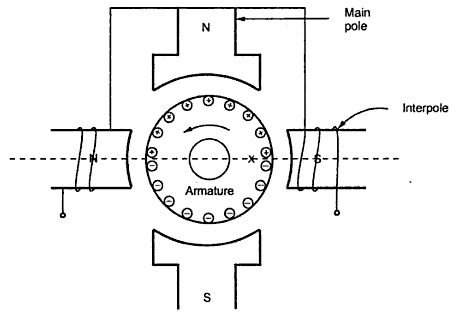
Now, flux cut/conductor in one revolution, dφ = (φ*P) web.
Number of revolutions per second = N/60;
Then, time for one course, dt = 60/N second.
Hence, according to FFaraday’slaws of electromagnetic induction,
EMF generated/conductor= (dφ/dt) = (φZPN/120) Volt.
For a wave-wound generator
No. of parallel paths is 2
No. of conductors (in series) in one course = Z/2
For a lap-wound generator
No. of similar tracks = P
No. of conductors (in series) in one pcourse= Z/P
Then, EMF generated/path = [(φPN/60)*(Z/P)] = (φZN/60) Volt.
In general, generated EMF = [(φPN/60)*(Z/A)]= (φZPN/60A) Volt
Where A=2 for wave-winding.
A= P for lap-winding.
Understanding the EMF Equation: An Overview
What is the EMF equation?
The Electromotive Force (EMF) equation is a fundamental principle in electromagnetism that relates the voltage or electromotive force induced in a conductor to the rate of change of magnetiFluxux through the conductor. Simply put, it quantifies the generation of electrical energy in a generator. The EMF equation provides a mathematical representation of the relationship between magnetic fields and currents, forming the basis for understanding the operation and performance of generators.
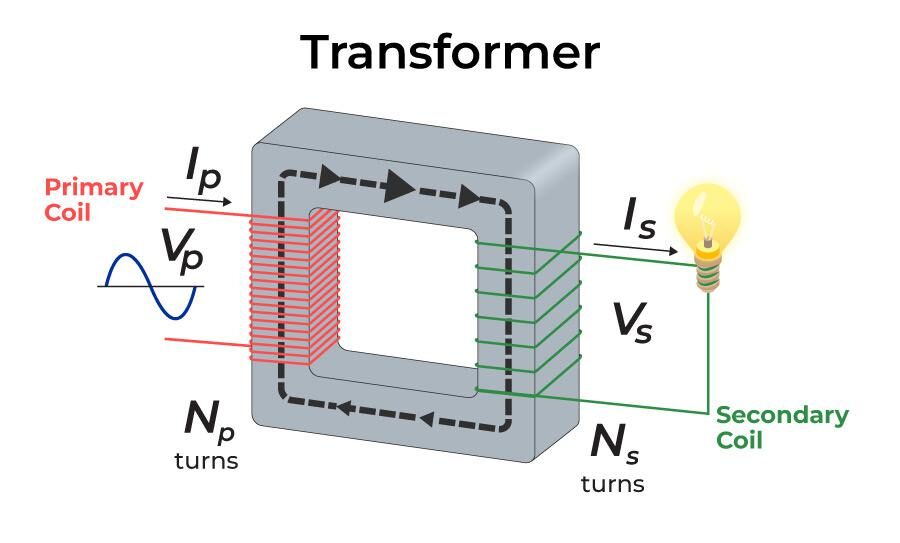
According to the EMF equation, The electromotive force (EMF) generated is directly proportional to the rate at which the magnetic flux changes over time. Mathematically, it can be expressed as:
EMF = -dϕ/dt
Where The term EMF stands for induced electromotive force. Meanwhile, dϕ/dt refers to the rate of change of magnetiFluxux. When there is a negative sign in the equation, the induced electromagnetic force opposes the change in magnetiFluxux. The EMF equation reveals that when there is a change in the magnetic field, such as through the rotation of a magnet or a varying current passing through a coil, an EMF is induced in the conductor.
Components of the EMF equation
The EMF equation consists of several key components that play a crucial role in determining the magnitude and characteristics of the induced electromotive force. Understanding these components is essential for comprehending the factors that influence generator performance. Here are the main features of the EMF equation:
MagnetiFluxux (ϕ)
Represents the measure of magnetic field lines passing through a given area. It is a fundamental concept in electromagnetism, denoted by the symbol ϕ. The strength and density of the magnetic field are directly linked to the magnetiFluxux. In the context of the EMF equation, Determining the magnitude of the induced electromotive force depends greatly on the rate of change of magnetiFluxux, denoted by (dϕ/dt).
Area (A)
Area (A) is the cross-sectional area of the conductor or coil through which the magnetiFluxux passes. It is an important parameter that affects the overall magnetic flux linkage and, consequently, the induced EMF. The larger the area, the greater the magnetiFluxux passing through it, resulting in a higher induced EMF.
Number of Turns (N)
The number of turns (N) is the total number of wire turns in a coil or conductor. It influences the overall magnetic flux linkage, as each turn contributes to the full magnetic field strength and induced EMF. Increasing the number of turns enhances the magnetic flux linkage and, subsequently, the induced EMF.
Change of Magnetic Flux (dϕ/dt)
The rate of change of magnetiFluxux (dϕ/dt) is a critical component of the EMF equation. It represents the speed at which the magnetiFluxux passing through the conductor changes over time. The rate of change can be influenced by various factors, such as the generator’s rotational speed or the coil’s current variation—a higher rate of change of magnetic flux results in a higher induced electromotive force.
Engineers can optimize generator designs by manipulating these components to achieve specific performance objectives. Factors such as the size and shape of the conductor, the number of wire turns, and the speed of flux variation can be carefully adjusted to enhance generator efficiency, voltage regulation, and overall performance. The components of the EMF equation provide valuable insights into the inner workings of generators and serve as the foundation for designing and improving electrical power generation systems.
Importance of the EMF equation in generator design
The EMF equation is significant in generating generators as it is a fundamental principle governing their operation and performance. Understanding and utilizing the EMF equation is crucial for engineers and designers in several ways:
Voltage Regulation
The EMF equation allows engineers to establish a relationship between the induced electromotive force and the magnetic flux rate of change. This understanding is essential for achieving voltage regulation in generators. By carefully manipulating the components of the equation, such as the magnetic field strength and the rotational speed, engineers can design generators that maintain a stable voltage output, even under varying load conditions. This ensures reliable operation and prevents voltage fluctuations that could damage connected electrical equipment.
Efficiency Optimization
The EMF equation plays a vital role in optimizing the efficiency of generators. By considering the various components of the equation, such as the number of turns, the area, and the rate of change of magnetiFluxux, engineers can fine-tune generator designs to maximize energy conversion. Minimizing losses and optimizing the conversion of mechanical energy to electrical energy leads to higher overall efficiency. This is crucial for reducing fuel consumption, operational costs, and environmental impact.
Power Output Control
The EMF equation provides insights into the factors that influence the power output of a generator. Engineers can design generators capable of delivering the desired power output by understanding the relationship between magnetiFluxux, the number of turns, and the rate of change oFluxux. This knowledge is crucial for sizing and selecting generators based on specific application requirements, ensuring they can efficiently meet the electrical load demands.
Design Optimization
The EMF equation guides engineers in optimizing generator design. By understanding the impact of different variables on the equation, such as the geometry of the conductors, the magnetic field strength, and the winding configuration, designers can make informed decisions to enhance generator performance. This includes selecting appropriate materials, improving cooling systems, and reducing losses through advanced insulation techniques. Optimizing the design based on the EMF equation results in more compact, reliable, and cost-effective generators.
Conclusion
In conclusion, the EMF equation is of the the utmost importance in generator design. It enables engineers to achieve voltage regulation, optimize efficiency, control power output, and optimize the overall design of generators. By leveraging the EMF equation’s insights, designers can create generators that meet specific requirements, ensuring reliable operation, energy efficiency, and optimal performance.
FAQs
What is an Electromagnetic Force (EMF) generator?
An Electromagnetic Force (EMF) generator is a device that converts mechanical energy into electrical energy through electromagnetic induction. It operates on the principle that a change in magnetiFluxux through a conductor induces an electromotive force (EMF) in the conductor, generating electrical current.
How does an EMF generator work?
An EMF generator works based on FFaraday’sLaw of Electromagnetic Induction, which states that a change in magnetiFluxux through a coil of wire induces an EMF (voltage) in the wire. Here it works:
- Magnetic Field: The generator contains magnets or electromagnets that create a magnetic field.
- Motion: A rotor or armature with wire coils rotates within the magnetic field.
- Induction: As the rotor spins, the magnetiFluxux through the coils changes, inducing an EMF in the wire.
- Current Flow: This induced EMF causes an electrical current to flow through the external circuit connected to the generator.
What are the different types of EMF generators?
There are several types of EMF generators, including:
- DC Generators: Produce direct current (DC) electricity using a commutator to convert the induced AC voltage in the armature windings to DC voltage.
- AC Generators (Alternators): Produce alternating current (AC) electricity by allowing the induced voltage in the armature windings to alternate as the magnetic field rotates.
- Permanent Magnet Generators: Using permanent magnets to create the magnetic field provides a simple and efficient design.
- Electromagnetic Generators: These use electromagnets powered by an external DC source to create a stronger and more controllable magnetic field.
What are the common applications of EMF generators?
EMF generators are used in a variety of applications, including:
- Power Generation: Large-scale power plants use alternators to generate electricity for the grid.
- Renewable Energy: Wind turbines and hydroelectric generators convert mechanical energy from wind and water into electrical energy.
- Automotive: Alternators in vehicles generate electricity to power the electrical systems and charge the battery.
- Portable Generators: Provide backup power for homes, businesses, and outdoor activities.
- Industrial Machinery: Power various machinery and equipment in manufacturing and processing industries.
How does an EMF generator differ from an electric motor?
An EMF generator and an electric motor are essentially reverse processes of each other:
- EMF Generator: Converts mechanical energy into electrical energy through electromagnetic induction.
- Electric Motor: Converts electrical energy into mechanical energy by using electromagnetic forces to produce motion.
Despite their different functions, both devices operate on similar principles and can sometimes be used interchangeably in certain applications.
What are the advantages and disadvantages of EMF generators?
Advantages:
- Efficiency: High efficiency in converting mechanical energy to electrical energy.
- Reliability: Durable and can operate for long periods with minimal maintenance.
- Versatility: Used in various applications, from small portable devices to large power plants.
Disadvantages:
- Initial Cost: It can be expensive to design and install, especially for large-scale applications.
- Maintenance: Regular maintenance is required to ensure optimal performance and longevity.
- Noise and Vibration: Mechanical components can produce noise and vibrations, which may be undesirable in certain environments.
Understanding the basics, types, and applications of electromagnetic force (EMF) generators can help select the selector for specific needs and optimize its use in industries.