Understanding D.C. Shunt Generators: Operation and Uses

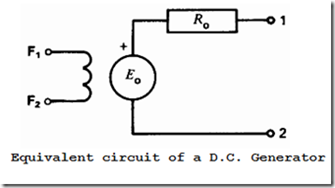
How is self-excitation achieved?

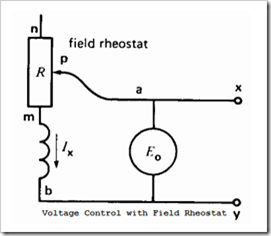
Controlling the Voltage of a Shunt Generator
FAQs
What is a DC shunt generator?
A DC shunt generator is a direct current (DC) generator in which the field windings are connected in parallel (or shunt) with the armature winding. In this configuration, the field winding receives full voltage from the generator output, which allows it to produce a consistent magnetic field, essential for generating a stable DC voltage. DC shunt generators are commonly used in applications that require a relatively constant output voltage under varying load conditions.
How does a DC shunt generator work?
The working principle of a DC shunt generator is based on electromagnetic induction, where mechanical energy is converted into electrical energy. Here’s how it works:
- Magnetic Field Generation:
- The field windings, connected in parallel with the armature, generate a magnetic field when a current flows through them. This magnetic field is essential for inducing a voltage in the armature winding.
- Armature Rotation:
- When the generator’s armature (rotor) rotates within the magnetic field created by the field windings, an electromotive force (EMF) is induced in the armature conductors according to Faraday’s law of electromagnetic induction.
- Current Flow and Output Voltage:
- When the generator is connected to an external load, the induced EMF in the armature generates a current. The speed of the armature rotation and the strength of the magnetic field determine the generator’s output voltage.
- Voltage Regulation:
- The field current in a DC shunt generator is relatively small because the field winding has high resistance. As a result, the voltage remains fairly constant, even with changes in the load, making it suitable for applications requiring stable voltage.
- Self-Excitation:
- DC shunt generators often exhibit self-excitation, where residual magnetism in the iron core provides enough initial magnetic field to generate a small voltage. This small voltage then increases the current in the field winding, strengthening the magnetic field and further increasing the output voltage until the generator reaches its operating point.
What are the types of DC shunt generators?
There are primarily two types of DC shunt generators, categorized based on how they are excited:
- Self-Excited DC Shunt Generator:
- Description: The field winding is connected directly across the generator’s output terminals in a self-excited DC shunt generator. The generator uses its output to supply the field current, relying on residual magnetism to initiate the process.
- Application: These generators are commonly used in power supply applications where a relatively constant voltage is required, such as in battery charging, electroplating, and small power supply systems.
- Separately Excited DC Shunt Generator:
- Description: In a separately excited DC shunt generator, the field winding is powered by an external DC source, independent of the generator’s output. This allows for more precise control of the field current and, consequently, the output voltage.
- Application: Separately excited generators are used in applications requiring fine control of output voltage, such as laboratory testing, experimental setups, and industrial processes.
What are the applications of DC shunt generators?
DC shunt generators are used in various applications because they provide a stable output voltage. Some common applications include:
- Battery Charging:
- Application: DC shunt generators are often used to charge batteries, particularly in automotive and industrial settings. Their ability to maintain a constant voltage is crucial for efficient and safe battery charging.
- Electroplating:
- Application: In electroplating processes, where a steady and controlled voltage is required, DC shunt generators ensure a uniform deposition of metal on the workpiece.
- Excitation of Alternators:
- Application: DC shunt generators provide excitation to the field windings of large alternators (synchronous generators) in power plants. The shunt generator’s stable output voltage helps maintain consistent excitation.
- Small Power Supply Systems:
- Application: In small-scale power supply systems, such as laboratories or workshops, DC shunt generators provide a stable DC power source for various equipment and instruments.
- Field Testing:
- Application: DC shunt generators are used in field testing of electrical equipment and systems, where a stable DC voltage is required for accurate testing and calibration.
What are the advantages and disadvantages of a DC shunt generator?
Advantages:
- Stable Output Voltage:
- Advantage: The field winding’s parallel connection helps maintain a relatively constant output voltage, even with varying loads, making it suitable for applications requiring voltage stability.
- Self-Excitation:
- Advantage: DC shunt generators can self-excite, meaning they can generate voltage from residual magnetism without needing an external power source to start the process.
- Easy Voltage Control:
- Advantage: A DC shunt generator’s output voltage can be easily controlled by adjusting the field current, providing flexibility in various applications.
Disadvantages:
- Poor Overload Capacity:
- Disadvantage: DC shunt generators have limited overload capacity, meaning they cannot handle sudden increases in load without a significant voltage drop.
- Field Winding Heating:
- Disadvantage: The field windings in a shunt generator can become hot under heavy loads, potentially leading to insulation failure if not properly managed.
- Sensitivity to Speed Variations:
- Disadvantage: The output voltage of a DC shunt generator is sensitive to changes in the speed of the armature. Significant speed variations can lead to fluctuations in voltage.
How do I maintain a DC shunt generator?
Proper maintenance of a DC shunt generator is essential for its efficient operation and longevity. Here are some maintenance tips:
- Regular Inspection:
- Tip: Inspect the generator regularly for signs of wear and tear, such as worn brushes, loose connections, and overheating of the field windings.
- Brush and Commutator Maintenance:
- Tip: Ensure the brushes are properly seated and make good contact with the commutator. Clean the commutator surface regularly to prevent sparking and ensure smooth operation.
- Lubrication:
- Tip: Lubricate the bearings and other moving parts according to the manufacturer’s recommendations to reduce friction and wear.
- Cooling:
- Tip: Ensure that the generator’s cooling system is functioning properly to prevent overheating the armature and field windings, especially under heavy loads.
- Voltage Regulation Check:
- Tip: Periodically check the voltage regulation of the generator and adjust the field current as needed to maintain stable output voltage.
- Insulation Testing:
- Tip: Test the insulation resistance of the windings to detect any potential degradation or faults that could lead to short circuits or failures.
Understanding the working principles, applications, and maintenance of DC shunt generators can help ensure their efficient operation and longevity in various electrical systems.