Common Stator Issues: Troubleshooting Guide for Beginners
You might face various issues with your ATV’s stator, including weak or dead batteries, dim or flickering lights, and difficulty starting the engine. These problems can also lead to engine stalling and malfunctions in other electrical components. It is crucial to inspect the stator for faults, check power output, test voltage, and ensure all connections are secure. Addressing these issues promptly can prevent accidents and maintain your ATV’s performance. Want to know how to tackle these common stator problems effectively? Let’s explore the steps and techniques to save time and costly repairs.
Key Takeaways
- A weak or dead battery often indicates a faulty stator preventing proper charging.
- Dim or flickering lights suggest power supply issues caused by a malfunctioning stator.
- Difficulty starting the ATV can stem from inadequate power supplied by a defective stator.
- Engine stalling may result from inconsistent electrical supply due to a faulty stator.
- Electrical component malfunctions, including sensor and control system issues, can be traced back to a problematic stator.
Weak or Dead Battery
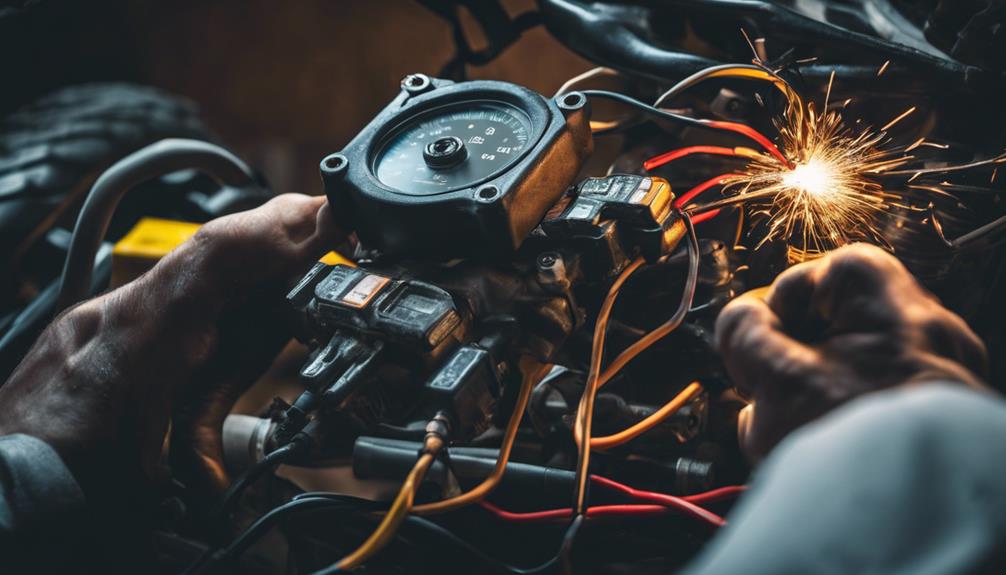
Experiencing a weak or dead battery is a common indicator of a faulty stator, as the stator’s failure prevents the battery from charging properly. When the stator isn’t working correctly, your battery won’t maintain its charge, leading to frequent jump-starts or regular battery replacements. These are clear signs of a faulty stator.
You might notice that your ATV struggles with ignition, reflecting a diminished battery charge caused by the failing stator. In such cases, the engine may turn over slowly or not at all. This issue stems from the stator’s inability to provide a consistent charge, which is necessary for keeping the battery at peak levels.
If you’re constantly facing battery problems, it’s important to inspect the stator. A faulty stator directly impacts the battery’s performance, and overlooking this can leave you stranded with an unresponsive ATV. Diagnosing and addressing stator issues early can save you from unnecessary hassles.
You may need to replace the old, failing stator with a new one to resolve this. This guarantees your battery gets the proper charge, restoring your ATV’s ignition reliability and overall performance. Don’t ignore these signs of a faulty stator; taking action promptly can make all the difference.
Dim or Flickering Lights
Dim or flickering lights on your ATV often indicate stator problems affecting the power supply to your headlights and taillights. When the stator fails, it can lead to insufficient power, causing your lights to dim or flicker. This issue can impair visibility and compromise safety, especially during nighttime riding. Proper inspection of the stator is essential to maintaining the proper function of your ATV’s lights.
Troubleshooting dim or flickering lights begins with checking the stator’s power output. If the stator isn’t delivering adequate power, it can lead to dim lights, making it harder to see and be seen on the trails. Addressing these underlying issues promptly can prevent accidents and improve your overall riding experience.
Here’s a quick reference table to help you troubleshoot:
| Symptom | Possible Cause | Solution |
|---|---|---|
| Dim lights | Stator fails | Inspect and replace stator |
| Flickering lights | Insufficient power | Check power supply |
| Poor visibility | Underlying issues | Perform proper inspection |
Difficulty Starting the ATV
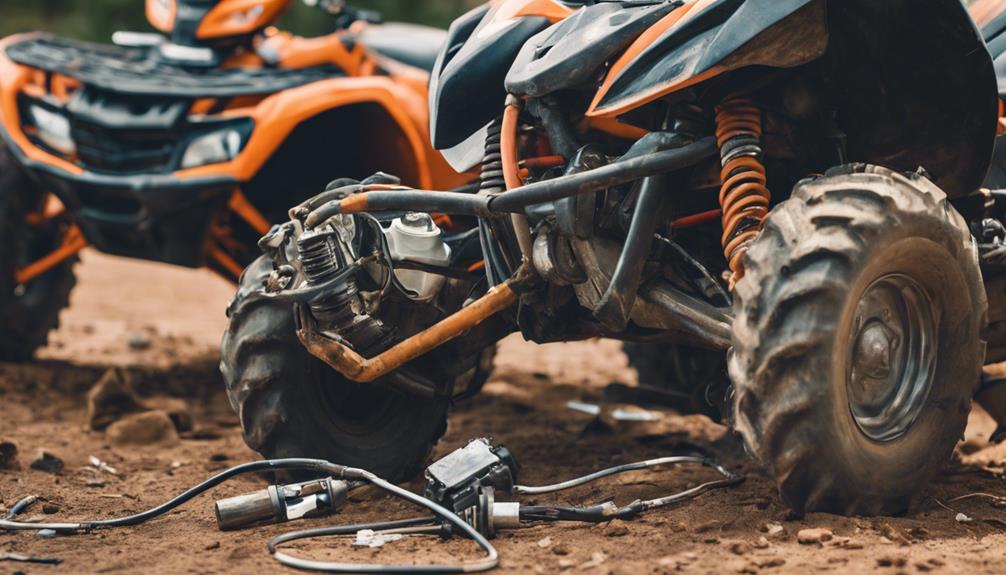
Starting your ATV can be challenging when the stator isn’t working properly. A faulty stator produces inadequate power for the starter motor, causing beginning difficulties. You might notice slow or hesitant cranking, which makes the engine struggle to come alive. This can be incredibly frustrating, especially if you’re excited to hit the trails.
When your ATV has starting difficulties, examining the stator is crucial. It plays a vital role in ignition and battery charging, supplying the required power for smooth engine operation. A defective stator can also result in your ATV stalling shortly after starting, indicating a lack of consistent power.
To troubleshoot these issues, check for:
- Inadequate power: Ensure your battery is fully charged and inspect the stator for wear or damage.
- Excessive heat: Overheating can diminish the stator’s performance, so look for signs of heat damage.
- Ignition system problems: Confirm that all ignition components are working properly and receiving sufficient power from the stator.
Engine Stalling
While starting issues clearly indicate a faulty stator, engine stalling during operation is another major indicator. If your ATV stalls while riding, it can be both frustrating and hazardous. A common cause of engine stalling is an inconsistent electrical supply from a malfunctioning stator, which disrupts the ignition system and impacts fuel injection. These disruptions can significantly impact overall engine performance.
A faulty stator can cause your ATV to stall shortly after starting, making the vehicle unreliable. When you experience frequent engine stalling, inspecting the stator is vital. This component is essential for providing a consistent electrical supply to the ignition system and fuel injection, ensuring smooth engine performance.
Here’s a quick troubleshooting guide for engine stalling:
| Symptom | Possible Cause | Action Needed |
|---|---|---|
| Engine stalls while riding | Inconsistent electrical supply from stator | Inspect and replace stator if needed |
| Stalls shortly after starting | Faulty stator affecting ignition system | Test stator output voltage |
| Inconsistent engine performance | Disrupted fuel injection | Check connections and stator condition |
| Frequent stalling | Malfunctioning stator | Consult a professional mechanic |
Electrical Component Malfunctions
When a stator starts malfunctioning, it can lead to a host of electrical component issues in your ATV. The stator powers various electronic components, including sensors and control systems, which are important for the smooth operation of your vehicle. If the stator fails, you might notice problems with these components, causing your ATV to behave erratically.
Sensor issues can be particularly troublesome. Faulty sensors can trigger dashboard warning lights, alerting you to potential problems with your stator. These warning lights shouldn’t be ignored, as they could indicate deeper issues that need immediate attention.
Here are some common electrical component malfunctions caused by a faulty stator:
- Electronic Fuel Injection Problems: A malfunctioning stator can disrupt the electronic fuel injection system, leading to poor engine performance or even failure to start.
- Accessory Failures: Winches and heated grips depend on a functioning stator. If the stator is faulty, these accessories mightn’t work as intended.
- Control System Errors: The control systems rely heavily on the stator for power. Any disruption can cause errors, affecting the ATV’s overall performance.
Keeping your stator in good condition is essential for maintaining the reliability of your ATV’s electronic components and accessories.
Conclusion
To sum up, it is essential to address common stator issues like weak batteries, dim lights, starting difficulties, engine stalling, and electrical malfunctions promptly. Regularly inspecting the stator and ensuring proper connections can prevent these problems from escalating. Early detection and maintenance not only save you from costly repairs but also enhance the safety and reliability of your ATV. Keep an eye on those electrical components, and enjoy a smoother, trouble-free ride.
FAQs
What are common issues with stators?
Common stator issues include overheating, grounding, and winding damage. Overheating often occurs from poor ventilation or excessive load, which can burn out the windings. Grounding issues happen when insulation fails, causing electrical shorts. Damaged windings can lead to weak power output or failure to generate electricity.
Key Points:
- Overheating from excessive load or poor ventilation
- Grounding issues from insulation failure
- Damaged windings lead to weak or no power output
How can I troubleshoot a faulty stator?
To troubleshoot a faulty stator, check for physical damage and perform a continuity test using a multimeter. Begin by inspecting the stator coils for visible signs of wear or damage. Use a multimeter to test for continuity; if the reading shows no continuity, the stator may have an open circuit. Testing for grounding issues by checking each coil against the ground can help identify shorts.
Key Points:
- Inspect coils for visible damage
- Use a multimeter for continuity test (open circuits mean issues)
- Test each coil for grounding issues to identify shorts
What are the signs of a faulty stator?
Flickering lights, weak battery charging, or failure to start are signs of a faulty stator. Other symptoms can include irregular power output or electrical malfunctions in connected devices. Consistently low power output, especially in motorcycles or vehicles, often points to a stator issue needing immediate attention.
Key Points:
- Flickering lights and weak battery charging
- Failure to start or irregular power output
- Consistent low power output signals stator problems