Common Insulation Mistakes to Avoid
When insulating your home, it’s easy to overlook vital details that can impact energy efficiency and comfort. Neglecting to air seal around windows and doors, blocking airflow in the attic, or overstuffing insulation are common pitfalls. Choosing the wrong type of insulation may even compromise safety. Before you jump into the costly removal of old materials, consider their condition. Avoid these mistakes to guarantee your home stays cozy and efficient. Curious about more pitfalls?
Key Takeaways
- Seal air leaks around windows and doors with caulk to enhance energy efficiency.
- Ensure proper attic ventilation with soffit vents to prevent humidity and temperature imbalances.
- Evaluate the condition of LD insulation before costly removal; new layers can often be added over existing ones.
- Do not overstuff insulation, as it reduces air pockets and compromises energy efficiency.
- Select the correct insulation type for your environment to maintain safety and energy performance.
Neglecting to Air Seal
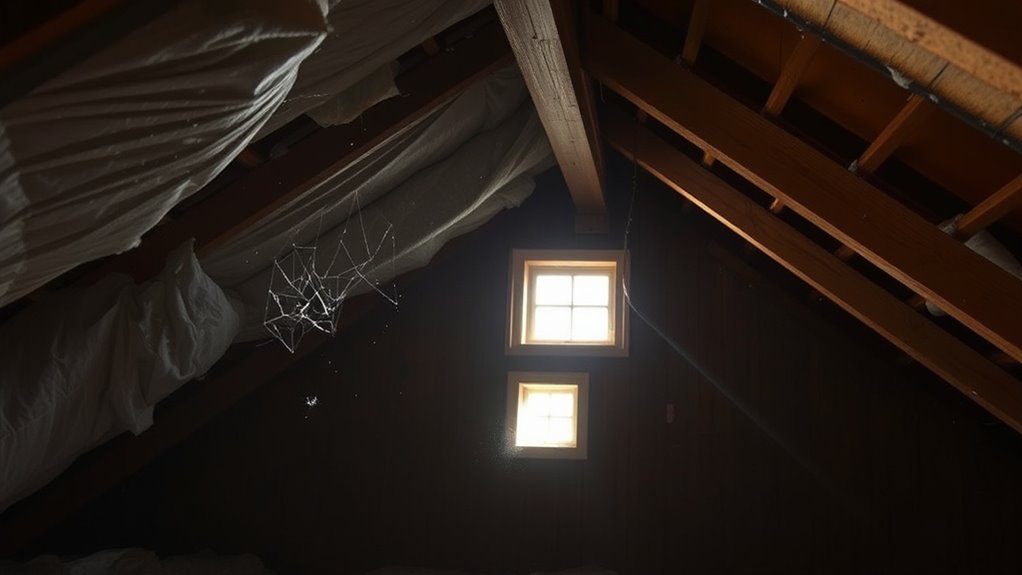
Even the best insulation can’t perform properly if you neglect to air seal your home. Air leaks considerably reduce insulation effectiveness by allowing unwanted heat transfer.
To enhance energy efficiency, focus on sealing gaps around windows, exterior doors, and places where electrical wires, fans, and lights penetrate walls. Grab some caulk to seal these areas, ensuring a snug fit. Use fireproof caulk near heat sources for added safety.
By addressing these leaks, you can potentially improve your home’s energy efficiency by up to 30%. This not only reduces heating and cooling costs but also helps maintain a comfortable temperature throughout the year.
Regularly inspecting and sealing air leaks can extend the lifespan of insulation and HVAC systems, maximizing your home’s comfort.
Blocking Air Flow
While sealing your home is important, it’s equally vital not to obstruct airflow, especially in the attic. Blocking air flow with insulation can hinder proper ventilation, leading to humidity issues and potentially shortening your roof’s lifespan.
Soffit vents play a key role in allowing fresh air to enter and exit the attic, preventing moisture buildup and mold growth. To maintain effective ventilation, use vent baffles during insulation installation to guarantee that air moves freely from soffit vents to roof vents.
Ignoring air circulation can lead to temperature imbalances, resulting in higher energy bills and increased discomfort. A well-ventilated attic, paired with proper insulation, boosts energy efficiency and prolongs the life of your roofing materials.
Don’t overlook this critical aspect when insulating.
Spending Time and Money Pulling Out Old Insulation
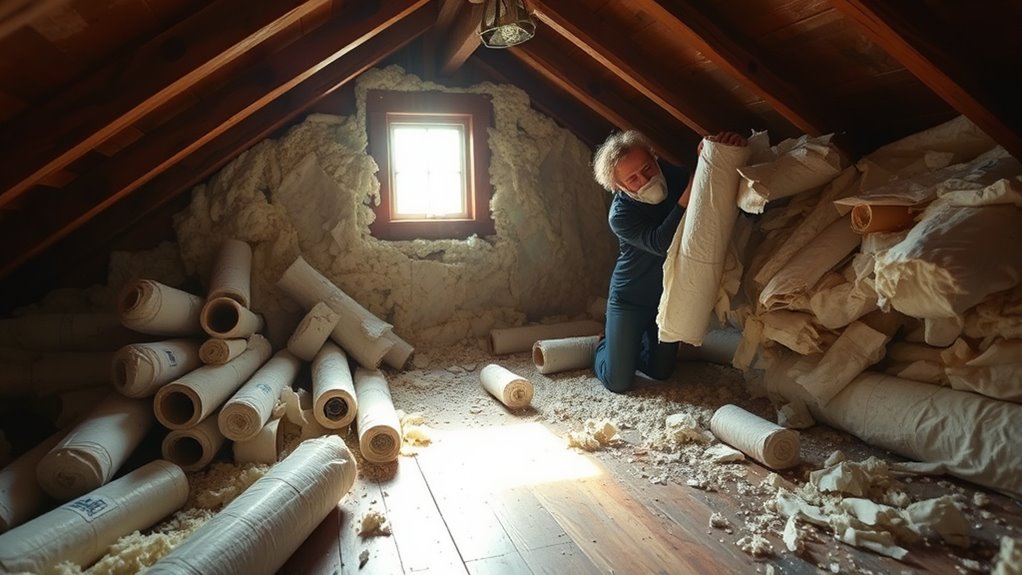
Although it might seem logical to remove old insulation before adding new, doing so can often be unnecessary and costly.
Start by evaluating its condition. If it’s not wet or moldy, it may still retain its value and not require removal.
Homes built between the 1950s and 1990s might’ve asbestos in their insulation, so removing old insulation without proper precautions poses serious health risks.
Instead, consider a professional evaluation to determine if your old insulation is compatible with new materials.
Often, you can add new insulation directly over existing layers, saving time and maintaining effective thermal performance.
This approach avoids the mess and complications of extraction, especially with blown-in insulation, while ensuring ideal results without unnecessary expense.
Overstuffing
When insulating your home, it’s vital to avoid the temptation of overstuffing. Overstuffing fiberglass insulation reduces the important air pockets needed for thermal effectiveness, decreasing overall insulation performance.
By compressing insulation into tight spaces, you lower its R-value, which measures resistance to heat flow, ultimately negating the energy efficiency you’re aiming for. To maintain best performance, always adhere to the recommended thickness guidelines for your insulation.
Overstuffing can lead to pressure points that compromise the structure and effectiveness of your insulation. Additionally, cramming insulation hampers proper airflow, which can increase the buildup-related issues in your home.
Each type of insulation has specific guidelines; ensure you follow them to prevent overcompression and maintain optimal performance.
Installing the Wrong Insulation
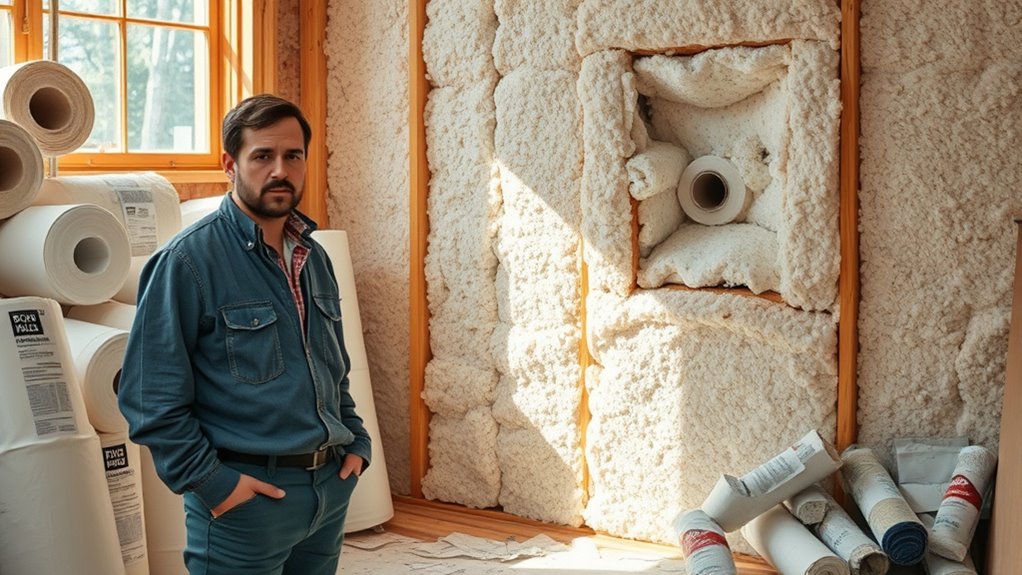
Overstuffing isn’t the only pitfall in insulation projects. Installing the wrong type of insulation is a common mistake that can jeopardize your home’s energy efficiency and safety.
Different insulation materials are suited to specific environments, and selecting the wrong type can lead to undesirable consequences. For instance, using fiberglass in damp areas, such as basements, can promote mold growth. Choosing the right material, such as spray foam insulation, helps prevent moisture issues and enhances thermal performance.
Consider these critical points:
- Moisture Control: Fiberglass in humid environments can invite mold.
- Fire Safety: Keep flammable materials away from heat sources.
- R-value Compliance: Each climate requires a specific type of insulation.
- Professional Advice: Consult experts to choose suitable insulation materials.
Ignoring Air Leaks
Don’t overlook air leaks when insulating your home, as they can allow conditioned air to escape into unconditioned spaces, thereby increasing the need for windows and doors to be sealed with caulk or weatherstripping. Additionally, address any gaps in the attic to improve insulation performance.
Regularly inspect common areas, such as electrical outlets and plumbing penetrations, to maintain energy efficiency and prevent costly issues.
Seal Windows and Doors
While many homeowners focus on adding insulation, neglecting to seal windows and doors can undermine these efforts. Ignoring air leaks around these areas often leads to significant energy loss, with up to 30% of your home’s heating and cooling energy potentially escaping.
By sealing windows and doors, you enhance energy efficiency, reduce drafts, and maintain a consistent indoor temperature. The stripping effectively reduces air leaks, which can lower your utility bills by 10-20%.
Consider these steps for better results:
- Inspect window and door frames regularly for gaps.
- Apply caulk to seal persistent gaps and prevent air leaks.
- Use weather stripping for additional protection against drafts.
- Schedule regular maintenance to guarantee long-term energy savings.
Proper sealing is essential for maximizing insulation effectiveness.
Address Attic Gaps
Although often overlooked, addressing gaps in your attic is essential for maintaining an energy-efficient home. Air leaks around attic access points can cause significant energy loss, making it challenging to maintain a comfortable and energy-efficient home. By sealing gaps around ducts, electrical wires, and plumbing vents with caulk or spray foam, you can improve energy efficiency by up to 30%. Ignoring these air leaks can lead to uncomfortable temperature fluctuations, poor indoor air quality, and increased energy costs. Regularly inspecting and sealing these gaps helps extend the lifespan of your insulation and roofing materials.
| Emotion | Impact | Solution |
|---|---|---|
| Frustration | Increased energy bills | Seal attic gaps |
| Discomfort | Temperature fluctuations | Improve insulation |
| Concern | Poor indoor air quality | Address air leaks |
| Anxiety | Moisture damage | Regular inspections |
| Relief | Enhanced energy efficiency | Maintain a comfortable home |
Use Weather Stripping
Addressing attic gaps is just one part of creating an energy-efficient home, but it’s equally important to focus on sealing air leaks around windows and doors. Ignoring these gaps can greatly hinder your insulation performance and spike your energy costs.
To combat this, use weather stripping to seal gaps effectively. It prevents warm air from escaping during winter and keeps cool air in during summer, boosting your home’s energy efficiency by up to 20%.
Consider these points:
- Material Choice: Use foam tape, V-strip, or door sweeps based on your needs.
- Regular Maintenance: Inspect and replace worn weather stripping on a regular basis.
- Cost Savings: Proper sealing can significantly reduce energy costs.
- Comfort Improvement: A well-sealed home maintains a stable temperature throughout the year.
Conclusion
To boost your home’s energy efficiency, don’t forget to air seal gaps around windows and doors. Confirm proper airflow in attics to avoid humidity and temperature issues. Avoid overstuffing insulation, as it reduces effectiveness, and choose the right type to maintain safety and efficiency. Before removing old insulation, assess its condition—you might need to add more. By addressing air leaks and these common pitfalls, you’ll create a more comfortable and cost-effective living environment.
FAQs
1. Can You Install Insulation Wrong?
Yes, you can install insulation wrong. If you overstuff, compress, or ignore instructions, you risk air leaks, fire hazards, and mold. Always follow guidelines and check for old materials, such as asbestos, to ensure safe and effective insulation.
2. What Is the Biggest Problem With Fiberglass Insulation?
The primary concern with fiberglass insulation is its ability to trap moisture, which can lead to mold growth and reduced energy efficiency. Guarantee proper installation and ventilation to avoid these issues and maintain the insulation’s effectiveness over time.
3. Where Should You Not Put Insulation?
You shouldn’t place insulation near light fixtures, without clearance, or over soffit vents. Avoid areas with high moisture unless using appropriate materials. Don’t insulate near heaters or unvented spaces with fiberglass to prevent mold and fire risks.
4. Do You Need an Air Gap Behind Insulation?
Yes, you need an air gap behind the insulation. It helps manage moisture, prevents mold, enhances thermal performance, and guarantees proper ventilation. Make sure it’s at least 1 inch wide and keep it unobstructed for maximum effectiveness.