HVDC Transmission System: How It Works and Key Advantages
You’re probably aware that HVDC transmission systems are transforming how we think about electricity distribution. They offer a more efficient way to transmit power over long distances, minimizing energy loss compared to traditional AC systems. But have you considered how these systems might revolutionize integrating renewable energy sources? The technology continues to evolve with significant innovations in converters, yet it also faces challenges that could impact its future development. What are these challenges, and how might they influence the future of global power grids? Let’s explore these aspects further.
Key Takeaways
- HVDC technology is ideal for long-distance power transmission with reduced energy loss compared to AC systems.
- It enhances grid stability and supports the integration of renewable energy sources into the main grid.
- Voltage-source converters and modular multilevel converters improve HVDC system efficiency and flexibility.
- HVDC systems offer significant cost savings over time.
- Key challenges include complex fault detection and the need for standardization in HVDC system deployment.
Evolution of HVDC Technology
From its inception in the late 19th century, HVDC technology has transformed dramatically, marking notable milestones. Initially, HVDC systems utilized early direct current transmission, but they’ve since evolved to incorporate advanced converter technology.
The shift from mercury arc valves to thyristor valves in the 1970s was a pivotal moment in the evolution of HVDC technology. This change markedly improved the efficiency and reliability of power transmission lines, paving the way for more sophisticated systems.
HVDC technology has continued to evolve with the introduction of capacitor-commutated converters (CCCs) and voltage-source converters (VSCs). These innovations have enhanced the performance of HVDC systems, making them more reliable and efficient.
The development of Modular Multilevel Converters (MMC) represents another leap forward, offering additional benefits for long-distance power transmission and grid stability. MMCs are particularly advantageous in facilitating renewable energy integration, supporting the shift towards more sustainable energy sources.
As HVDC technology advances, its evolution has been pivotal in supporting modern energy demands. The ongoing improvements in converter technology and power transmission lines are essential to achieving greater efficiency and reliability in electricity networks worldwide.
Key HVDC Converter Innovations
You’re about to explore the evolution of converter technology in HVDC systems, highlighting significant advancements like ABB’s HVDC Light and Siemens’ MMC technology. These innovations and the introduction of thyristor valves in LCC-HVDC systems have greatly impacted long-distance transmission capabilities.
Additionally, the development of VSC-HVDC technology has provided the flexibility and reliability needed for modern transmission demands.
Evolution of Converter Technology
Moving from mercury arc to thyristor valves marked a noteworthy leap in HVDC system efficiency and reliability. This shift paved the way for the widespread adoption of line-commutated converters (LCC) in HVDC transmission lines. While converter stations are costly, the advantages of increased efficiency and reduced operational costs can’t be overstated. Thyristor-based LCC systems became the backbone of HVDC technology post-1977, offering more stable and efficient conversion of direct current (DC).
A new era of HVDC technology began with the emergence of voltage-source converters (VSC) in the late 1990s. VSC technology, particularly Modular Multilevel Converters (MMC), uses insulated-gate bipolar transistors (IGBTs) to enhance performance and flexibility. This innovation is essential for integrating renewable energy sources into the grid. With higher-rated IGBTs, GTOs, and IGCTs, power electronics have evolved, making HVDC systems more economical and reliable. Capacitor-commutated converters (CCC) further addressed turn-off issues inherent in earlier systems, ensuring more robust operation.
Advances in VSCs
As HVDC technology evolves, Voltage Source Converters (VSCs) are at the forefront of this advancement, offering superior efficiency and flexibility over traditional line-commutated converters. With innovations like ABB’s HVDC Light and Siemens’ Modular Multilevel Converters (MMCs), VSCs have transformed HVDC systems by enhancing performance and minimizing power losses. These converters are well-suited for offshore applications, enabling seamless power transfer from offshore wind farms to onshore grids.
VSCs are especially advantageous for integrating renewable energy sources into the main grid. For instance, projects like ABB’s DolWin2 showcase how VSC technology can efficiently connect remote renewable sites to central power systems. This is pivotal as the world moves towards cleaner energy solutions. VSCs’ compactness also makes them ideal for challenging environments with limited space.
Consider these benefits of VSCs:
- Efficiency: VSCs minimize power losses, ensuring more reliable energy transmission.
- Flexibility: They’re adaptable to varying grid demands, making them suitable for diverse applications.
- Advanced Control Capabilities: VSCs offer robust control over power flow, enhancing stability in medium to long-distance transmission systems.
Impact of Thyristor Valves
Thyristor valves marked a pivotal turning point in HVDC technology, revolutionizing the industry by replacing outdated mercury arc valves. With their introduction, you witnessed a transformation in high-power transmission. Thyristor-based HVDC systems, known as line-commutated converters (LCC), quickly became the standard, offering more efficient, reliable, and cost-effective solutions. These systems notably reduced maintenance requirements and enhanced system performance, enabling the development of modern high-voltage direct current transmission networks.
To better understand their impact, let’s look at a comparison:
| Feature | Thyristor Valves |
|---|---|
| Efficiency | High |
| Reliability | Enhanced |
| Cost-effectiveness | Improved |
| Maintenance Requirements | Reduced |
Thyristor valves play an essential role in the evolution of HVDC systems by replacing mercury arc valves, which were less efficient and required more maintenance. The shift to thyristors in HVDC technology didn’t just improve the systems’ performance but paved the way for more extensive and reliable networks. By reducing maintenance requirements, thyristor-based systems have lowered operational costs and increased the lifespan of HVDC installations. As you explore the advancements in HVDC technology, the contribution of thyristor valves stands out as a cornerstone in achieving efficient and reliable power transmission worldwide.
HVDC vs. AC Transmission
When comparing HVDC to AC transmission systems, it becomes evident that each has unique advantages depending on the application. HVDC transmission systems excel in long-distance power because AC lines require less conductor material per unit distance. This efficiency is essential for transporting energy over vast areas, making HVDC systems an excellent choice for connecting remote renewable energy sources to the main grid.
DC lines also experience about 50% less energy loss at the same voltage level than AC lines. This loss reduction makes HVDC a more efficient option for long-distance power transfer, ensuring that more generated energy reaches its destination.
In addition, HVDC technology plays a pivotal role in enhancing grid stability. It allows for power transfer between separate AC networks, which is particularly helpful during transient conditions that could otherwise destabilize the grid. This capability supports grid resilience and ensures a more reliable energy system. Here are some key points to take into account:
- Efficiency: HVDC lines have lower losses and require less conductor material.
- Grid Stability: HVDC enables power transfer between disconnected AC networks.
- Renewable Integration: HVDC supports efficiently incorporating renewable energy into the grid.
Cost and Investment Considerations
When considering HVDC systems, you’ll face initial investment obstacles due to the high costs of converter stations, often exceeding $100 million. However, the long-distance efficiency of HVDC technology can lead to significant cost savings over time.
It is pivotal to conduct a thorough cost-benefit analysis to determine whether the long-term advantages outweigh the upfront expenses, especially compared to traditional AC transmission lines.
Initial Investment Challenges
Facing the pivotal challenge of initial investment, the cost of constructing HVDC converter stations often exceeds $100 million. This sizable financial hurdle can make you question the economic feasibility of implementing HVDC systems. However, these initial investment challenges are usually offset by the improved efficiency of HVDC technology, which is evident in various global projects.
For instance, projects in India highlight how HVDC systems can enhance energy transmission efficiency, making them a viable option despite their high upfront costs.
When considering HVDC technology, you’ll need to weigh several cost considerations:
- Initial setup costs include the cost of converter stations and the installation of transmission lines. HVDC systems require specialized equipment, adding to the initial expenses.
- Long-term Savings: Although the initial investment is steep, HVDC systems offer long-term savings through reduced energy losses and more efficient power transfer over considerable distances.
- Comparative Analysis: Conducting economic feasibility studies is vital. They help compare HVDC systems against traditional AC systems, ensuring you make an informed decision based on long-term benefits rather than upfront costs.
Understanding these aspects will help you navigate the challenges associated with HVDC technology.
Long-distance Efficiency Benefits
Shifting focus away from initial investment hurdles, let’s delve into the efficiency benefits of HVDC systems for long-distance power transmission.
You’ll discover that HVDC transmission systems are a game-changer in long-distance effectiveness, as they reduce power losses compared to traditional AC systems. By using direct current (DC), these systems experience about 50% less loss than their AC counterparts at the same voltage levels. This decrease in losses translates to more cost-effective power transmission over vast distances.
One of the standout features of HVDC is its ability to transfer only active power. This specificity leads to lower losses and improved effectiveness, making HVDC ideal for connecting renewable energy sources far from consumption areas. Additionally, HVDC technology requires less conductor material per unit distance, creating additional cost savings and enhancing efficiency.
Furthermore, HVDC systems excel in maintaining grid stability. They can efficiently transfer power between separate AC networks, which is important during transient conditions. This makes them reliable for supporting grid stability in an increasingly interconnected world.
Cost-Benefit Analysis
Evaluating the cost-benefit dynamics of HVDC transmission systems involves understanding the initial investment and long-term economic advantages. HVDC converter stations, for instance, can cost over $100 million, representing a substantial upfront investment. However, this initial cost is balanced by the long-term benefits HVDC technology offers for bulk power transmission.
Economic feasibility studies play a pivotal role in appraising the financial viability of HVDC systems. Considering the breakeven distance, these studies help you compare HVDC systems with traditional AC systems. This is crucial in determining when the cost savings in construction and operation outweigh the initial expenditures.
Consider the following when evaluating HVDC systems:
- Initial Investment: HVDC converter stations require significant capital but offer efficiency gains in energy transmission.
- Cost Savings: Over long distances, HVDC technology can notably reduce costs in both construction and operation, making it ideal for bulk power transmission.
- Economic Feasibility: Conduct thorough economic feasibility studies to compare HVDC with AC systems and evaluate the breakeven distance to promote informed decision-making.
Applications in Renewable Energy
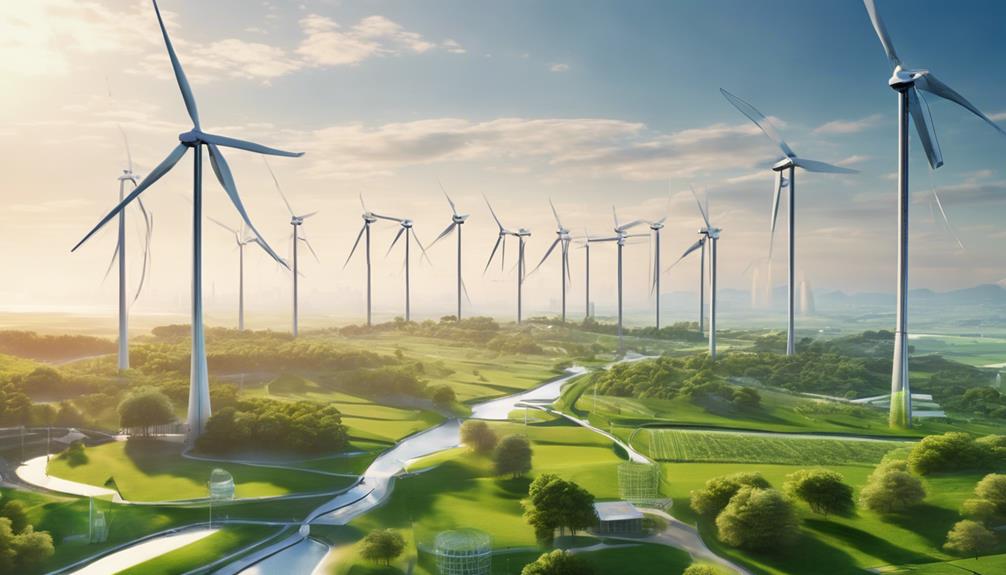
Integrating renewable energy into the grid isn’t just a trend; it’s necessary for a sustainable future, and HVDC transmission systems are at the heart of this transformation. As a key component, HVDC technology supports the efficient integration of renewable sources like wind energy. It is pivotal in connecting offshore wind farms to onshore grids, ensuring seamless power transfer from sea to land.
With the increasing need for sustainable energy, HVDC offers a reliable solution for transmitting power from remote, renewable-rich areas to major load centers. Advanced grid planning is further enhanced by multiterminal multiterminal, which facilitates the integration of multiple renewable sources, making the grid more resilient. Further cost analysis is necessary to determine the best mix of HVDC and HVAC lines. This analysis helps maximize the utilization of renewable energy in the grid, ensuring efficient and cost-effective power delivery. By focusing on these aspects, you can support the growth and reliability of sustainable energy systems, ultimately contributing to a cleaner and more resilient energy future.
HVDC systems make renewable energy integration feasible and pave the way for a greener tomorrow.
Challenges in HVDC Systems
Traversing the landscape of HVDC systems reveals several challenges that impact their widespread adoption and efficiency. To begin with, fault detection and mitigation in HVDC systems are tricky due to the continuous nature of DC. Unlike AC systems, where fault detection is more straightforward, HVDC requires advanced technology to identify and resolve issues quickly.
Secondly, grid planning and modeling need significant adjustments. The unique characteristics of HVDC systems mean that traditional grid planning standards don’t quite fit, complicating integration with existing infrastructure.
Finally, the lack of standardization and interoperability in DC systems poses a considerable challenge. Seamlessly integrating HVDC into existing grids is a hurdle because different systems don’t always speak the same “language.”
Here are some key challenges faced by HVDC systems:
- Fault Detection and Mitigation: Advanced technologies are needed for effective fault detection due to the continuous DC.
- Grid Planning Adjustments: Current standards require updates to accommodate HVDC’s unique features.
- Standardization and Interoperability: Common standards hinder smooth integration with existing grids.
Expensive converter stations add another layer of complexity, impacting the cost-effectiveness of HVDC deployment. Innovative solutions are essential to address these challenges and optimize performance in modern power grids.
Future Prospects for HVDC Technology
The horizon of HVDC technology shines with promising advancements that could reshape the future of energy transmission. As you navigate this landscape, consider how HVDC lines, utilizing direct current (DC), stand ready to integrate more renewable resources into the power grid. They offer significant advantages in reducing energy losses over long distances compared to traditional AC lines, making them a vital player in the quest for cleaner energy solutions.
NREL is actively exploring multi-terminal hybrids, which could revolutionize grid planning and enhance system stability. These lines allow for commultiterminalion applications, enabling more flexible and efficient power distribution. They could be particularly transformative in connecting offshore wind farms and remote solar installations to urban centers.
Despite their potential, understanding the cost implications remains essential. Detailed cost analyses are necessary to weigh transmission trade-offs and optimize the use of HVDC technology.
Fortunately, for certain scenarios, HVDC lines are comparable in cost to HVAC lines, yet they offer superior efficiency and reliability. Continued research and development are key to unraveling these prospects, ensuring HVDC technology can effectively support the evolving energy landscape.
Conclusion
You’ve seen how HVDC transmission systems revolutionize power networks by offering efficiency and reliability unmatched by traditional AC systems. With innovations in converter technology, HVDC stands out as a cost-effective choice, especially for integrating renewable energy. Despite challenges, its benefits in long-distance power transmission and grid stability are undeniable. As technology advances, HVDC’s role in sustainable energy solutions will only grow, making it an essential component of modern electricity grids worldwide.
FAQs
What is an HVDC transmission system?
An HVDC (High High-Voltage Directent) transmission system transctransmitstrical power over long distances using direct current (DC) at high voltages. Unlike traditional AC (alternating current) transmission systems, HVDC systems are more efficient for transmitting power over vast distances, especially underwater and underground power lines.
Key Features:
- Transmits power over long distances using direct current.
- It is more efficient than AC for long-distance transmission.
- It is ideal for underwater and underground lines.
How does an HVDC transmission system work?
An HVDC transmission system works by converting AC power generated by power plants into DC for transmission, then converting it back to AC at the receiving end. Here’s how it works step-by-step:
- Conversion to DC: A converter station with rectifiers converts high-voltage AC to high-voltage DC at the sending station.
- Transmission: DC power is transmitted over long distances through high-voltage transmission lines, which minimizes energy losses that would occur with AC.
- Conversion Back to AC: At the receiving end, another converter station with inverters converts the high-voltage DC back into AC, which can then be distributed to homes and businesses through the standard AC grid.
Steps in HVDC Operation:
- AC is converted to DC at the sending station.
- DC is transmitted over long distances.
- DC is converted back to AC at the receiving station.
What are the advantages of HVDC transmission systems?
HVDC transmission systems offer several advantages over traditional AC transmission, especially for long-distance and high-capacity power transmission:
- Lower Transmission Losses: HVDC systems reduce energy losses during long-distance transmission compared to AC, especially over hundreds of kilometers.
- Efficient for Long Distances: HVDC is more efficient for transmitting power over long distances, including undersea or underground cables, where AC would suffer significant losses.
- Increased Capacity: HVDC systems can carry more power per conductor than AC transmission systems of the same size.
- Better Stability: HVDC can stabilize power grids by controlling the power flow between different regions or countries, reducing the risk of blackouts.
- Integration of Renewable Energy: HVDC transmission systems are ideal for integrating renewable energy sources like offshore wind farms into the grid by efficiently transmitting power over long distances.
Advantages:
- Lower energy losses over long distances.
- Higher transmission capacity.
- Improved stability and grid control.
- Ideal for integrating renewable energy sources.
What are the main applications of HVDC transmission systems?
HVDC transmission systems are used in several key applications where long-distance, high-efficiency power transmission is required:
- Long-Distance Power Transmission: HVDC is commonly used to transmit power across vast distances, from remote hydroelectric or wind power plants to populated areas.
- Underwater Power Transmission: HVDC is preferred for underwater power transmission between countries or across seas, where AC systems would lose too much energy.
- Connecting Different Grids: HVDC can connect power grids with different frequencies or electrical characteristics, such as interconnecting national grids or creating cross-border power links.
- Renewable Energy Integration: HVDC systems transmit power over long distances to integrate large-scale renewable energy projects, such as offshore wind farms, into the grid.
Key Applications:
- Long-distance power transmission.
- Underwater transmission (cross-sea connections).
- Connecting grids with different frequencies.
- Integrating renewable energy sources.
What are the limitations of HVDC transmission systems?
Despite its advantages, HVDC transmission has some limitations:
- High Initial Cost: The converter stations required to convert AC to DC and back again are expensive, making HVDC systems costlier to set up than AC systems for short distances.
- Complexity of Converters: The technology used in converter stations is complex and requires advanced maintenance and expertise.
- Limited Short-Distance Applications: Traditional AC transmission systems are often more cost-effective for shorter distances, as the benefits of HVDC are primarily realized over longer distances.
Limitations:
- High initial costs for converter stations.
- Complex converter technology.
- Less efficient for short-distance transmission.