

Buchholz Relay – Function, Operation, and Applications
When you’re managing power transformers, understanding the Buchholz Relay is essential. This device isn’t just a safety feature; it’s a critical component that detects internal faults by monitoring gas accumulation within the transformer. You might wonder how it manages to safeguard your equipment so effectively. The Buchholz Relay guarantees early fault detection and swift response from its robust construction to its sensitive activation mechanisms. But what exactly triggers it, and how does it differentiate between minor and severe issues? Let’s explore the intricacies of this indispensable technology.
Key Takeaways
- Buchholz relay detects internal faults in oil-filled transformers by sensing gas accumulation.
- It triggers alarms for minor faults and shuts down the transformer for severe faults.
- The relay is installed between the transformer’s main tank and conservator in the oil pipe in the oil pipe.
- Float mechanisms and mercury switches monitor gas and oil level changes.
- Buchholz relay enhances transformer safety, reduces downtime, and prolongs transformer lifespan.
What Is a Buchholz Relay?
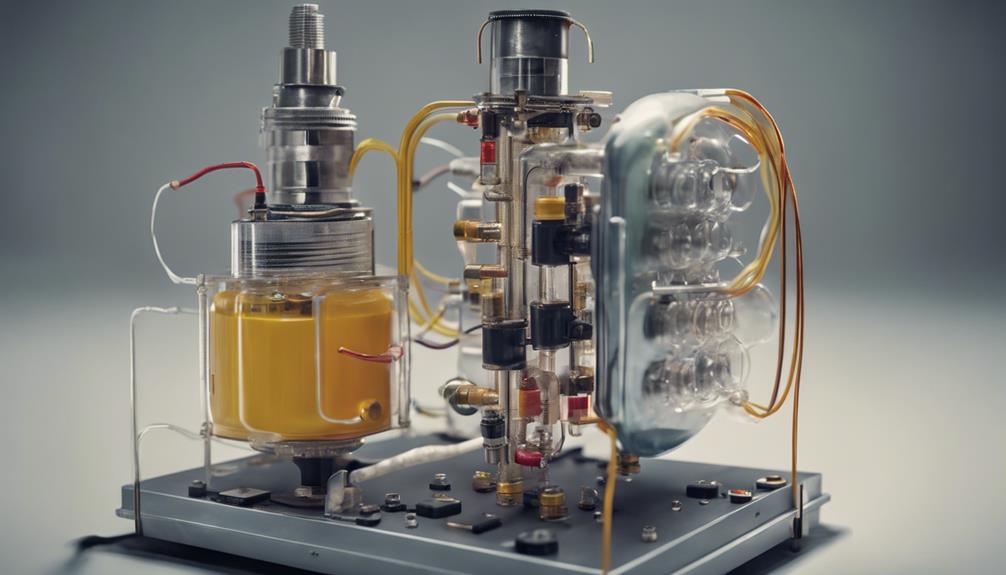
A Buchholz relay is an essential safety device that protects oil-filled power transformers by detecting internal faults. It is installed in the oil pipe between the main tank and the transformer’s conservator. This relay is critical because it senses the presence of gas, often indicating a fault within the transformer.
The Buchholz Relay operation is quite fascinating. When a fault occurs inside the transformer, it generates gas. This gas accumulates in the relay’s gas release pockets. As gas builds up, it displaces oil, causing the oil level to drop. The relay’s float senses this change and activates a mercury switch, sending an alarm signal or tripping the transformer to prevent further damage.
But that’s not all. The relay also detects changes in oil flow. During severe faults, the oil rushes toward the conservator, displacing the baffle plate inside the relay. This movement triggers another mercury switch, providing an additional layer of safety.
In essence, the Buchholz relay ensures that any minor or major internal transformer issues are promptly identified and addressed, maintaining the transformer system’s transformer system’s safety and functionality.
Importance in Transformers
The Buchholz relay plays an essential role in safeguarding transformers against internal faults. As a critical safety device, it guarantees that your transformer operates efficiently and safely, especially in oil-filled power transformers above 500 kVA.
Buchholz relays are designed to detect internal faults, such as short circuits and breakdowns in insulating oil, which can lead to severe damage if not promptly addressed.
When a minor fault occurs, the Buchholz relay triggers an alarm, alerting you to the issue so you can take corrective action. In the case of a severe fault, the relay initiates an immediate shutdown of the transformer to prevent catastrophic failures.
This dual functionality is vital for maintaining the integrity of your transformer and avoiding extensive downtime.
Working Principle

The Buchholz relay detects internal transformer faults by monitoring gas accumulation and changes in oil levels. When an internal fault occurs, gases are generated within the transformer oil. These gases rise to the Buchholz relay, causing a shift in the float’s position within the relay. This shift tilts a mercury switch, closing electrical contacts and triggering an alarm signal.
The working principle of the Buchholz relay can be broken down into the following steps:
- Gas Accumulation: During an internal fault, gases produced by the fault accumulate in the Buchholz relay. This gas accumulation causes the float to move, tilting the mercury switch and closing the contacts to activate an alarm.
- Oil Level Changes: Severe faults result in a rapid surge of oil flow. This surge activates a lower mercury switch within the relay, leading to immediate isolation of the transformer to prevent further damage.
- Fault Analysis: The type of internal fault can be analyzed by examining the gases that accumulate in the relay. Different faults produce different gases, providing essential information for fault diagnosis.
Construction Details
When you look at the construction of a Buchholz relay, you’ll notice the oil-filled housing and the materials used for durability.
The float mechanism and mercury switches are essential for detecting and signaling faults.
To guarantee proper functionality, pay attention to the installation and mounting details.
Housing and Materials Used
Durability and resistance to operational stresses define the housing and materials used in constructing Buchholz relays. The housing is typically made from robust materials like cast iron or aluminum. These materials play a vital role in ensuring that the relay can withstand the pressures of transformer oil and gas, providing reliable and long-lasting protection. Cast iron offers superior strength, while aluminum provides a lightweight yet sturdy alternative, both resistant to the harsh conditions within a transformer.
Internally, Buchholz relays feature components crafted from non-corrosive materials. These non-corrosive materials, such as stainless steel, are selected to prevent chemical reactions with transformer oil, safeguarding the internal mechanisms to remain operational and free from degradation. Carefully choosing these materials is essential for maintaining the relay’s integrity and performance.
Here are three key materials used in Buchholz relay construction:
- Cast Iron: Used for the housing to provide exceptional durability and strength.
- Aluminum: Another option for the housing, offering lightweight yet robust protection.
- Stainless Steel: Utilized for internal components to ensure non-corrosive, long-lasting performance.
Float and Mercury Switches
While the robust housing materials are essential, Buchholz relays’ functionality hinges on the intricate design of float and mercury switches. Inside the Buchholz relay, hinged floats move in response to changes in oil flow. These float movements are vital as they directly influence the mercury switches housed within the relay.
When the float moves, it tilts the mercury switches, causing them to open or close electrical contacts accordingly. This action is pivotal for the relay’s operation, as it allows faults within the transformer to be detected by monitoring the movement of oil and gas.
Baffle plates play a significant role in this setup. They help guide the oil and gas flow within the relay, ensuring that the float movements are accurate and responsive to any changes in the system. Gas release pockets are also integrated into the relay’s design to expel accumulated gases. This prevents potential malfunctions and guarantees the relay’s smooth operation.
The combined interplay of float movements, mercury switches, gas flow, and baffle plates makes the Buchholz relay an effective protective device for transformers, capable of detecting and reacting swiftly to internal faults.
Installation and Mounting
Proper installation and mounting of your Buchholz relay between the transformer and the conservator are essential for its reliable operation. This positioning guarantees that gas and oil movements are accurately monitored, enabling effective fault detection and enhancing transformer protection.
When focusing on the installation and mounting, follow these steps:
- Mounting Brackets: Securely attach the mounting brackets to the relay. These brackets are essential for maintaining the correct position and stability of the Buchholz relay, preventing any misalignment that could affect operation.
- Secure Connections: Confirm all connections between the transformer, Buchholz relay, and conservator are tight and leak-proof. This prevents any gas or oil leaks, which could impair the relay’s ability to detect faults accurately.
- Correct Positioning: Place the relay in an ideal location where it can effectively monitor the flow of gas and oil. Proper positioning is crucial for the relay to provide early warning signals, maximizing transformer protection.
Operation Mechanism

The Buchholz relay operates by detecting gas accumulation and changes in oil levels within oil-filled transformers. When transformer faults occur, they often produce gases, accumulating gas inside the relay chamber. These gases are a significant indicator of internal issues, and the relay uses this buildup to detect faults alongside gas accumulation; oil level changes also play a vital role. When faults happen, oil may rapidly move, causing significant shifts in levels.
In such scenarios, float switches and mercury switches come into action. They detect these changes swiftly, triggering the relay to send an alert. If the fault is severe, rapid oil movement can force the float switches to activate the relay more aggressively, leading to the isolation of the transformer to prevent further damage.
Activation Conditions
When a transformer fault occurs, the Buchholz relay acts promptly to gas accumulation and oil level changes to guarantee early fault detection and isolation. This relay is designed to respond swiftly to conditions that indicate potential transformer issues.
Gas Accumulation: Internal faults like overheating or arcing produce gas within the transformer. As gas bubbles accumulate, they displace oil, causing the float inside the relay to tilt. This tilting action actuates the mercury switch, providing an early warning signal of abnormal conditions.
Rapid Activation: In severe faults such as short circuits or extensive arcing, gas and oil movement suddenly surges. This surge quickly activates the lower mercury switch of the Buchholz relay, ensuring rapid activation to isolate the transformer.
Severe Faults and Internal Faults: Severe internal faults lead to significant disturbances within the transformer. The relay instantly detects the resulting gas evolution and oil displacement, which helps in early fault identification and subsequent isolation.
Advantages and Benefits
You’ll appreciate the Buchholz relay for its enhanced fault detection capabilities, which boost transformer safety greatly.
Identifying issues early reduces downtime and maintenance costs.
This promotes efficient and cost-effective transformer operation, safeguarding your investment.
Enhanced Fault Detection
Buchholz relays offer unmatched fault detection capabilities that rapidly identify issues like overheating, arcing, and insulation breakdown in oil-filled transformers. By detecting internal faults early, the Buchholz relay guarantees that your transformer operates safely and efficiently.
With its advanced gas and oil monitoring features, this relay can swiftly respond to critical issues, greatly reducing the risk of major transformer damage and potential fires.
Here are three key benefits of enhanced fault detection with Buchholz relays:
- Rapid Identification of Internal Faults: The Buchholz relay excels at detecting internal faults such as overheating, arcing, and insulation breakdown. This rapid identification helps mitigate any damage in a timely manner.
- Advanced Gas and Oil Monitoring: The relay continuously monitors gas and oil levels within the transformer. Any irregularities trigger an alarm, allowing you to address issues before they escalate into more severe problems.
- Prolonged Transformer Lifespan: Early fault detection minimizes wear and tear on the transformer components, improving its longevity and reliability.
Incorporating a Buchholz relay into your transformer system ensures enhanced fault detection, which is critical for maintaining transformer safety and operational efficiency.
Improved Transformer Safety
Thanks to its advanced fault detection capabilities, a Buchholz relay greatly enhances the safety and reliability of transformers in your power system. This essential protective device is mounted on oil-filled power transformers to detect and respond to internal faults.
By monitoring gas and oil movements, the Buchholz relay can identify minor faults before they escalate into major issues, providing you with critical early warning signals.
When gas bubbles or oil flow irregularities are detected, the relay triggers alarms, allowing you to take timely action. This immediate notification helps prevent extensive damage and reduces the risk of catastrophic transformer failures. As a result, you’ll experience less downtime and fewer costly repairs.
Moreover, using a Buchholz relay means your transformers operate more safely and efficiently. The relay protects the transformer and extends its lifespan by ensuring that faults are addressed promptly. This proactive approach to transformer safety minimizes the likelihood of severe damage, contributing to a more reliable power system.
Incorporating a Buchholz relay into your transformer protection system is a smart move. I know that an effective safety device safeguards your oil-filled power transformers, ensuring their effective maintenance and peace of mind.
Regularly inspecting your Buchholz relays’ gas accumulation and oil levels guarantees early fault detection and cost-effective transformer maintenance. By monitoring these critical factors, you can catch potential issues before they escalate into costly failures. The relay’s alarm signals play an important role in alerting you to any abnormalities that need immediate attention.
Here are three key benefits of cost-effective maintenance for your Buchholz Relay:
- Prevent Costly Failures: Early detection of gas accumulation and abnormal oil levels triggers alarm signals, allowing you to address minor faults before they become major transformer issues. This proactive approach effectively reduces repair costs.
- Reduce Downtime: Timely intervention based on the relay’s warnings minimizes transformer downtime. This ensures your operations run smoothly and efficiently without unexpected interruptions, saving you time and money.
- Increase Transformer Lifespan: Consistent maintenance of your Buchholz Relays ensures your transformers operate at peak performance. By addressing issues early, you enhance the reliability and longevity of your equipment, providing long-term cost savings.
Incorporating these practices into your maintenance routine not only safeguards the safety and performance of your transformers but also proves to be a cost-effective solution in the long run.
Limitations and Drawbacks
Despite their effectiveness, Buchholz relays have several limitations and drawbacks that you should consider. One notable issue is their susceptibility to false triggers. High oil velocity in the connection pipe or external short circuits can falsely activate the Buchholz relay’s lower float. These false triggers might lead to unnecessary maintenance checks and operational interruptions, which can be time-consuming and costly.
Additionally, the relay can erroneously signal a fault during oil addition, adding to the inconvenience.
Another limitation is the economic aspect. Buchholz relays may not be cost-effective for transformers below 500 kVA. The investment in such cases often outweighs the benefits, making it impractical for smaller transformers. This economic drawback limits their application mainly to larger transformers where their advantages can justify the cost.
Moreover, while mechanical locks in Buchholz relays are designed to prevent false alarms during maintenance, they add complexity to the system. This additional complexity can be a drawback as maintenance personnel must carefully handle and understand it to avoid accidental activation or deactivation.
Conclusion
You’ve learned that the Buchholz Relay is essential for maintaining the efficiency and safety of oil-filled power transformers. Detecting gas accumulation and oil level changes offers early warnings and prevents severe faults like short circuits.
Its quick response helps reduce downtime and extend the lifespan of your transformers. While it has limitations, the advantages far outweigh them, making the Buchholz Relay an indispensable component in transformer protection.
FAQs
What is a Buchholz relay, and how does it function?
A Buchholz relay is a protective device used in oil-filled transformers and reactors. It is designed to detect faults within the transformer by monitoring the flow of insulating oil. The relay is typically installed in the pipe connecting the transformer’s main tank to the conservator tank.
Function:
- Gas Accumulation Detection: The Buchholz relay detects gas generated by internal faults like short circuits, arcing, or insulation breakdown. The gas accumulates in the relay chamber, causing a float to drop and triggering an alarm.
- Oil Flow Detection: In case of a severe fault, such as a short circuit, the rapid flow of oil from the main tank to the conservator tank tilts a flap in the relay, triggering a trip signal to isolate the transformer.
How does a Buchholz relay operate in the event of a fault?
The operation of a Buchholz relay can be understood in two scenarios:
- Minor Faults (Gas Accumulation):
- Operation: When a minor fault occurs inside the transformer, such as insulation failure, it generates heat, causing the insulating oil to decompose and produce gas. The gas rises and collects in the Buchholz relay chamber, causing the oil level to drop. As the oil level drops, a float in the relay descends, triggering a mercury switch that sends an alarm signal. This alerts the operators to investigate the transformer for potential issues.
- Major Faults (Oil Surge):
- Operation: In the event of a major fault, such as a short circuit, oil is rapidly discharged from the transformer tank toward the conservator tank. This sudden oil movement pushes a flap in the Buchholz relay. The flap activates a separate mercury switch, sending a trip signal to the circuit breaker and isolating the transformer from the system to prevent further damage.
What are the key applications of a Buchholz relay?
The Buchholz relay is primarily used in oil-filled transformers and reactors, serving critical roles in power systems:
- Transformer Protection:
- Application: A Buchholz relay’s primary application is protecting oil-immersed transformers. It detects internal faults early, allowing operators to address issues before they escalate into more serious problems.
- Early Fault Detection:
- Application: The Buchholz relay provides early warning of developing faults by detecting gas accumulation and oil surges. This early detection helps prevent catastrophic failures, reduce downtime, and avoid costly repairs.
- Automatic Shutdown:
- Application: In cases of severe faults, the Buchholz relay can automatically trigger the shutdown of the transformer by sending a trip signal to the circuit breaker. This prevents the fault from spreading and causing further damage to the transformer or the power system.
- Power System Reliability:
- Application: The Buchholz relay contributes to the overall reliability and stability of power systems by providing reliable protection for transformers. It ensures that transformers operate safely and that any faults are addressed promptly.
What are the advantages of using a Buchholz relay?
The Buchholz relay offers several advantages in transformer protection:
- Early Detection of Faults:
- Advantage: The relay provides early detection of both minor and major faults within the transformer, allowing for timely maintenance and repair, which can prevent more serious damage.
- Automatic Protection:
- Advantage: In the event of a severe fault, the Buchholz relay can automatically trip the circuit breaker, isolating the transformer and preventing further damage.
- No External Power Supply Needed:
- Advantage: The Buchholz relay operates mechanically and does not require an external power supply, making it a reliable and self-sufficient protective device.
- Simple and Reliable Design:
- Advantage: The relay’s simple mechanical design has few moving parts, making it highly reliable and easy to maintain.
- Dual Functionality:
- Advantage: The relay serves as an early warning device for gas accumulation and a protection device for rapid oil flow due to severe faults, offering comprehensive protection for transformers.
Are there any limitations of the Buchholz relay?
While the Buchholz relay is highly effective, it does have some limitations:
- Applicable Only to Oil-Filled Transformers:
- Limitation: The Buchholz relay is specifically designed for oil-filled transformers and unsuitable for dry-type transformers or other non-oil-immersed electrical equipment.
- Sensitivity to External Vibrations:
- Limitation: External vibrations or mechanical shocks can sometimes trigger the relay, leading to false alarms. Proper installation and maintenance are required to minimize this risk.
- Limited to Detecting Internal Faults:
- Limitation: The Buchholz relay effectively detects internal faults within the transformer but does not protect against external faults or issuers outside the transformer.
- Requires Regular Maintenance:
- Limitation: To ensure proper operation, the Buchholz relay requires regular maintenance, including checking for gas accumulation and ensuring the mechanical components function correctly.
Understanding the Buchholz relay’s function, operation, and applications is essential for anyone involved in transformer maintenance and power system protection. Its ability to detect and respond to faults makes it a critical component in ensuring the reliability and safety of electrical transformers.
