Exploring Different Types of Cooling Towers: A Quick Guide
When evaluating different types of cooling towers, it is crucial to understand how each functions uniquely to meet specific cooling needs. Crossflow and counterflow cooling towers offer distinct water and air movement advantages, while natural and induced draft towers differ in using natural convection versus fan-assisted airflow. Factory-assembled options provide convenience and cost savings, whereas field-erected towers cater to large-scale operations with custom designs. But how do you determine which is best for your particular situation? Let’s explore the nuances that set each type apart and guide you in making an informed decision.
Key Takeaways
- Crossflow cooling towers use horizontal airflow and gravity-driven water distribution for efficient heat exchange.
- Counterflow cooling towers employ an upward air movement and downward water flow for compact, energy-efficient cooling.
- Natural draft cooling towers utilize natural convection, eliminating mechanical fans and minimizing maintenance needs.
- Induced draft cooling towers enhance cooling efficiency with top-mounted fans to draw air.
- Factory-assembled cooling towers offer compact, pre-fabricated units for quick installation and reliable performance in limited spaces.
Overview of Cooling Towers

Cooling towers are essential components in various industrial facilities, ensuring efficient process water cooling. You’ll find them in oil refineries, chemical plants, and thermal power stations. Cooling towers increase the surface area over which air and water interact, allowing the water to cool more efficiently.
Several types of cooling towers are categorized based on the airflow direction and the fan type used. Understanding these distinctions helps you choose the right cooling tower for your needs. The main types include natural draft, mechanical draft, and hybrid cooling towers. Natural draft towers rely on the natural convection of air, while mechanical draft towers use fans to force air through the system. Hybrid towers combine elements of both natural and mechanical draft types.
Reputable brands like EVAPCO, ENEXIO, and Baltimore Aircoil Company offer high-quality cooling towers tailored to various industrial applications. Each type has unique features and benefits, but they aim to enhance the interaction between air and water, improving cooling efficiency.
CrossfCrossflowng Towers
When you look at crossfcrossflowng towers, you’ll notice the unique water distribution system where water flows downward while air moves horizontally. This design makes the airflow configuration straightforward to maintain.
However, remember that these towers can be prone to frost damage in colder climates.
Water Distribution System
In crossfcrossflowng towers, the water distribution system relies on gravity to spread water evenly across the fill material, ensuring efficient heat transfer.
You’ll find a distribution basin at the top of the tower, which plays an essential role in this process. The distribution basin guarantees that hot water is evenly spread over the fill material.
Once the water is evenly distributed, it cascades down the fill, increasing surface area contact with the air and enhancing the cooling process.
Efficient water distribution is essential for maximizing the cooling efficiency of cross-crossflowing towers. Here’s what you need to know:
- Gravity Distribution: The system uses gravity to move water horizontally across the fill material.
- Even Spread: The distribution basin ensures water is evenly dispersed over the fill.
- Increased Surface Area: As water cascades down, it maximizes contact with air for better cooling.
- Critical Efficiency: Proper distribution is crucial for optimal tower performance.
Airflow Configuration
Building on the efficiency of the water distribution system, crossfcrossflowng towers use horizontal airflow combined with downward water flow to maximize heat exchange. In these towers, air passes through horizontally, perpendicular to the direction of the water flow. This unique airflow configuration guarantees that the water cascading down the fill material is met by air flowing across it, greatly enhancing heat transfer efficiency.
Due to their straightforward yet effective design, crossfcrossflows are popular in HVAC systems and various industrial applications. The horizontal airflow allows for an even air distribution across the fill, ensuring consistent and efficient cooling performance. As water flows downward through the fill, it directly interacts with the horizontally moving air, facilitating excellent heat exchange.
One key benefit of crosscrossflowrs is their ease of maintenance. The design allows easy access to internal components without disrupting the operation, making routine inspections and cleaning more manageable. This ensures that your system continues to operate efficiently with minimal downtime.
Counterflow Cooling Towers
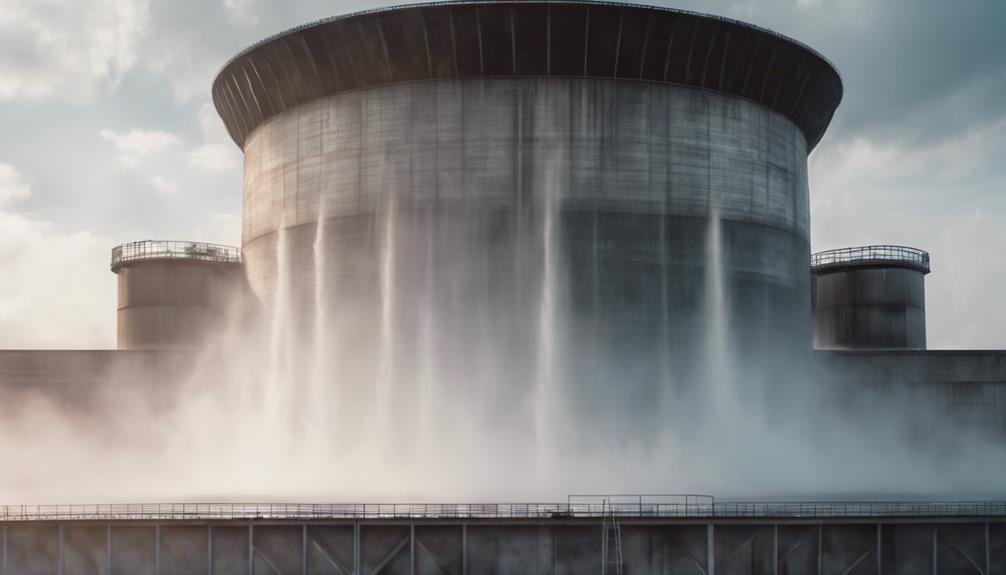
When you look at counterflow cooling towers, you’ll notice their design allows air to move upward while water flows downward, ensuring efficient heat transfer.
Despite their compact size, these towers perform exceptionally well, offering significant energy efficiency.
Additionally, their design minimizes the risk of bacterial growth, making them a safer option in industrial settings.
Design and Functionality
Counterflow cooling towers are efficient because air and water move in opposite directions. This method greatly enhances heat transfer efficiency. Air is drawn upward through the cooling tower while water flows downward. This countercurrent flow pattern maximizes the interaction between air and water, resulting in more effective cooling.
Counterflow cooling towers are also known for being compact and energy-efficient. Their design allows for a smaller footprint, making them ideal for locations where space is limited. In addition to their size advantage, these towers consume less energy than their crossflow counterparts, contributing to overacrossflowional cost savings.
Here are some key features of counterflow cooling towers:
- Enhanced Heat Transfer: The countercurrent flow optimizes the cooling process, achieving higher heat transfer efficiency.
- Space-Saving Design: Their compact structure makes them suitable for confined spaces.
- Energy Efficiency: They require less power to operate, reducing energy consumption.
- Reduced Bacterial Growth: The design lowers the risk of bacterial proliferation, ensuring cleaner operation.
Efficiency and Performance
Their innovative design gives counterflow cooling towers unparalleled efficiency and performance. Due to their unique configuration, these towers are more efficient than crossflow designs. Crossflow counterflow cooling towers achieve superior heat transfer efficiency by moving air and water in opposite directions. This design maximizes the contact time between air and water, ensuring peak cooling and energy use.
One of the standout features of counterflow cooling towers is their compact nature. They save space without compromising on performance, making them ideal for installations where space is premium. Additionally, their compact design often translates to lower material and construction costs, enhancing their appeal.
Another significant advantage of counterflow cooling towers is their energy-saving capabilities. They require less power to operate, leading to reduced energy consumption and lower operating costs. This makes them an environmentally friendly and cost-effective choice for many applications.
Safety is also a notable benefit. Counterflow towers’ design helps prevent issues such as Legionnaires disease by minimizing areas where water can stagnate, making them a safer option than other cooling towers.
Natural Draft Cooling Towers
Relying on natural convection, Natural Draft Cooling Towers eliminates the need for mechanical fans by using the buoyancy of hot air to draw in cooler air from the surroundings. These towers are typically large and tall, ideal for power plants and other industrial facilities. Harnessing natural airflow facilitates effective heat transfer, which is essential for maintaining peak operation in these settings.
Natural Draft Cooling Towers offer several advantages:
- Energy Efficiency: Without mechanical fans, these towers consume less energy, reducing operational costs.
- Low Maintenance: Fewer mechanical parts mean less wear and tear, lowering maintenance requirements.
- Environmental Impact: These towers minimize their ecological footprint by relying on natural processes.
- Reliable Performance: Consistent and effective heat dissipation ensures dependable performance, even in demanding industrial environments.
These towers are a staple in large-scale cooling applications due to their long-term cost savings and operational reliability.
The design of Natural Draft Cooling Towers allows them to stand out in terms of energy efficiency and environmental sustainability, making them an excellent choice for large industrial facilities aiming for efficient heat transfer.
Induced Draft Cooling Towers

Induced Draft Cooling Towers use fans at the top to draw air through the tower, enhancing cooling efficiency and airflow control. These fans are strategically placed to pull air upwards, guaranteeing peak cooling performance. The induced draft cooling tower stands out for its energy efficiency, making it a preferred choice over natural draft cooling towers. By actively drawing air through the system, it maximizes cooling capacity while minimizing energy consumption.
Induced draft cooling towers are widely used in industrial applications. They provide consistent and reliable cooling, essential for maintaining the operational efficiency of industrial processes. Placing fans at the top not only improves airflow control but also helps reduce the risk of recirculation, which can compromise cooling effectiveness.
The induced draft cooling tower is an invaluable asset in industrial settings, where high cooling demands and efficiency are paramount. Its design ensures that air is evenly distributed throughout the building, promoting enhanced thermal performance. If you’re looking for a cooling solution that balances energy efficiency with robust performance, the induced draft cooling tower is an excellent choice for various industrial applications.
Forced Draft Cooling Towers
Forced draft cooling towers use fans at the air intake to push air through the tower, guaranteeing effective cooling. These systems are designed to force air into the tower and over the fill material, providing an efficient cooling process. Unlike induced draft towers, forced draft towers position their fans at the base, allowing better control over air distribution and velocity within the tower.
However, mentioning that these fans consume more power than their induced draft counterparts is crucial. This increased power consumption can be a consideration when evaluating the overall efficiency and operational costs of forced draft towers.
Here are some key points about forced draft cooling towers:
- Air Distribution: The fan placement helps manage the airflow, enhancing the cooling process.
- Power Consumption: The fans require more energy, impacting operational costs.
- Flexibility: These towers are versatile and can be used in various industrial settings.
- Efficiency: Pushing air through the tower ensures effective and consistent cooling.
Factory-Assembled Cooling Towers
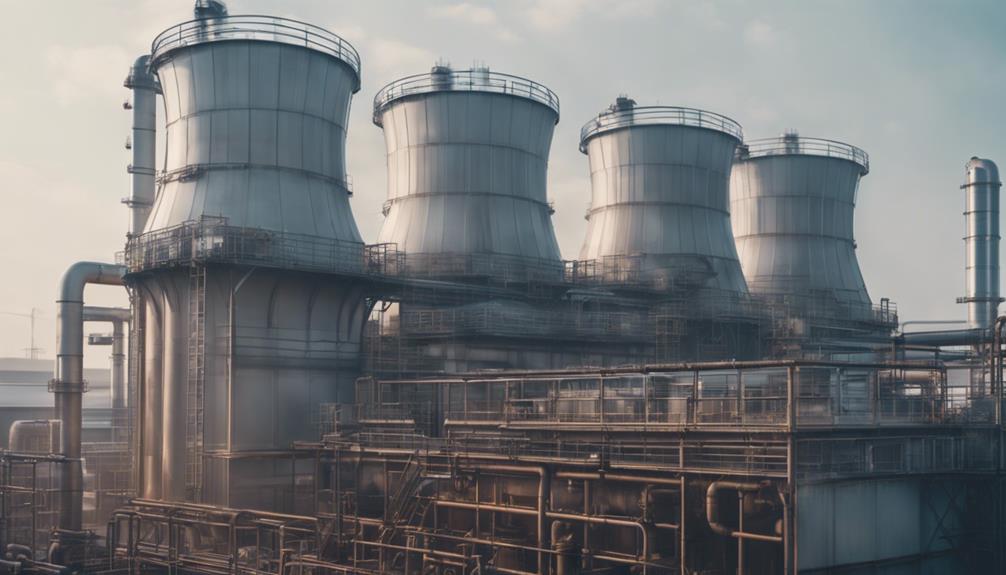
After exploring the mechanics and benefits of forced draft cooling towers, let’s focus on factory-assembled cooling towers, which offer a compact and convenient cooling solution for various applications. These pre-fabricated units are constructed off-site in controlled environments, ensuring high quality and reliability. Their compact size makes them ideal for commercial and light industrial settings where space is a premium.
Factory-assembled cooling towers are shipped to the site in sections, allowing for quick and efficient assembly. This reduces installation time significantly, meaning you can get your cooling system up and running faster. Not only do these towers provide reliable performance, but they also offer a cost-effective solution for your cooling needs.
Let’s take a closer look at some of the key benefits:
| Feature | Benefit |
|---|---|
| Pre-fabricated units | High-quality, controlled build |
| Compact size | Ideal for limited space |
| Quick assembly | Minimized installation time |
| Cost-effective | Budget-friendly cooling solution |
Field-Erected Cooling Towers
Field-erected cooling towers are often the go-to solution for industries requiring large-scale cooling capabilities. These towers are larger units commonly found in power plants and factories, with significant industrial cooling demands.
Unlike factory-assembled units, field-erected cooling towers are constructed on-site. This allows customization to meet specific cooling requirements, making them ideal for heavy-duty applications.
Here’s why field-erected cooling towers might be the right choice for your industrial needs:
- Higher Cooling Capacities: They handle higher heat loads, offering greater cooling capacities than pre-fabricated units.
- Customizable Design: On-site construction allows for tailored solutions to specific cooling challenges.
- Heavy-Duty Applications: Designed for heavy-duty industrial settings, they promote efficient heat dissipation, which is important for equipment performance and longevity.
- Longer Lead Times: While they involve longer lead times and higher initial costs, the investment pays off in performance and reliability.
Field-erected cooling towers are built to endure and perform in demanding environments. If you’re in an industry where efficient and reliable cooling is non-negotiable, these towers provide the robust solution you need.
Remember the initial investment and lead times, but rest assured, the long-term benefits are substantial.
Choosing the Right Cooling Tower
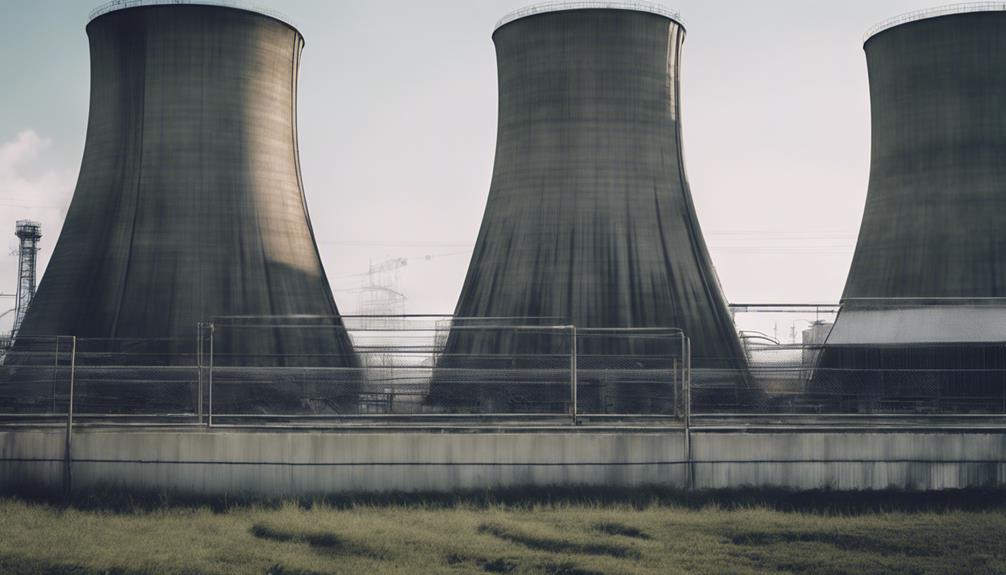
When selecting the appropriate cooling tower, you’ll need to consider your facility’s specific cooling requirements and size. Cooling Tower Systems vary greatly, and understanding these differences is vital for making an informed decision.
Package cooling towers might be sufficient for smaller facilities due to their compact size and ease of installation. However, larger facilities typically require field-erected towers, which offer greater capacity and customization options.
Counterflow towers are known for their efficiency, as the airflow moves opposite the water flow, enhancing heat transfer. If energy consumption is a concern, evaluating the efficiency of counterflow towers against crossflow models is important.
Hyperbolic cooling towers are part crossflow suitable for large facilities. These towers use natural air properties to cool water efficiently, making them a cost-effective option over time. Their unique shape allows for efficient cooling with lower energy consumption, which benefits spacious facilities with extensive cooling needs.
Consulting with experts can be invaluable. They can help assess your facility’s space, efficiency requirements, and climate to determine the best cooling tower type.
Whether you opt for counterflow or Hyperbolic cooling towers, making an informed choice will ensure excellent performance and energy efficiency.
Conclusion
In summary, selecting the right cooling tower depends on your specific cooling needs and environment. Whether you choose crossflow, counterflow, natural draft, induced draft, or forced crossflow, each type offers unique advantages.
Factory-assembled towers provide quick installation and cost savings, while field-erected towers offer customized solutions for large-scale projects.
By understanding these options, you’ll guarantee efficient and effective cooling for your operations. Make an informed choice to maximize performance and reliability.
FAQs
1. What Are the Different Types of Cooling Towers?
You’ll find various cooling towers, including natural draft towers that use natural convection and hybrid cooling systems that combine different technologies for efficiency. Another type is air-cooled towers, which use air instead of water to remove heat. Mechanical draft towers with fans, crossflow towers with horizontal air and downward water flow, crossflow towers with opposite air and water directions, and package types are also common.
Each type suits different applications.
2. What Is the Most Commonly Used Cooling Tower?
You’re likely wondering about the most commonly used cooling tower. Crossflow cooling towers top the list due to their efficiency. benCrossflowey offers excellent heat exchange, making them very effective. Maintenance requirements are minimal, which is a huge plus. Cost implications are favorable, as well; they’re cost-effective and energy-efficient. Industries like oil refineries, chemical plants, and power stations prefer them.
3. What Are the Three Basic Designs of Cooling Towers?
There are three basic designs of cooling towers: natural draft, forced draft, and induced draft.
Natural draft towers rely on buoyancy to move air, while forced draft towers use fans at the air inlet to push air through.
Induced draft towers, conversely, place fans at the air outlet to pull air through.
Each type serves different needs based on space, efficiency, and installation ease.
4. What Are the Two Classes of Cooling Towers?
You’re wondering about the two classes of cooling towers. They’re natural drafts and mechanical drafts.
Natural draft towers use natural convection for air circulation, which is ideal for wet cooling.
On the other hand, mechanical draft towers use fans, offering better control and tower efficiency. They are suitable for both wet and dry cooling.
Each type has advantages, depending on your cooling needs and efficiency requirements.
5. What Are the Three Different Types of Cooling?
When considering the three different types of cooling, focus on evaporative, air, and liquid cooling.
Evaporative cooling uses heat exchangers to enhance thermal efficiency by utilizing water evaporation.
Air cooling relies on air as the medium to dissipate heat, while liquid cooling uses a coolant to transfer heat away from systems.
Each method has advantages and applications based on thermal efficiency and specific cooling needs.