

Piezoelectric Transducer Technology: Application and Advancement
A piezoelectric transducer is like a tiny engine, transforming mechanical stress into electrical power using special materials such as quartz. The magic begins when this mechanical stress alters positive and negative charges inside these materials, generating electricity! Quite amazing. This nifty little process is known as the direct piezoelectric effect. But it can also do the opposite – change electricity into physical motion – in an equally remarkable process called the converse piezoelectric effect. Hold onto that fascinating thought; we’ll dive deeper into this transducer’s composition.
A piezoelectric transducer is an electronic device that converts mechanical stress or pressure into an electrical charge. These transducers are commonly used in various applications such as medical imaging, industrial sensing, and acoustic instruments due to their ability to convert physical phenomena into electrical signals accurately.
Piezoelectric Transducer Composition
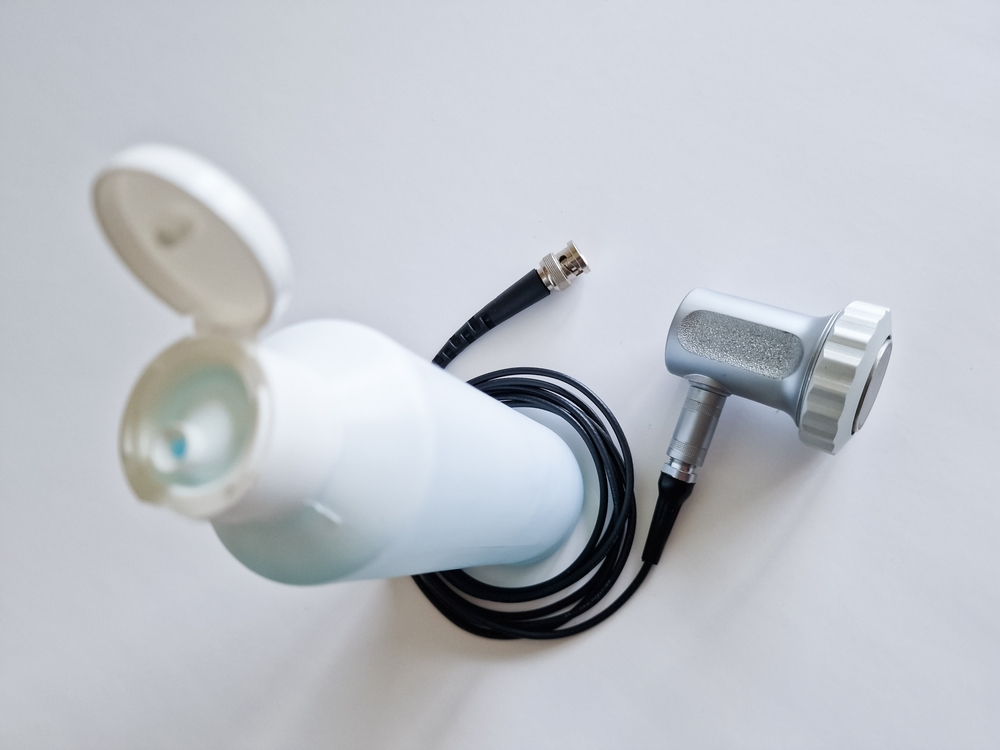
The effectiveness of a piezoelectric transducer heavily relies on the materials used in its construction. These materials exhibit a remarkable ability to generate an electrical charge when subjected to mechanical stress. Sensitivity, efficiency, and environmental stability must be carefully considered when selecting piezoelectric materials for transducer construction.
Quartz
Quartz is commonly used in piezoelectric transducers due to its outstanding mechanical and electrical properties. Its crystalline structure allows it to maintain excellent frequency stability, making it adept at producing accurate and reliable electrical signals. Another common material, Rochelle salt, is favored for its high sensitivity to mechanical strain, making it ideal for applications requiring high levels of responsiveness.
Ceramics
In piezoelectric transducers, engineers widely employ ceramics like lead zirconate titanate (PZT) due to their versatility and capacity for customization to suit specific applications. Engineers can modify their composition to achieve the desired frequency response, temperature stability, and overall performance characteristics, rendering them indispensable in various industrial and consumer electronics devices.
Configuration and Arrangement
Beyond material selection, the arrangement and configuration of the piezoelectric elements within the transducer profoundly impact its conversion efficiency from mechanical to electrical energy. The transducer can maximize output by strategically arranging these elements while ensuring optimal responsiveness to applied mechanical stress.
Understanding the composition of these materials provides insight into the precision engineering involved in creating piezoelectric transducers. This understanding is fundamental when considering their widespread use across various industries.
Working Principle of Piezoelectric Transducers
The magic behind piezoelectric transducers is how they respond to mechanical and electrical forces. When pressure or force is applied to a piezoelectric material, it squishes slightly, triggering the direct piezoelectric effect. The material responds by generating an electric charge, with positive and negative charges shifting within the material due to the mechanical stress.
It’s akin to squeezing a stress ball, where your hand feels the pressure. In this case, the piezoelectric material senses the pressure and reacts by creating an electric charge. This electric potential can then power and operate various devices and sensors.
Conversely, when an electric field is applied to the material, it responds with a mechanical deformation known as the converse piezoelectric effect. Imagine holding a balloon filled with air and lightly squeezing it – the balloon changes shape in response to your action. Similarly, the piezoelectric material alters shape due to the external electric potential.
This amazing back-and-forth between mechanical and electrical energy forms the basis for many modern applications. For example, when you press your smartphone’s screen, you’re causing a tiny deformity by applying pressure, which generates an electrical signal underneath. This signal detects and responds to your touch, allowing you to navigate different apps and features.
Now that we’ve explored the direct and converse piezoelectric effects let’s investigate how these principles are harnessed in various industries and their applications.
We’re entering the fascinating world of applications! Let’s explore how these piezoelectric wonders are used across diverse industries.
Key Applications of Piezoelectric Transducers
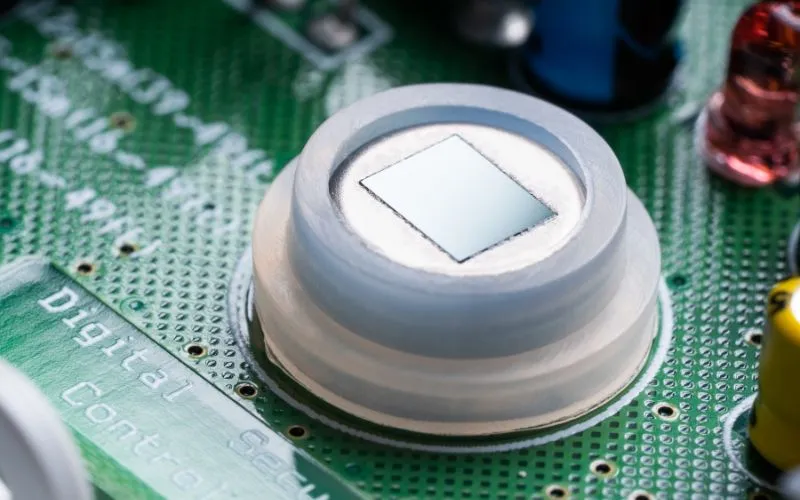
Piezoelectric transducers function as multitasking superheroes across various industries. Their roles range from detecting minute pressure changes to producing sound in musical instruments and generating electrical energy from mechanical vibrations. Let’s explore some of their key applications and how they revolutionize different fields.
Sensors
Piezoelectric transducers are pivotal in the world of sensors, delicately measuring physical quantities such as pressure, acceleration, and force. In industries like automotive engineering, aerospace, and medical devices, these transducers are essential in ensuring critical systems’ safe and efficient operation. For example, in the medical field, piezoelectric sensors monitor vital signs or administer precise medication dosages.
In automotive engineering, manufacturers use these sensors in airbag systems to detect sudden changes in acceleration and trigger the deployment of airbags to protect occupants during a collision. Similarly, in aerospace, engineers utilize piezoelectric sensors in structural health monitoring systems to detect and assess damage or stress on aircraft components for maintenance and safety precautions.
Actuators
Actuators incorporating piezoelectric elements are used in numerous applications requiring controlled mechanical movements. These range from ultrasonic cleaning devices to inkjet printers and musical instruments. The precision of piezoelectric actuators allows for efficient and reliable performance across industries, making them ideal for applications requiring fine-tuned control over mechanical action without sacrificing speed.
Energy Harvesting
Piezoelectric transducers can convert mechanical vibrations into electrical energy through energy harvesting. This technology is integral for low-energy electronics and IoT devices that require sustainable power sources independent of traditional batteries or electrical grids. By harnessing ambient mechanical vibrations from industrial machinery or the environment, piezoelectric transducers pave the way for self-sufficient technology that reduces environmental impact while enhancing operational reliability.
As we continue to explore the wide-reaching applications of piezoelectric transducers, it becomes evident that their contributions extend far beyond mere sensory capabilities or mechanical movement generation.
The Process of Making Piezoelectric Transducers
Creating piezoelectric transducers involves a delicate and precise manufacturing process that begins with carefully selecting the piezoelectric material. This choice profoundly impacts the sensitivity and performance of the resulting transducer, making it a critical decision that shapes the entire manufacturing process.
Piezoelectric Material
Manufacturers don’t arbitrarily select the piezoelectric material used in these transducers. Instead, they meticulously consider crystal structure, chemical composition, and temperature stability. These considerations ensure that the material possesses the necessary properties to convert mechanical energy into electrical signals and vice versa effectively. Some commonly used materials include lead zirconate titanate (PZT), which offers excellent piezoelectric properties and is ideal for various applications due to its high electromechanical coupling factor and robust nature.
Poling Process
Following the crucial material selection step, the piezoelectric materials undergo a poling process, a pivotal phase that significantly enhances their piezoelectric properties. A high-voltage electric field is applied to the material during this phase, uniformly aligning its internal dipoles. This alignment optimizes the material’s ability to convert mechanical strain into electrical charge and vice versa. The precision and uniformity achieved in this poling process directly contribute to the transducer’s overall efficiency and sensitivity.
Electrode Deposition
The next stage in manufacturing piezoelectric transducers involves the deposition of electrodes onto the poled piezoelectric material. These electrodes play a crucial role in facilitating the transfer of electric charge within the transducer, forming an integral part of its structure.
Manufacturers commonly use materials like silver or nickel for electrode deposition, employing physical vapor deposition or screen printing techniques. These methods ensure a reliable and consistent application of electrodes onto the surface of the poled piezoelectric material, allowing for the effective transmission of electrical signals within the transducer.
Precision Manufacturing
It’s crucial to note that skilled artisans execute every step in this intricate manufacturing process with precision and care to ensure the optimal performance and reliability of the final product. The combination of meticulous material selection, thorough poling, and precise electrode deposition culminates in creating highly functional, responsive, and resilient piezoelectric transducers capable of translating mechanical forces into electrical signals with remarkable efficiency.
The journey from selecting the right piezoelectric material to meticulously aligning its internal dipoles through poling and completing it with the deposition of electrodes forms a crucial foundation for building robust and efficient piezoelectric transducers.
Pros and Cons of Piezoelectric Transducers
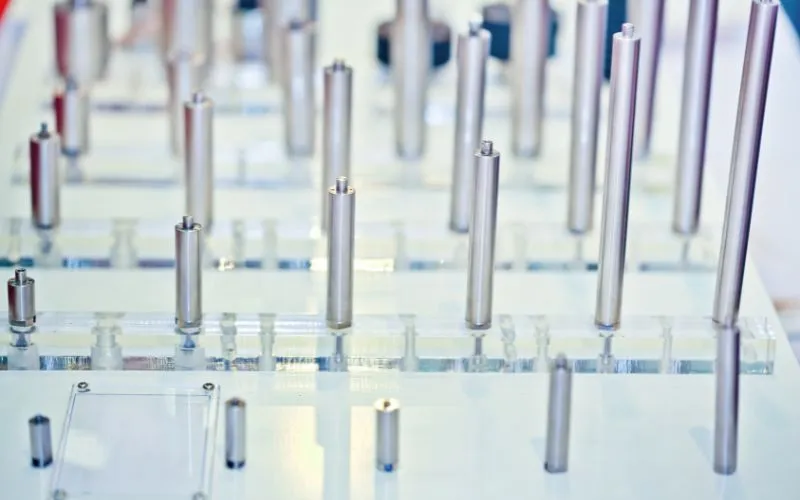
Piezoelectric transducers have revolutionized how we perceive and interact with the physical world, offering many advantages. However, there are a few crucial limitations to consider. Let’s start by discussing the benefits of employing piezoelectric transducers across different industries.
Pros
- High Modulus of Elasticity: The high modulus of elasticity exhibited by piezoelectric materials allows precise and accurate measurements and manipulations. This unique property enables them to convert mechanical forces into electrical signals effectively, making them invaluable in diverse applications where precision and reliability are paramount.
- Excellent Linearity: Another remarkable advantage of piezoelectric transducers is their exceptional linearity. This characteristic ensures that the output signal faithfully represents the applied force or stimulus, providing consistent and dependable results critical in scientific experiments, industrial processes, and medical devices.
- Insensitivity to Electromagnetic Fields: Unlike some other sensor technologies, piezoelectric transducers are relatively immune to electromagnetic interference. This resilience makes them well-suited for use in environments with high levels of electromagnetic activity, ensuring accurate readings and reliable performance.
- Ability to Determine Aromas in the Air: One of the most intriguing capabilities of piezoelectric sensors is their ability to detect and analyze aromas in the air. Researchers and industries harness this unique function in applications such as quality control in food and beverage production, environmental monitoring, and even medical diagnostics, where detecting specific odors is important.
- Stability at High Temperatures: Piezoelectric materials exhibit remarkable stability at high temperatures, with some formulations retaining their functionality even at temperatures up to 1000°C. This exceptional thermal stability broadens the scope of potential applications, including those involving extreme temperature conditions like aerospace, automotive, and industrial processes.
Let’s shift our focus toward exploring potential limitations associated with piezoelectric transducers.
Modern Advancements in Piezoelectric Technology
Advancements in piezoelectric technology have brought about revolutionary changes, especially in enhancing the energy conversion efficiency of piezoelectric transducers. These innovations have led to a significant increase in the effectiveness of energy harvesting applications, which is crucial when considering the growing demand for sustainable and eco-friendly energy sources. By improving energy conversion efficiency, these modern advancements have enabled piezoelectric transducers to harness more energy from their surrounding environment, paving the way for greater utilization of clean energy.
Utilization of Nanotechnology
One of the most noteworthy developments in this field has been the utilization of nanotechnology to create nanocomposite piezoelectric materials. These sophisticated materials have opened up new frontiers for miniaturized and highly sensitive transducers. Nanocomposite materials allow for the manipulation of properties at the nano-scale, resulting in transducers that are not only more compact but also possess increased sensitivity and accuracy. This breakthrough has unlocked various possibilities across various industries, from medical devices to consumer electronics, where space-efficient and highly responsive transducers are in high demand.
Wearable Technology and IoT
Integrating nanocomposite piezoelectric materials has also facilitated the development of smaller and more efficient devices, leading to exciting prospects in wearable technology and Internet of Things (IoT) applications. Imagine wearable gadgets powered by tiny yet highly efficient piezoelectric transducers, seamlessly harvesting energy from natural movements and vibrations.
These advancements are not just about making devices smaller but also making them smarter and more sustainable than ever before. With nanocomposite materials elevating the capabilities of piezoelectric transducers, we are witnessing a shift towards more environmentally friendly and resource-efficient solutions across multiple sectors, contributing to a greener and more sustainable future.
The cutting-edge developments in piezoelectric technology are quickly reshaping our approach to energy harvesting and device design, laying the foundation for a more efficient and sustainable future.
These modern advancements hold tremendous promise for enhancing our technological landscape, enabling the creation of innovative products with improved performance and reduced environmental impact. To delve deeper into this fascinating technological realm, explore Piezoelectric Elements to stay updated on the latest developments.
