Unveiling the Secrets of Transformer Differential Protection
What is Transformer Differential Protection
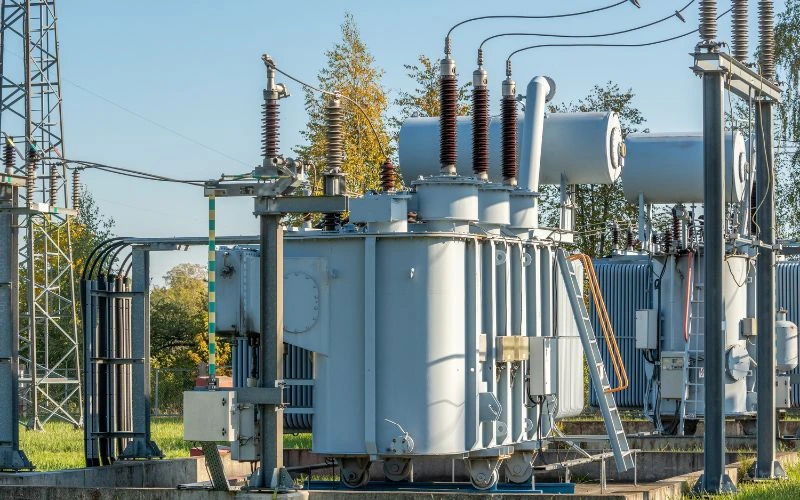
Principles of Operation
At its core, differential protection relies on maintaining a balance between the currents entering and exiting the transformer windings under normal operating conditions. Any deviation from this balance indicates the presence of a fault within the transformer. Key aspects of its operation include:
- Current Balance Principle: Differential protection involves balancing the currents entering and exiting the transformer windings. This balance serves as the foundation for fault detection.
- Biased Differential Protection: Modern differential relays incorporate biasing techniques to address challenges such as magnetizing inrush currents and transient phenomena. These techniques ensure the protection system remains robust and responsive under varying operating conditions.
- High-Speed Operation: Differential relays are engineered for swift operation, aiming to detect and isolate faults as soon as possible to prevent cascading failures within the power system.
Components of Transformer Differential Protection
Several components work in tandem to enable effective transformer differential protection:
- Current Transformers (CTs): Current Transformers (CTs) are pivotal in measuring currents entering and leaving the transformer windings. Proper CT selection, installation, and calibration are essential for accurate differential protection operation.
- Differential Relays: These electronic devices compare the currents measured by CTs and initiate tripping commands if a fault condition is detected. Modern digital relays offer advanced features such as communication capabilities and fault recording, enhancing the reliability and diagnostic capabilities of the protection scheme.
Applications of Transformer Differential Protection
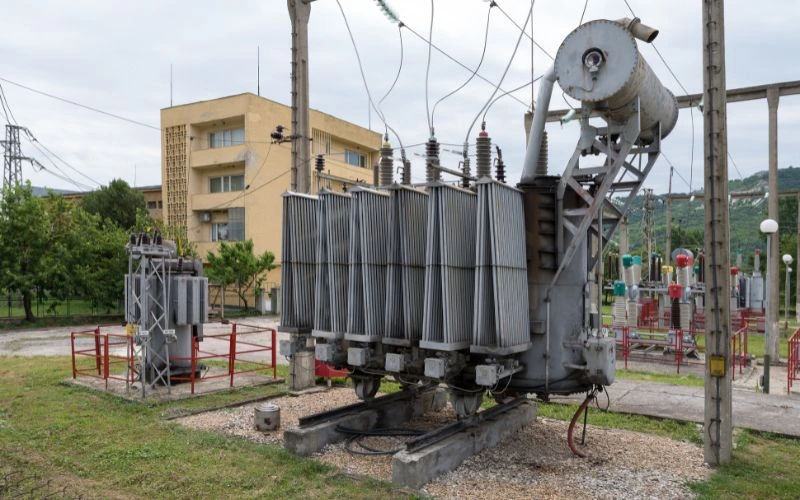
Transformer differential protection finds applications in various scenarios, including:
- Medium and High Voltage Networks: Differential protection is commonly deployed in medium and high voltage networks to safeguard transformers against internal faults and ensure an uninterrupted electricity supply to consumers.
- Industrial Power Systems: Industrial facilities with critical power requirements rely on transformer differential protection to protect vital equipment and processes from disruptions caused by transformer faults.
- Renewable Energy Installations: In renewable energy installations such as wind farms and solar power plants, transformer differential protection plays a crucial role in maintaining grid stability and reliability, particularly in remote or isolated locations.
Challenges and Solutions
Despite its effectiveness, transformer differential protection faces several challenges that must be addressed:
- Inrush Currents: Magnetizing inrush currents during transformer energization can mimic fault conditions, leading to unnecessary tripping. Differential relays employ sophisticated algorithms that differentiate between inrush currents and genuine fault conditions to mitigate this issue.
- CT Saturation: Under fault conditions, CTs may saturate, leading to inaccurate current measurements. Relay settings and CT sizing must be carefully coordinated to mitigate the effects of CT saturation and ensure reliable operation under all circumstances.
- Communication and Coordination: In large power systems with multiple transformers, coordination between differential relays and communication with supervisory control systems are crucial for effective protection coordination and fault management. Integration with other protection functions, such as overcurrent protection and distance protection, enhances the overall reliability and performance of the protection scheme.
Advancements in Transformer Differential Protection

The field of transformer differential protection has witnessed significant advancements, driving improvements in accuracy, flexibility, and diagnostic capabilities:
- Numerical Relays: Traditional electromechanical relays have largely been superseded by numerical relays, offering enhanced accuracy and flexibility. Numerical relays also facilitate advanced diagnostic capabilities, allowing for more efficient fault analysis and troubleshooting.
- Adaptive Protection Algorithms: Modern differential relays incorporate adaptive algorithms that continuously adjust relay settings based on prevailing operating conditions. These adaptive algorithms enhance sensitivity while reducing the risk of nuisance tripping, optimizing system performance and reliability.
- Integrated Protection Schemes: Transformer differential protection is increasingly integrated with other protective functions such as overcurrent protection, distance protection, and voltage protection. This integration enables the development of comprehensive protection schemes that offer coordinated fault detection, isolation, and system restoration capabilities, thereby bolstering the resilience and reliability of power systems.
Conclusion
FAQs
1. How does transformer differential protection differ from traditional overcurrent protection?
Transformer differential protection operates based on comparing currents entering and leaving the transformer windings, whereas overcurrent protection relies on predefined threshold values of current. Differential protection offers higher sensitivity and faster operation, making it suitable for detecting internal faults.
2. What measures can prevent unnecessary tripping due to inrush currents?
To prevent unnecessary tripping caused by magnetizing inrush currents, differential relays employ various techniques such as harmonic restraint, flux restraint, and adaptive algorithms. Additionally, proper CT sizing, selection, and coordination with transformer energization sequences can help mitigate the effects of inrush currents.