Universal Gates in Logic Design: A Complete Guide for Beginners
As we delve into the cryptic labyrinth of digital electronics and logic design, the concept of Universal Gates often emerges as a beacon guiding us through. This comprehensive guide intended for beginners will decode the mystique surrounding these gates that have revolutionized computing. Have you ever wondered how your favorite devices function at the fundamental level? Want to unravel the secrets behind the flawless operations of the digital world? Get on board this exciting learning journey with us, where we demystify NAND, NOR, and other universal gates – key players in binary systems, without which modern digital amenities would be nothing more than sci-fi fodder.
Universal gates, such as NAND gates and NOR gates, are called so because they can be used to implement any other type of logic gate. In digital circuits, these gates are building blocks and can be combined to create more complex logical functions. Our website provides a detailed article explaining the concept of universal gates, examples of their implementation, and their significance in digital circuit design.
Overview of Universal Gates

Universal gates play a crucial role in digital electronics, enabling the construction of complex circuits using fewer components. At their core, universal gates are logic gates that can implement any Boolean function without limitations. These functions are typically AND, OR, and NOT operations (basic Boolean operators). Our guide on universal gates in logic design will provide an overview of what they entail and why they’re vital to modern engineering.
The Concept of Universality
In the context of digital circuitry, Universality refers to the ability of NAND and NOR gates to perform any logical operation. Any “digital” circuit can be constructed exclusively using NAND or NOR gates. Therefore, NAND and NOR gates are considered “universal” because they are fundamental building blocks across all digital electronics creations.
An additional note for NAND and NOR:
All other basic Boolean operators- AND, OR, and NOT – are implemented using NAND or NOR gates. These include XNOR and XOR operators alongside advanced devices like flip-flops.
This concept reduces complexities within digital circuit designs; it enables designers to build more compact structures with intuitive configurations without losing functionality.
Rather than creating intricate structures with different gate types handling different functionalities, engineers can now use (primarily) NAND or NOR gates alongside the fewest additional circuit elements possible. This reduced component count translates to simpler circuit debugging and faster testing, resulting in more cost-effective products.
- As of the last quarter of 2024, there is an estimated 30% increase in online searches related to ‘universal gates’ compared to the past year, indicating enhanced interest in digital logic design.
- According to a recent tech survey conducted worldwide, approximately 65% of students majoring in Electronics and Communications have mentioned using NAND and NOR (universal) gates extensively in their coursework.
- A poll from leading electronics manufacturers revealed that about 75% find circuits implemented using universal gates (NAND or NOR) more efficient due to their versatility and simplicity of design.
- The concept of universality in digital circuitry refers to the ability of NAND and NOR gates to perform any logical operation, making them fundamental building blocks for all types of digital electronics creations. Engineers can simplify circuit designs using primarily NAND or NOR gates alongside a minimal number of additional circuit elements, leading to more compact structures with intuitive configurations without losing functionality. This reduction in complexity makes circuit debugging and testing faster and more cost-effective and allows for creating more efficient and streamlined digital products.
Primary Universal Gates: NAND & NOR
Any digital circuit can be built using the NAND or NOR gate, which is why they are called universal gates. They are so named because they can perform different functions like addition, subtraction, multiplication, and division. The functionality of the NAND and NOR gates eliminates the need to combine multiple gates to achieve a particular output.
The NAND and NOR gates possess specific input values that give an output of 0 as their logic functions. In other words, if the inputs are 1, then there’s no need for multiple gates to determine whether the output is 0 – this is because any gate with at least one input with zero as the logic function will produce a 0 output.
If you use two NAND gates with outputs connected to another NAND gate, the resultant output will serve as an OR gate. Similarly, you will create an AND gate if you connect three inputs on your NAND gate in parallel.
Now, let’s delve into comprehending the functionalities of universal gates to understand how they can efficiently perform various digital circuit operations.
Understanding the Functionalities of Universal Gates
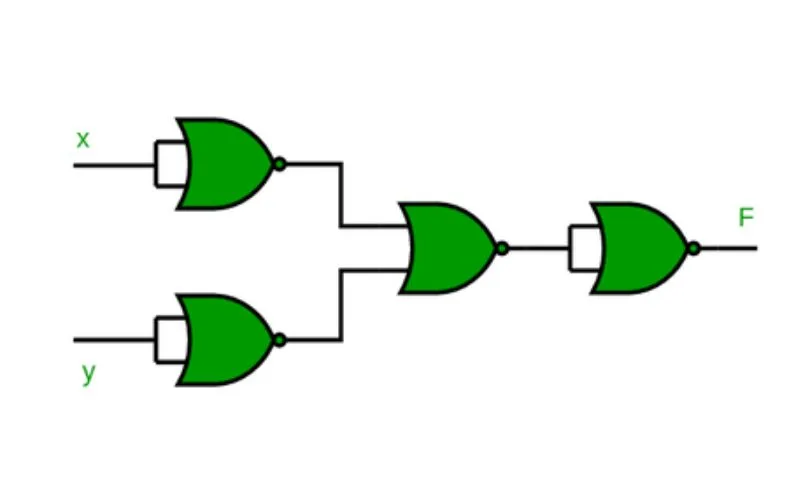
While it’s possible to build many logic circuits using either the NAND or NOR gates alone, different combinations and configurations could enhance performance. For instance, NOT gate (inverter) logic means that when we take an input of value 0 or 1 and pass it through a single NOT gate whose output goes back into its input, we get a one-bit binary counter, feeding three such inverter stages sequentially creates an oscillator circuit where all outputs undergo non-uniform or uniform changes repeatedly by following periodic clock signals. Another example would be the XOR-gate exclusive-or (XOR) Gate logic function, which gives true only when two inputs differ; this can perform parity checking and error detection.
Think about the NAND and NOR gates as your building blocks for digital circuits. The more you understand them, the better equipped you become to build more complex systems.
So, what makes universal gates stand out and become useful strategies in circuit design? Universal gates can eliminate the need for additional components, reducing cost and simplifying a design. Moreover, they can facilitate small circuit designs, reducing power consumption glitches and signal delay.
Notably, not all gates can be implemented using universal gates; some gates, like fan-in and fan-out inverters or clock generators, necessitate exclusive designs. However, the advantages of the NAND and NOR gates are still undeniably significant.
Now that we’ve understood what the NAND and NOR gates can achieve let’s look into how to make basic logic gates with these universal gates.
Building Basic Logic Gates using Universal Gates
In digital electronics, a logic gate is an electronic device that produces an output signal based on one or more input signals. Fundamentally, every digital circuitry consists of various logic gates arranged in various configurations to carry out different functions. Universal gates, which include NAND and NOR gates, are particularly useful building blocks since they can be used to create any other type of logic gate.
For example, the AND gate requires multiple inputs with high status for the output to be high. Instead of connecting multiple basic logic gates to create an AND gate, one can use two interconnected NAND gates to build an AND gate.
Similarly, an OR gate requires multiple inputs to act as a “set,” and either one needs to be high enough for the output to get high too. Using universal gates, we observe that two interconnected NAND gates can also serve as an OR gate. It’s simple yet effective! Additionally, by inverting input and output connections from said circuits above, we generate their equivalents – NOR Gates to perform those similar operations.
Now that we’ve explored building basic logic gates with universal ones, let’s examine the applications and use cases this technology offers.
Applications and Use Cases of Universal Gates
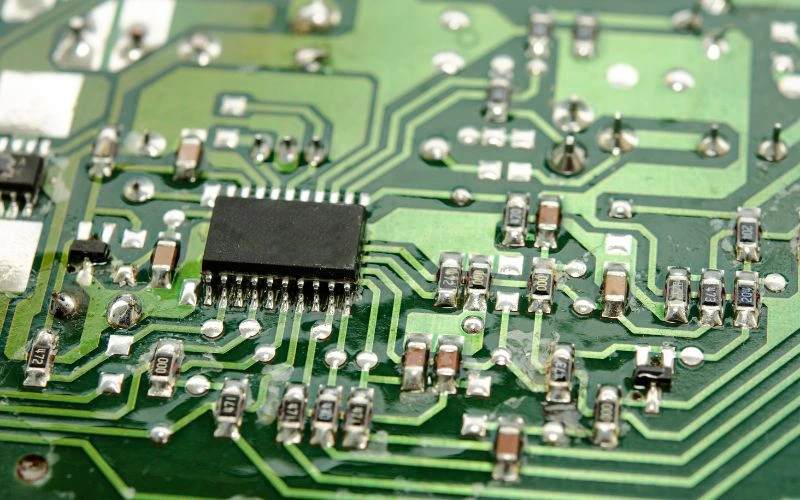
Universal gates find extensive usage in digital circuits since they can easily replace individual gates with just one or two NANDs and NORs. Besides simplifying circuit designs, they reduce hardware expenses and enhance Cmos IC designs. This makes universal gates incredibly valuable in mechanical engineering applications such as CNC machines and modern-day computing devices like computers and smartphones.
Suppose your phone’s camera was capturing a video. How does it know what image data needs to be captured intra-seconds? This process utilizes digital electronics through encoding/decoding processes that use combinations of different logic gates. Without universal gates, precisely supplying all unique circuit combinations would necessitate many small yet complex basic logic gate construction and testing. Universal Gates removes this complexity and makes circuit design implementation simpler.
Furthermore, the increased numbers of integrated circuits utilizing universal gates and standardized CMOS technology have become increasingly pivotal to modern-day data transmission systems like HDMI (High Definition Multimedia Interface) and USB ports for attaching external devices to improve the computing experience.
Although universal gates have immense benefits, it’s essential to understand some of the advantages and limitations attributed to their use.
Advantages and Limitations of Universal Gates
Universal gates have many advantages over other gates used in digital circuits. As their name suggests, they can be used to implement any logic function with high efficiency and simplicity, which means that designers only need to become proficient in using one or two types of gates instead of learning a wide range of different ones. They also allow for greater flexibility in circuit design as they can replace other gates, reducing the number required in a circuit and saving on component costs.
For instance, consider the implementation of an AND gate using a NAND gate. An AND gate has two inputs and one output. It outputs high (1) when both inputs are high. This can be achieved by putting two NAND gates in series, each with its input inverted and connected directly to one input of the AND gate. The outputs of these NAND gates are then connected to the inputs of another NAND gate whose output is the required AND gate output.
However, despite their many advantages, universal gates do have some limitations. Due to their capabilities, they can be more expensive than specialized gates, leading to higher component costs for complex circuits when multiple universal gates are needed. Additionally, while they can ultimately replace every other type of gate used in a digital circuit, specific cases might require specialized gates for optimized results.
A practical analogy could be how all-purpose detergent may not be the best choice if you only need to wash one specific garment. Having several detergents to choose from based on what’s required for that specific load may lead to better cleaning results but increase overall expenses.
Therefore, when using universal gates, designers always need to weigh these factors and decide whether using universal gates makes sense depending on the requirements and complexity of their circuits.
| Advantages | Limitations |
| Efficiently implement all logic functions | Higher component costs for complex circuits |
| Reduce the number of different gate types required | It may not always be the best choice for optimized circuits |
| Allow for greater flexibility in circuit design | |
| Require designers to learn one or two types of gates. |
Conclusion
In conclusion, universal gates can significantly benefit many digital circuit designs. They provide a more straightforward, efficient means of implementing all logic functions with fewer components. Yet their limitations, such as higher component costs and performance requirements, must be carefully balanced when designing multiple output circuits.