

Ferromagnetic Material: Unlocking the Mysteries of Attraction
Ferromagnetic material has long fascinated scientists and engineers, captivating their imaginations with its unique properties and potential applications. From the humble refrigerator magnet to the complex machinery of modern technology, this remarkable substance plays a crucial role in our everyday lives. In this exploration of ferromagnetic material, we will delve into its intriguing nature, historical significance, and the numerous ways it continues to shape our world.
At its core, ferromagnetic material possesses a magnetic property that sets it apart from other materials. When exposed to a magnetic field, it becomes magnetized, attracting other magnetic objects and exhibiting a phenomenon known as ferromagnetism. This captivating property has been harnessed by humans for centuries, dating back to ancient civilizations that marveled at the power of lodestones.
Throughout history, the understanding and utilization of ferromagnetic material have evolved significantly. From the groundbreaking discoveries of Michael Faraday and James Clerk Maxwell in the 19th century to the modern advancements in materials science and engineering, our knowledge of ferromagnetism has expanded exponentially. Today, ferromagnetic material is at the heart of countless technological marvels, from electric motors and generators to magnetic storage devices and medical imaging equipment.
Beyond its practical applications, ferromagnetic material also holds a place of intrigue in the scientific community. The study of its microscopic structure and the intricate mechanisms behind its magnetic behavior continue to captivate researchers, pushing the boundaries of our understanding of the fundamental forces that govern our universe.
As we embark on this journey through ferromagnetic material, we invite you to join us in uncovering the secrets of attraction. From the origins of its name to the cutting-edge research that propels its future, we will explore the depths of this magnetic world, opening doors to new possibilities and inspiring further exploration. So, fasten your seatbelts and prepare to be magnetically drawn into the captivating world of ferromagnetic material.
What is a Ferromagnetic Material?
Ferromagnetic materials are substances that exhibit strong magnetic properties. They are widely used in various applications, such as electronics, telecommunications, and energy generation. Understanding the nature of ferromagnetic materials is crucial for harnessing their magnetic properties effectively.
One key characteristic of ferromagnetic materials is their ability to retain a significant amount of magnetization even after an external magnetic field is removed. This property is known as hysteresis. It allows ferromagnetic materials to be used as permanent magnets, essential in many devices like electric motors and generators.
The magnetic behavior of ferromagnetic materials arises from the alignment of their atomic spins. In these materials, neighboring atoms tend to align their magnetic moments parallel to each other, creating domains with a net magnetic moment. When an external magnetic field is applied, these domains align themselves in the direction of the field, resulting in a stronger magnetic effect.
Iron, nickel, and cobalt are the most commonly known ferromagnetic materials. However, some other elements and compounds exhibit ferromagnetism, such as gadolinium and some alloys. The presence of certain impurities or the introduction of specific crystal structures can also enhance or suppress the ferromagnetic properties of a material.
Understanding the behavior of ferromagnetic materials is crucial for various technological advancements. It enables the developing of more efficient magnetic storage devices, such as hard drives and magnetic tapes. Additionally, the study of ferromagnetic materials contributes to the advancement of magnetic sensors, microwave devices, and magnetic resonance imaging (MRI) technology.
In conclusion, ferromagnetic materials possess unique magnetic properties that make them valuable in numerous applications. Their ability to retain magnetization and exhibit strong magnetic effects has revolutionized various industries. Further research and development in this field will continue to unlock new possibilities for utilizing ferromagnetic materials in innovative ways.
What are the Properties of Ferromagnetic Materials?

Ferromagnetic materials are a group of substances that exhibit strong magnetic properties. These materials are widely used in various industries, including electronics, telecommunications, and energy production. Understanding the properties of ferromagnetic materials is crucial for engineers and scientists working in these fields.
One of the key properties of ferromagnetic materials is their ability to become magnetized. When exposed to a magnetic field, these materials align their magnetic moments in the same direction, creating a strong magnetic force. This property is known as ferromagnetism and is responsible for the magnetic behavior observed in materials like iron, nickel, and cobalt.
Another important property of ferromagnetic materials is their ability to retain magnetization even after the external magnetic field is removed. This property, known as hysteresis, allows these materials to produce permanent magnets. The strong magnetic field produced by ferromagnetic materials makes them ideal for applications such as magnetic storage devices and electric motors.
Ferromagnetic materials also exhibit strong magnetic interactions between neighboring atoms or ions. This property, exchange interaction, is responsible for forming magnetic domains within the material. These domains align in the same direction, further enhancing the overall magnetic properties of the material.
In addition to their magnetic properties, ferromagnetic materials have high electrical conductivity. This makes them suitable for applications where both magnetic and electrical properties are required, such as in transformers and inductors.
In conclusion, ferromagnetic materials possess unique properties that make them invaluable in various industries. Their ability to become magnetized, retain magnetization, and exhibit strong magnetic interactions make them essential for the development of modern technologies. Understanding these properties is crucial for engineers and scientists working with ferromagnetic materials, as it allows them to design and create innovative solutions for various applications.
What are some examples of Ferromagnetic Materials?
Ferromagnetic materials are substances that exhibit strong magnetic properties. These materials are characterized by their ability to become permanently magnetized when exposed to a magnetic field. They are crucial in various industries, including electronics, telecommunications, and energy.
One of the most well-known examples of a ferromagnetic material is iron. Iron is widely used in magnet manufacturing due to its high magnetic strength and low cost. It is also used to construct transformers, motors, and generators.
Another common ferromagnetic material is nickel. Nickel has excellent magnetic properties and is often alloyed with other metals to enhance its strength and durability. It is frequently used to produce rechargeable batteries, magnetic recording media, and electrical contacts.
Cobalt is yet another example of a ferromagnetic material. It is highly magnetic and has a high Curie temperature, which makes it suitable for applications in high-temperature environments. Cobalt is utilized to produce magnetic alloys, such as Alnico and Samarium-Cobalt magnets.
Manganese is a ferromagnetic material that is often used in the production of steel. It improves the magnetic properties of steel and is essential for the manufacturing of electrical transformers and motors.
Other examples of ferromagnetic materials include gadolinium, dysprosium, and neodymium. These rare earth metals possess strong magnetic properties and are used in various applications, including magnetic resonance imaging (MRI) machines, magnetic sensors, and magnetic data storage devices.
In conclusion, ferromagnetic materials are crucial in numerous industries due to their ability to become permanently magnetized. Iron, nickel, cobalt, manganese, and rare earth metals like gadolinium, dysprosium, and neodymium are all examples of ferromagnetic materials that find extensive applications in various technological and industrial fields.
How do Ferromagnetic Materials behave in a Magnetic Field?
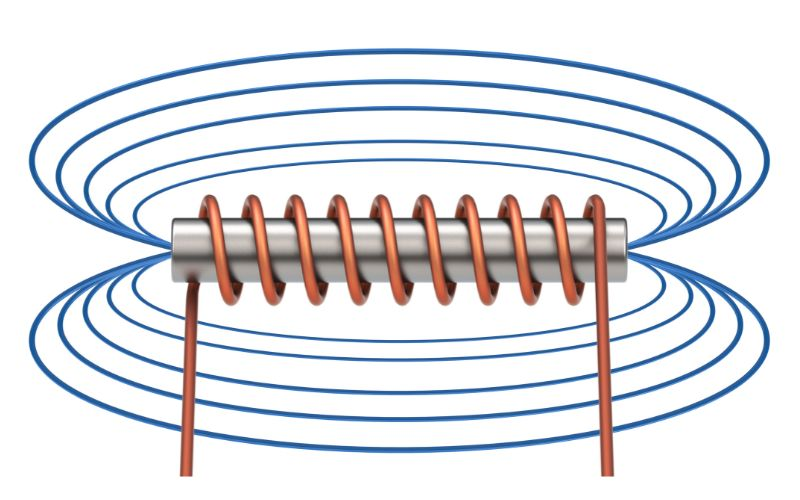
Ferromagnetic materials, such as iron, nickel, and cobalt, exhibit fascinating behavior when exposed to a magnetic field. Understanding how these materials respond to magnetic forces is crucial in various industries, including electronics, telecommunications, and energy.
One of the most remarkable characteristics of ferromagnetic materials is their ability to become permanently magnetized. When placed in a magnetic field, the individual magnetic moments of the atoms align with the external field, resulting in a net magnetic moment for the material. This alignment persists even after the external field is removed, creating a magnet. This property makes ferromagnetic materials ideal for applications like compass needles and refrigerator magnets.
Furthermore, ferromagnetic materials display a phenomenon known as hysteresis. Hysteresis refers to the lag between the applied magnetic field and the resulting magnetization of the material. This lag occurs due to the resistance of the atomic magnetic moments to realign themselves with the changing field. As a result, ferromagnetic materials retain their magnetization even when the external field fluctuates.
In addition to their magnetization properties, ferromagnetic materials exhibit high magnetic permeability. This means they can easily conduct magnetic flux, making them valuable in transformers and inductors. The high permeability allows for efficient energy transfer and helps amplify magnetic fields.
In conclusion, ferromagnetic materials behave uniquely in the presence of a magnetic field. Their ability to become permanently magnetized, exhibit hysteresis, and possess high magnetic permeability makes them indispensable in various industries. By harnessing the properties of ferromagnetic materials, we can develop innovative technologies that revolutionize our world.
What is the Curie Temperature of Ferromagnetic Materials?
The Curie temperature is a fundamental property of ferromagnetic materials that determines their behavior at different temperatures. It is named after Pierre Curie, a French physicist who significantly contributed to the study of magnetism.
Simply put, the Curie temperature is when a ferromagnetic material loses its permanent magnetism. Below this temperature, the material exhibits strong magnetic properties, such as the ability to attract or repel other magnets. However, as the temperature rises above the Curie temperature, the material gradually loses its magnetism and eventually becomes paramagnetic or non-magnetic.
The Curie temperature varies depending on the specific composition and structure of the ferromagnetic material. Different materials have different Curie temperatures, ranging from a few degrees Kelvin to several hundred degrees Celsius. Some common examples of ferromagnetic materials and their Curie temperatures include iron (770°C), nickel (358°C), and cobalt (1121°C).
Understanding the Curie temperature is crucial for various technological applications. For instance, it is essential in the design and manufacturing of magnetic storage devices like hard drives. By carefully selecting materials with suitable Curie temperatures, engineers can optimize the performance and stability of these devices.
It is worth noting that the Curie temperature is influenced by external factors such as pressure and magnetic fields. Applying high pressure or strong magnetic fields can alter the Curie temperature of a material, providing opportunities for further control and manipulation of its magnetic properties.
In conclusion, the Curie temperature is a critical characteristic of ferromagnetic materials that determines their magnetic behavior at different temperatures. By understanding and harnessing this property, scientists and engineers can develop innovative technologies that rely on magnetism.
Can Ferromagnetic Materials be Demagnetized?

Ferromagnetic materials, known for retaining magnetization even after removing an external magnetic field, have long fascinated scientists and engineers. However, a question often arises is whether these materials can be demagnetized. The answer, in short, is yes.
Demagnetization refers to reducing or eliminating the magnetic field within a material. While ferromagnetic materials are highly resistant to demagnetization, it is possible to demagnetize them through various methods.
One common method is known as heating above the Curie temperature. The Curie temperature is when a ferromagnetic material loses its magnetic properties. By heating the material above this temperature and then slowly cooling it, the alignment of the magnetic domains within the material can be disrupted, resulting in demagnetization.
Another method involves applying an alternating magnetic field to the material. This field causes the magnetic domains to continuously switch direction, leading to a loss of overall magnetization. This process is often used in industrial applications to demagnetize ferromagnetic materials.
Additionally, mechanical shock or vibration can also demagnetize ferromagnetic materials. The impact or vibration causes the magnetic domains to become misaligned, resulting in magnetization loss.
It is important to note that the ease of demagnetization depends on the specific properties of the ferromagnetic material. Some materials are more resistant to demagnetization than others, and the demagnetization process may need to be tailored accordingly.
In conclusion, while ferromagnetic materials have a strong tendency to retain magnetization, they can indeed be demagnetized through various methods such as heating, applying alternating magnetic fields, or subjecting them to mechanical shock or vibration. Understanding the demagnetization process is crucial for applications where precise control over magnetization is required.
What are the Applications of Ferromagnetic Materials?
Ferromagnetic materials, with their unique magnetic properties, have found numerous applications in various fields. From technology to medicine, these materials play a crucial role in modern society.
One of the most well-known applications of ferromagnetic materials is in the field of electronics. Magnetic storage devices, such as hard drives and magnetic tapes, rely on the ability of these materials to retain magnetic fields. This allows for the storage and retrieval of vast amounts of data, making them essential for our digital world.
In addition to electronics, ferromagnetic materials are widely used in producing electric motors and generators. The magnetic properties of these materials enable efficient energy conversion, making them ideal for powering everything from small household appliances to large industrial machinery.
Another important application of ferromagnetic materials is in the field of medicine. Magnetic resonance imaging (MRI) machines utilize the magnetic properties of these materials to generate detailed images of the human body. This non-invasive imaging technique has revolutionized medical diagnostics, allowing doctors to detect and diagnose various conditions with high precision.
Furthermore, ferromagnetic materials are used in the manufacturing of transformers and inductors. These devices are essential for the transmission and distribution of electrical energy, enabling efficient power transfer over long distances.
In conclusion, ferromagnetic materials have various applications in various industries. From electronics to medicine, their unique magnetic properties enable the development of innovative technologies that shape our modern world. As research and technology advance, we can expect to see even more applications of ferromagnetic materials.
How are Ferromagnetic Materials used in Magnetic Storage Devices?

Ferromagnetic materials play a crucial role in the development and functioning of magnetic storage devices. These materials possess unique properties that make them ideal for storing and retrieving large amounts of data in various electronic devices, such as hard drives and magnetic tapes.
One of the key characteristics of ferromagnetic materials is their ability to retain a magnetic field even after the external magnetic field is removed. This property, known as hysteresis, allows for the stable storage of data over extended periods. The most commonly used ferromagnetic material in magnetic storage devices is iron, due to its high magnetic permeability and low coercivity.
In hard drives, ferromagnetic materials are used to create tiny magnetic domains, which represent the binary data. These domains can be magnetized in one of two directions, corresponding to the binary values of 0 and 1. By applying magnetic fields through read/write heads, the data can be written or read from these domains, allowing for the storage and retrieval of information.
Magnetic tapes also similarly utilize ferromagnetic materials. The tape is coated with a thin layer of ferromagnetic material, such as iron oxide. The data is stored as magnetic patterns on the tape, and a magnetic head is used to read and write the information.
The use of ferromagnetic materials in magnetic storage devices provides several advantages. They offer high data density, allowing storing large amounts of information in a compact space. Additionally, they provide non-volatile storage, meaning the data is retained even when the power is turned off.
In conclusion, ferromagnetic materials are essential components in magnetic storage devices. Their unique properties enable reliable and efficient data storage, making them indispensable in modern electronic devices.
In conclusion, ferromagnetic materials are a fascinating subject with many applications and properties. Throughout this post, we have explored various aspects of these materials, including their definition, properties, examples, behavior in a magnetic field, Curie temperature, demagnetization, applications, and usage in magnetic storage devices.
We have learned that ferromagnetic materials are substances that exhibit strong magnetic properties due to the alignment of their atomic magnetic moments. This unique characteristic allows them to be used in various industries, such as electronics, telecommunications, and medicine.
Some key properties of ferromagnetic materials include their ability to retain magnetization even after removing an external magnetic field, their high magnetic permeability, and their tendency to form magnetic domains.
We have also discussed the behavior of ferromagnetic materials in a magnetic field, where they align themselves with the field lines, leading to the creation of magnetic domains. Additionally, we have explored the concept of the Curie temperature, which is the temperature at which ferromagnetic materials lose their magnetic properties.
Furthermore, we have examined the demagnetization process and how ferromagnetic materials can be demagnetized through various methods, such as heating or applying an alternating magnetic field.
The applications of ferromagnetic materials are vast and diverse. They are used to manufacture transformers, motors, generators, magnetic sensors, and magnetic storage devices. Speaking of which, we have delved into the role of ferromagnetic materials in magnetic storage devices, such as hard drives and magnetic tapes, where their magnetic properties are crucial for data storage.
Looking ahead, we can expect further advancements and developments in ferromagnetic materials. With the constant evolution of technology, new applications and uses for these materials are likely to emerge.
In conclusion, understanding ferromagnetic materials is essential for various industries and scientific research. By harnessing their unique properties, we can continue to innovate and improve our technological capabilities. Thank you for reading this post, and we encourage you to leave any comments or feedback. Your insights and thoughts are greatly appreciated.
