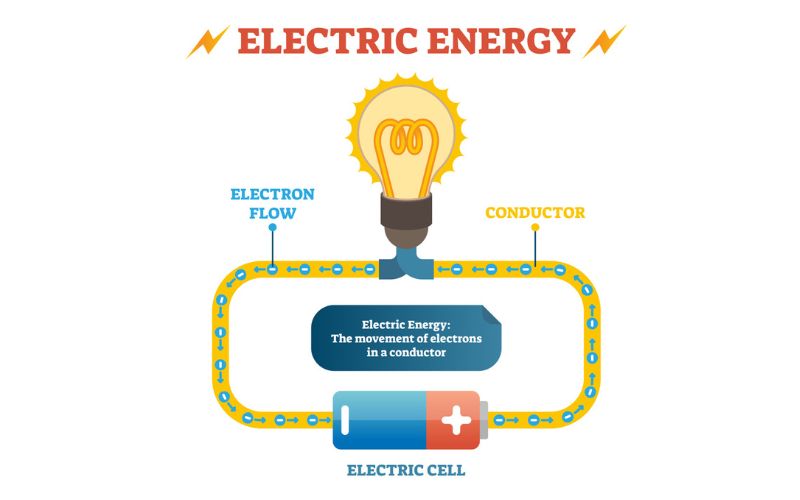
Conductors

The Semiconductors Spectrum: A Guide to Different Types

In the intricate world of electronics, semiconductors are the unsung heroes that power our modern technological landscape. These materials can conduct electrical current selectively, making them the building blocks of transistors, diodes, microchips, and much more. However, not all semiconductors are created equal. They come in a rich tapestry of materials, each with its properties and applications. In this journey through the semiconductor universe, we will unravel the diverse materials that form the electronics foundation, from classic silicon to exotic compounds and everything in between.

Silicon: The Workhorse of Electronics

Silicon, often referred to as the workhorse of the semiconductor industry, has been a staple material for decades. Its abundance, stability, and well-understood properties make it the go-to choice for most electronic applications. Silicon-based semiconductors power our computers, smartphones, and countless other devices. They’re also the foundation of integrated circuits, where millions of transistors work harmoniously to process and store information.

Germanium: The Forgotten Element

Germanium, while less common in modern electronics, played a significant role in the early days of semiconductor technology. It has similar properties to silicon but requires stricter manufacturing conditions. Germanium-based devices, such as diodes and transistors, were vital in pioneering electronic systems.

Compound Semiconductors: Breaking New Ground

Types of Semiconductors

Compound semiconductors are a fascinating category of materials created by combining elements from different groups in the periodic table. Gallium arsenide (GaAs), gallium nitride (GaN), and indium phosphide (InP) are just a few examples. These materials offer unique advantages, such as high electron mobility and excellent performance in high-frequency applications. Compound semiconductors are crucial in developing advanced electronics, including high-speed communication devices and cutting-edge radar systems.

Organic Semiconductors: Flexible and Futuristic

Organic semiconductors are an emerging class of materials that hold immense promise for flexible electronics, organic light-emitting diodes (OLEDs), and more. Composed of carbon-based molecules, they offer flexibility, lightweight design, and low-cost manufacturing. Organic semiconductors pave the way for bendable displays, wearable technology, and organic solar cells.

Exotic Semiconductors: Pushing the Boundaries

Beyond conventional materials, researchers are continually exploring exotic semiconductors like diamond, silicon carbide (SiC), and perovskite. These materials exhibit remarkable properties, from extreme durability and high-temperature stability to impressive photovoltaic efficiency. Exotic semiconductors are at the forefront of cutting-edge technologies, including high-power electronics and next-generation solar cells.

Semiconductor Classification: Intrinsic vs. Extrinsic

Semiconductors are the backbone of modern electronics, and their ability to control the flow of electrical current makes them indispensable in a wide range of applications. To better understand their behavior and utility, we categorize semiconductors into two main types: intrinsic and extrinsic. These classifications are essential in theoretical and practical semiconductor physics and technology.

Intrinsic semiconductor

Principle of Electronics

A semiconductor is an extremely pure form known as an intrinsic semiconductor.
Common examples of such semiconductors are pure Germanium and silicon, which have forbidden energy gaps of 0.72 eV and 1.1 eV, respectively.
Alternatively, an intrinsic semiconductor may be desired as one in which the number of conduction electrons is equivalent to the integer of holes.
In an intrinsic semiconductor, uniform at room temperature, hole % electron pairs are produced when an electric field is applied through an intrinsic semiconductor. The current conduction proceeds by two processes: free electrons and holes, as shown in the figure.

Intrinsic semiconductor

Extrinsic Semiconductors

Semiconductors are classified into Intrinsic semiconductors and Extrinsic semiconductors. Extrinsic semiconductors further may be classified into N-type and P-type semiconductors. While intrinsic semiconductors have their uses, many practical electronic devices require more precise control over electrical behavior. This is where extrinsic semiconductors come into play. Extrinsic semiconductors are created by intentionally introducing specific types and amounts of impurities, a process known as doping.

Adding a minor amount of appropriate impurity (Donor) to an intrinsic semiconductor converts an extrinsic semiconductor.
Intrinsic semiconductors are so-called extrinsic semiconductors on which specific suitable impurity or doping agent has been added in exceptionally lesser amounts.

Doping

It’s the process of adding impurities to the semiconductors. The amount and types of such contaminants have to be carefully controlled for the period of the preparation of extrinsic semiconductors.
The determination of increasing impurity is to raise either the number of free electrons or holes in the semiconductor crystal.
Depending upon the kinds of impurity added, extrinsic semiconductors are classified into:
  1. N-type semiconductors
  2. P-type semiconductors

N-Type semiconductors

When a lesser amount of pentavalent impurities is added to a pure semiconductor, it is named an n-type semiconductor. (N stands for Negative).
Adding pentavalent impurity delivers many free electrons in the semiconductor crystal.
The usual example of pentavalent impurities is arsenic (AS) and antimony (Sb). Such impurities that create n-type semiconductors are known as donor impurities since they donate or deliver free electrons to the semiconductor crystal.

Creation of N-type semiconductor

It is obtained when a pentavalent material like antimony is added to pure geranium crystal. As shown in the figure, each antimony atom forms covalent bonds with the surrounding four geranium atoms with the help of four of its five electrons.
Practically every antimony atom introduced into the germanium lattice contributes one conduction electron without creating a positive hole.

Creation of N-type semiconductor

The figure shows the energy band description of n-type semiconductors. The addition of pentavalent impurities has formed several conduction-band electrons. i.e., free electrons

Creation of N-type semiconductorP-Type Intrinsic Semiconductors

When a minor amount of trivalent impurities are added to a pure semiconductor, it is named a P-type semiconductor. (P stands for Positive).
The additions of trivalent impurity provide many holes in the semiconductor.
Usual examples of trivalent impurities are Gallium (Ga), Indium (Id), and Boron(B). Such impurities that create P-type semiconductors are acceptor impurities since the holes made can receive electrons.
This kind of semiconductor is acquired when traces of a trivalent impurity like boron(B) are added to a pure germanium crystal.

P-Type Intrinsic Semiconductors

Resistance in AC Circuit

Therefore, boron, called an acceptor impurity, causes many positive holes in a germanium crystal as there are boron atoms, providing a P-type extrinsic semiconductor.

The above figure shows the energy band description of the P-type semiconductor. The addition of trivalent impurity has formed a large number of holes. However, a few conduction band electrons are due to thermal energy allied with room temperature. But the holes outnumber the conduction band electrons.

Principle of Electronics

Types of Semiconductors

A schematic energy bond illustration of an intrinsic semiconductor at room temperature is shown below:
The free electrons are created due to the breaking up of various covalent bonds by thermal energy. Similarly, holes are produced in the covalent bonds. Under the effect of the electric field, conduction over the semiconductor by both free electrons is holes. Hence, the entire current inside the semiconductor is the sum of currents owing to free electrons and holes.

Conclusion

The world of semiconductors is a vibrant tapestry of materials, each contributing uniquely to the evolution of electronics. As we continue to push the boundaries of what’s possible, from faster processors to more efficient energy conversion, these materials remain at the forefront of innovation. Understanding the rich diversity of semiconductors is not just a journey through science; it’s a journey through the history and future of technology itself—a journey that promises to bring us ever closer to the unimaginable possibilities in electronics.

Jessica

Jessica, at just 27 years old, is a passionate trailblazer in the world of physics and engineering. Her insatiable curiosity about the mysteries of the universe and a knack for simplifying complex concepts have made her a rising star in the field. As a Quantum Mechanics Enthusiast, Jessica delves into the deepest realms of theoretical physics with a unique and engaging perspective. Her love for unraveling the secrets of the quantum world is infectious, making even the most perplexing ideas accessible to enthusiasts and newcomers alike.

Leave a Reply

Your email address will not be published. Required fields are marked *