Unleashing Magnetic Flux/ Magnetic Flux Density
Magnetic flux
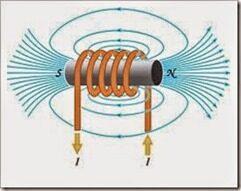
As soon as a magnetic substance is brought nearer to at least one magnet, an attraction force will be performed on the magnetic substantial by the magnet. Similarly, once a magnetic pole is placed within a flux, it’ll be repulsed or attracted, depending upon the character of the pole. These effects are patented due to magnetic flux within the magnetic field.

Applications and Phenomena of Magnetic Flux Explored
Magnetic flux plays a crucial role in various areas of science and technology. Here are a few key applications and phenomena related to magnetic flux:
Magnetic Sensors
Magnetic flux is used in operating magnetic sensors, such as Hall effect sensors and magnetometers. These sensors detect changes in magnetic flux and are employed in compasses, position sensing, current measurement, and various industrial applications.
Magnetic Field Shielding
Magnetic flux can be used to shield sensitive electronic components from external magnetic fields. Directing the magnetic flux around the desired area using materials with high magnetic permeability, such as ferromagnetic materials, can significantly reduce unwanted magnetic interference.
Magnetic Imaging
Techniques like magnetic resonance imaging (MRI) and magnetic particle imaging (MPI) rely on manipulating and detecting magnetic flux. MRI uses magnetic fields and magnetic flux density gradients to generate detailed images of the internal structures of the human body. At the same time, MPI utilizes the response of superparamagnetic particles to create high-resolution images for medical diagnostics and research.
Magnetic Levitation and Maglev Trains
Magnetic flux plays a vital role in magnetic levitation (maglev) systems, where repulsive magnetic forces are used to suspend and propel objects, such as trains, without physical contact with the track. By controlling magnetic flux density, maglev trains can achieve high speeds and reduced friction, offering a promising alternative to traditional rail transportation.
What is Electro Magnetic Force
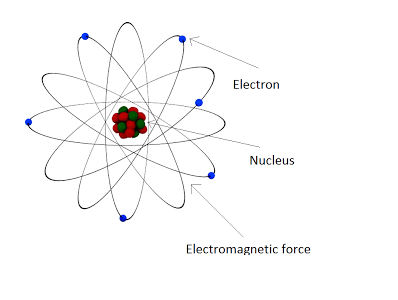
The electromagnetic force, also known as the electromagnetic interaction or electromagnetic field, is one of the fundamental forces of nature. It plays a crucial role in the interactions between charged particles and is responsible for various phenomena, such as electricity, magnetism, and light. Understanding the electromagnetic force is essential for comprehending the behavior of charged particles and the functioning of electromagnetic devices.
The Role of Electromagnetic Force in Electricity and Magnetism
The electromagnetic force is responsible for the phenomena of electricity and magnetism. When charges are in motion, they generate a magnetic field, and this field, in turn, can exert forces on other moving charges. This interaction forms the basis of electric motors, generators, and transformers, which are essential components in many electrical devices.
Electromagnetic Waves and Light
Electromagnetic force also plays a significant role in the propagation of light and other electromagnetic waves. According to Maxwell’s equations, changing electric fields give rise to magnetic fields, generating electric fields. This self-sustaining cycle allows electromagnetic waves to travel through space without needing a medium. The electromagnetic spectrum encompasses a vast range of wavelengths, from radio waves to gamma rays, with visible light falling within a small portion of this spectrum.
Definition of Magnetic flux Density
Applications and Phenomena of Explored Magnetic Flux Density
Magnetic Materials and Magnetic Saturation Magnetic flux density significantly affect the behavior of magnetic materials. Different materials exhibit varying responses to magnetic fields. Magnetic flux density can magnetize certain materials, such as iron or nickel, and increase their magnetic properties. However, there is a saturation point beyond which further increases in magnetic field strength do not significantly increase the magnetic flux density.
Magnetic Levitation
High magnetic flux densities are utilized in magnetic levitation systems. Maglev trains, for example, use strong magnetic fields to suspend and propel the train without physical contact with the track. By controlling the magnetic flux density, maglev trains achieve reduced friction, increased speeds, and improved energy efficiency.
Magnetic Resonance Imaging (MRI)
Magnetic flux density is crucial in magnetic resonance imaging. In MRI machines, powerful magnetic fields are generated to create a uniform magnetic flux density within the imaging area. By manipulating the magnetic flux density and analyzing the response of atomic nuclei in the human body, detailed images of internal structures can be obtained for medical diagnosis and research.
Magnetic Force and Interactions
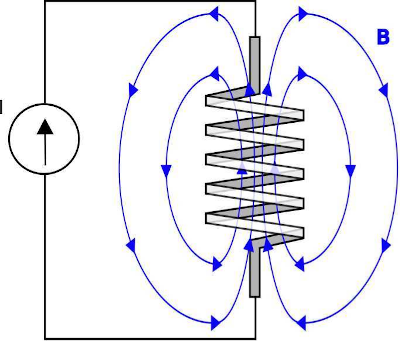
Magnetic flux density determines the strength and direction of magnetic forces and interactions. The force experienced by a magnetic material in a magnetic field depends on the magnetic flux density. The magnetic flux density influences the behavior of charged particles moving through a magnetic field, resulting in phenomena like the Lorentz force and cyclotron motion.