The Science Behind Conducting Materials in Electrical Machines
Essentials: Conductors, Insulation, Magnets in Machines
The core substantial characteristics of significance to electrical machines are those related to conductors for electrical devices, the insulation system essential to isolate the circuits, and the specialized steels and permanent magnets used for the magnetic circuit.
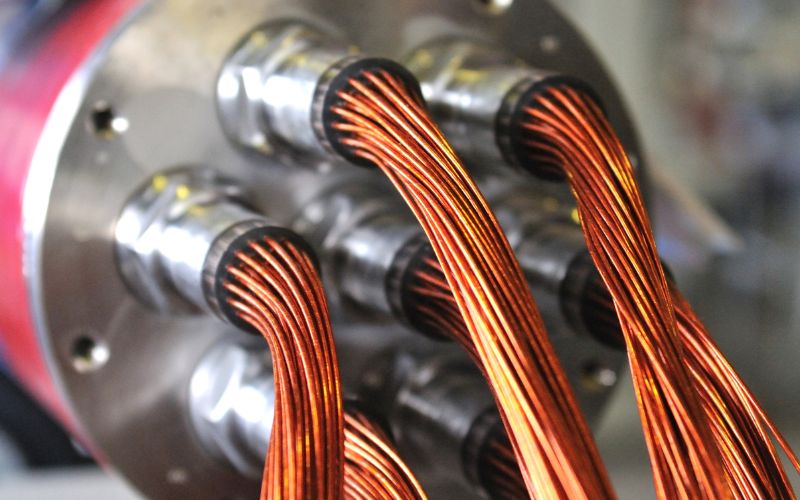
Material Selection and Properties
- Conducting materials encompass a range of substances, from traditional metals like Copper and aluminum to modern high-performance alloys.
- Material properties, such as electrical conductivity, thermal conductivity, and mechanical strength, are crucial in determining their suitability for specific applications.
- The selection of conducting materials is a balance between efficiency, cost, and environmental impact.
Electrical Conductivity
- Electrical conductivity refers to a material’s ability to conduct electric current.
- Materials with high electrical conductivity, such as Copper, are preferred for applications requiring minimal energy loss during transmission and conversion.
- Advancements in material engineering strive to enhance conductivity while maintaining other necessary properties.
Heat Dissipation and Efficiency
- Conducting materials not only facilitates current flow but also plays a role in dissipating heat generated during operation.
- Efficient heat dissipation ensures prolonged machine lifespan and optimal performance.
- Thermal conductivity is a key factor in managing heat in electrical machines.
Electromagnetic Properties
- Conducting materials influence the magnetic behavior of electrical machines.
- Materials like iron and steel are employed in magnetic cores to enhance the efficiency of transformers, motors, and generators.
- Magnetic properties impact machine efficiency, power factor, and overall performance.
Superconductors and Emerging Technologies
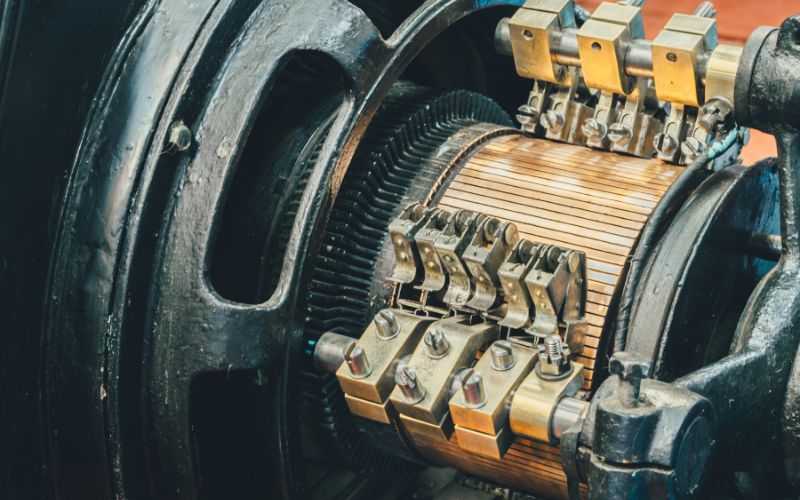
- Superconducting materials offer zero electrical resistance at low temperatures, promising unparalleled efficiency in electrical machines.
- Research into high-temperature superconductors aims to enable practical applications without extreme cooling.
- These materials hold the potential to revolutionize energy transmission and storage.
Challenges and Future Directions
- Challenges include finding materials that balance conductivity, cost, and environmental impact.
- Emerging technologies like nanomaterials and composite conductors pose opportunities for breakthroughs in electrical machine design.
Conducting materials

The Essence of Power Flow
- Conducting materials are chosen for their exceptional electrical conductivity, allowing them to transmit electric currents with minimal resistance efficiently.
- Copper and aluminum are favored due to their high conductivity, making them ideal for power transmission and distribution.
Power Generation and Motors
- In generators, conducting materials are employed to create magnetic fields and facilitate the conversion of mechanical energy into electrical energy.
- Motors utilize these materials to convert electrical energy into mechanical motion, driving machines and devices.
Transmission of Energy
- Conducting materials serve as the backbone of power transmission lines, facilitating the long-distance transport of electricity from generation sources to end-users.
- Their low resistance minimizes energy losses during transmission.
Electronics and Circuitry
- Conductors like Copper create circuit pathways on printed circuit boards (PCBs) and integrated circuits.
- These materials enable the intricate networks that power computers, smartphones, and various electronic devices.
Sustainable Energy Technologies
- Renewable energy sources, such as solar panels and wind turbines, incorporate conducting materials to harvest and transport electricity.
- Innovations in materials contribute to enhanced efficiency and viability of sustainable energy solutions.
Challenges and Innovations
- The quest for more efficient conducting materials continues, driving research into novel materials and composite structures.
- Challenges include balancing conductivity, cost, environmental impact, and durability.
Future Horizons
- Nanotechnology and new material discoveries hold promise for revolutionizing conducting materials.
- Advancements like high-temperature superconductors may reshape energy transmission and storage.
Factors to be Considered for Electrical Machine Design

- Small Low value of temperature constant of resistance.
- A small value of resistance or high conductivity.
- High corrosion resistance.
- High stringiness.
- High freezing point.
- Allow brazing, bonding, or welding so that the joints are reliable.
- Extremely malleable and ductile. Robust and economical by cost.
| Si No | Particulars | Copper | Aluminium |
| 1 | Resistivity at 200C | 0.0172 ohm/m/mm2 | 0.0269 ohm/m/mm2 |
| 2 | Conductivity at 200C | 58.14 x 10⁶ S/m | 37.2 x 10⁶ S/m |
| 3 | Density at 200C | 8933kg/m3 | 2689.9m3 |
| 4 | Temperature coefficient (0-100oC) | Explanation: If the temperature increases by 1oC, the resistance increases by 0.4% in the case of aluminum | |
| 5 | Coefficient of linear expansion (0-100oC) | 16.8×10⁻⁶ per oC | 23.5 x10⁻⁶ per oC |
| 6 | Tensile strength | 25 to 40 kg/mm2 | 10 to 18 kg/mm2 |
| 7 | Mechanical property | highly malleable and ductile | not highly malleable and ductile |
| 8 | Melting point | 10830C | 6600C |
| 9 | Thermal conductivity (0-599 W/m 0C | 599 W/m 0C | 238 W/m 0C |
| 10 | Jointing |
can be easily soldered
|
cannot be soldered easily |
Classifiaction of DC machies

Carbon Brush Commutated DC Machines
- Carbon brush commutation is a prevalent method in DC machines.
- Carbon brushes create a sliding electrical connection with the rotating armature, allowing current to flow to different coil windings.
- These machines often use copper or copper alloys for the armature winding conductors.
Copper and Other Conducting Materials
- Copper is a common choice for armature windings in DC machines due to its excellent electrical conductivity and mechanical properties.
- Copper offers low resistance, facilitating efficient current flow and reducing energy losses.
- Copper alloys, such as phosphor bronze, are also used for specific applications requiring enhanced durability.
Magnet Wire in Field Windings
- Field windings that generate the magnetic field often use magnet wire made from Copper with a high-temperature insulation coating.
- Magnet wire ensures effective current flow and maintains insulation integrity under operational conditions.
Innovations in Superconducting Materials
- Superconducting materials, with their ability to conduct electricity with zero resistance at low temperatures, offer exciting prospects for DC machine innovation.
- High-temperature superconductors hold the potential for enhancing machine efficiency and reducing energy losses.
Advances in Nanomaterials
- Research explores the utilization of nanomaterials, such as carbon nanotubes and graphene, to enhance the conductivity and performance of conducting components in DC machines.
- Nanomaterials hold promise for optimizing efficiency, thermal management, and overall machine design.
Considerations for Classification
- The choice of conducting materials influences machine efficiency, reliability, and cost-effectiveness.
- I am classifying DC machines based on conducting materials aids in designing machines tailored to specific applications.
Conclusion
In the intricate world of electrical machines, conducting materials emerge as the unsung heroes, orchestrating the flow of power that empowers our modern society. This exploration into “The Science Behind Conducting Materials in Electrical Machines” has unveiled a symphony of principles where electrical conductivity, thermal management, and magnetic behavior harmonize to drive efficiency and reliability. The remarkable journey through materials like Copper and alloys and emerging technologies like superconductors and nanomaterials underscores their crucial roles in propelling machines forward. As we navigate an era of sustainable energy and technological advancement, the continual evolution of conducting materials will define the cadence of electrical progress, orchestrating a future where efficiency and innovation converge to illuminate our electrified horizons.