Exploring the Principle Operation of Three-Phase Induction Motor
Working Principle

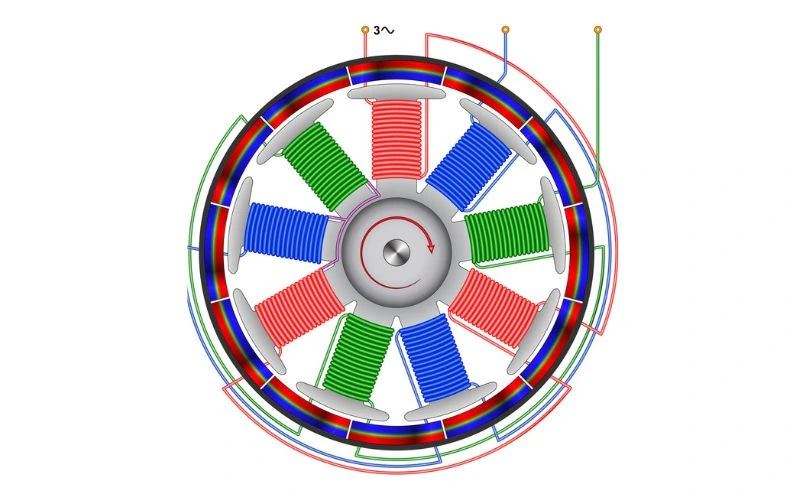
Three-phase induction motors come to life in the intricate dance of electricity and magnetism. Energizing the stator winding initiates a mesmerizing interplay, generating a rotating magnetic field that induces currents in the rotor. This induction sets the stage for mechanical forces, creating torque and propelling the rotor into synchronous harmony with the stator’s magnetic field.
Energizing the Stator Winding
- The three-phase stator winding is energized with a three-phase power supply, creating a rotating magnetic field.
- This magnetic field revolves around the stator at its synchronous speed (Ns = 120f/p).
Rotor Induction
- The rotating magnetic field traverses the air gap and intersects with the stationary rotor conductors, inducing EMFs due to the virtual speed between the rotating field and the stationary rotor.
- The short-circuited rotor circuit allows current to flow in the rotor conductors.
Mechanical Forces and Torque Production
- The current-carrying rotor conductors experience mechanical forces within the stator’s magnetic field, generating torque.
- The cumulative effect of these forces initiates the rotation of the rotor in the direction of the rotating magnetic field.
Lenz’s Law and Rotor Direction
- Lenz’s law dictates that the rotor current opposes the source generating it, which, in this case, is the virtual speed between the rotating magnetic field and the stationary rotor.
- Following Lenz’s law, the rotor runs in the same direction as the stator field, attempting to minimize the virtual speed.
Advantages of Three-Phase Induction Motors
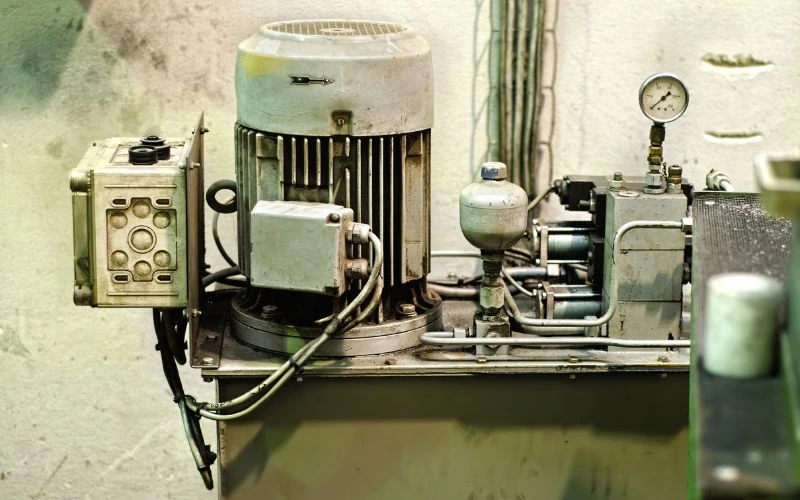
- Self-starting capability without the need for a starter.
- Minimal armature reaction and absence of brush sparking.
- Simple construction, easy maintenance, and cost-effectiveness.
Key Parameters
Two key parameters define the heartbeat of these motors. Synchronous Speed (Ns) establishes the pace of the rotating magnetic field, while Slip quantifies the subtle dance between rotor speed and synchronous speed. Understanding these parameters is paramount for optimizing motor performance and efficiency.
Synchronous Speed (Ns)
The rotational speed of the rotating magnetic field is denoted as synchronous speed.
Ns = 120f/P rpm
Slip
The rotor stabs to catch the synchronous speed of the stator field, and thus, it rotates. In practice, the rotor never makes it grasp up. Because if the rotor runs up to the stator speed, there will be no virtual speed between the stator and the rotor. Hence, there are no induced rotor currents or torque production to maintain the rotation. That’s why the rotor rotates at its speed, less than the synchronous speed.
Efficiency and Performance
Efficiency becomes the unsung hero as three-phase induction motors convert electrical power into mechanical prowess. The torque-speed characteristics, starting torque, and maximum torque offer a performance symphony, ensuring seamless operation across varying loads and speeds.
Efficiency
- Three-phase induction motors exhibit high efficiency in converting electrical power into mechanical power.
- The efficiency is influenced by factors such as the design of the motor, the quality of materials used, and the precision of manufacturing processes.
Performance Characteristics
- Torque-Speed Characteristics: The torque-speed curve illustrates the motor’s performance concerning various loads and speeds. It helps in selecting the right motor for specific applications.
- Starting Torque: The motor must generate sufficient starting torque to overcome initial inertia and accelerate the load.
- Maximum Torque: Understanding the motor’s maximum torque capability is essential for applications with varying load conditions.
Types of Three-Phase Induction Motors
The motors come in diverse flavors. The Squirrel Cage Rotor, with its simplicity and reliability, contrasts with the sophistication of the Wound Rotor, offering more control. The Double Squirrel Cage Rotor combines strengths, catering to applications demanding a delicate balance of torque and efficiency.
Squirrel Cage Rotor
- The most common rotor type features short-circuited bars for high reliability and low maintenance.
- Suitable for applications requiring constant speed and minimal slip.
Wound Rotor
- Includes a three-phase winding on the rotor, providing external resistance for better speed and torque control.
- It is commonly used in applications with high starting torque requirements.
Double Squirrel Cage Rotor
- Combines two short-circuited bars, offering improved starting torque and efficiency performance.
- Suitable for applications demanding high starting torque and reduced slip.
Applications
- Three-phase induction motors find applications in various industries, including manufacturing, agriculture, transportation, and HVAC systems.
- Their versatility, reliability, and ease of maintenance make them suitable for powering pumps, fans, compressors, conveyors, and other industrial machinery.
Control Methods
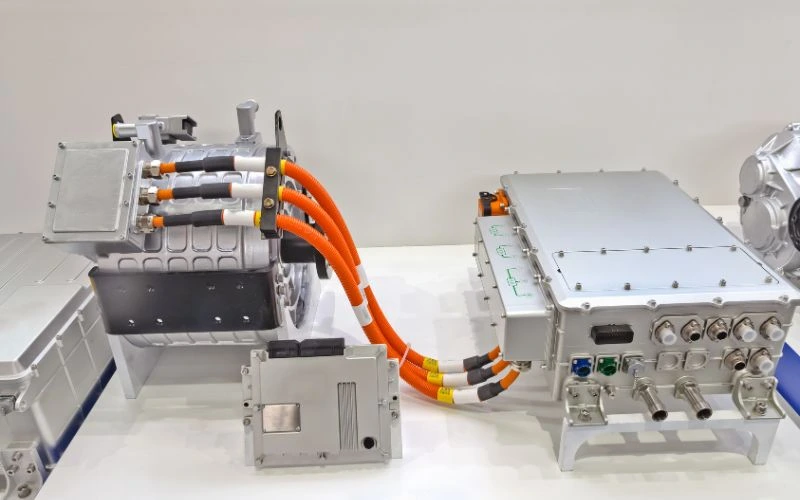
Variable Voltage Variable Frequency (VVVF) Control
- Allows precise motor speed and torque control by adjusting both voltage and frequency.
- It is commonly used in applications requiring variable speed, such as pumps and fans.
Direct Online (DOL) Starting
- The simplest and most economical starting method is directly connecting the motor to the power supply.
- Suitable for applications with low starting torque requirements.
Soft Starters and Variable Frequency Drives (VFD)
- Soft starters gradually increase voltage during startup, reducing mechanical stress and current spikes.
- VFDs provide continuous speed control and energy savings by adjusting the power supply frequency.
Conclusion
Understanding three-phase induction motors’ principles, characteristics, and control methods is crucial for optimizing their performance in diverse industrial applications. As technology advances, motor design and control methods innovations continue to enhance efficiency, reliability, and overall motor performance. With ongoing research and development, these motors remain integral to the industrial landscape, powering the machinery that drives progress across various sectors.
FAQs
Why are three-phase induction motors widely used in industrial settings?
Three-phase induction motors are preferred in industrial environments due to their self-starting capability, minimal maintenance requirements, cost-effectiveness, and absence of brushes and commutation, reducing wear and sparking.
What role does slip play in the operation of three-phase induction motors?
Slip is the difference between the rotating magnetic field’s synchronous speed and the rotor’s actual speed. It is crucial for inducing rotor currents and producing torque, allowing the motor to operate efficiently and maintain rotation.
How do control methods like VVVF and DOL impact the performance of three-phase induction motors?
Variable Voltage Variable Frequency (VVVF) control enables precise speed and torque adjustments, making it suitable for applications with variable speed requirements. Direct Online (DOL) starting is a simpler, economical method suited for applications with lower starting torque demands. These control methods offer flexibility and efficiency in diverse operational scenarios.