Exploring the Designing Construction of Transformer

Harmonics in Transformer
Voltage Consideration in Designing of Transformer

When designing transformers, voltage considerations are crucial in ensuring efficient and safe operation. Voltage considerations encompass various aspects that must be carefully analyzed and optimized during the design process. Here are some key factors to take into account:
Rated Voltage
Determining the voltage is fundamental in transformer design. It involves selecting the appropriate voltage level at which the Transformer will operate unTransformerconditions. This selection is based on the specific application requirements, such as the voltage levels of the power system to which it will be connected.
Voltage Regulation
Transformers regulate voltage levels within a desired range. Voltage regulation refers to the ability of a transformer to maintain a consistent output voltage despite fluctuations in the input voltage or load conditions. Designers must consider the permissible voltage drop, load variations, and the Transformer’s winding configuration to achieve optimal voltage regulation.
Insulation Systems
Insulation plays a vital role in preventing electrical breakdown and ensuring the safe operation of transformers. Voltage considerations are crucial in selecting appropriate insulation materials and designing insulation systems capable of withstanding the voltage stresses experienced during normal processes and transient conditions.
Dielectric Strength
Dielectric strength refers to the ability of insulating materials to withstand high voltages without breakdown. Designers must carefully assess the dielectric strength of insulation materials and ensure they exceed the anticipated operating voltages to prevent electrical failures or hazards.
Clearances and Creepage Distances
In high-voltage applications, transformer designs must account for appropriate clearances and creepage distances. Licenses refer to the minimum distance between conductive parts, while creepage distances refer to the shortest path along the surface of insulating materials. These considerations are essential to prevent unwanted electrical arcing or flashovers.
Surge Voltage Protection
Transformers are susceptible to transient voltages, such as lightning strikes or switching surges. Adequate surge protection measures must be implemented to safeguard the Transformer from damage and transformable operation. This may involve using surge arresters, protective circuits, or other transient voltage suppression techniques.
Core Type Transformer
Single-phase core-type transformer
A single-phase core-type transformer is a common design in which the primary and secondary windings are wound around a laminated iron core. This configuration provides efficient magnetic coupling and is being used in industrial, residential, and commercial applications for voltage transformation and power distribution.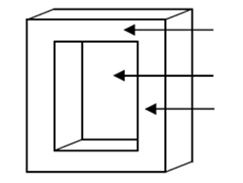
Three-phase 3-limb core-type transformer
The three-phase, 3-limb core type transformer features three separate magnetic circuits, each with a limb or leg, allowing for efficient and balanced power transmission in three-phase systems. This design provides enhanced magnetic coupling and lower losses and is commonly used in high-power applications such as electrical grids, industrial plants, and large-scale commercial installations.

Three-phase 5-limb core-type transformer
The three-phase 5-limb core type transformer is characterized by its five magnetic limbs or legs, providing increased magnetic path length and reduced magnetic flux leakage. This design offers improved efficiency and better voltage regulation. It is commonly utilized in high-voltage transmission and distribution systems and industrial and utility applications requiring robust and reliable power transformation.

Shell Type Transformer
Single-phase shell-type Transformer
The single-phase shell-type Transformer features two transformers placed concentrically around a central iron core, providing excellent magnetic coupling and minimizing magnetic leakage. This design offers compact size and efficient performance and is commonly used in low to medium-power applications, such as residential distribution, appliances, and smaller industrial systems.

Three-phase shell-type transformer
The three-phase shell-type Transformer consists of Transformer single-phase transformers arranged in a shell-like structure. It provides efficient and balanced power transmission in three-phase systems. This design offers enhanced magnetic coupling and compact size. It is commonly used in medium—to high-power applications, such as industrial power distribution, large commercial buildings, and utility substations.

Conclusion
In conclusion, delving into the intricate world of transformer design and construction reveals its pivotal role in modern power systems. The careful interplay of core materials, windings, and insulation techniques ensures optimal performance and efficiency. As we strive for more sustainable and energy-efficient solutions, continued research and innovation in transformer design will be essential. From power distribution to renewable energy integration, transformers remain the backbone of electrical infrastructure. Embracing emerging technologies and materials will unlock new possibilities, propelling us toward a greener and electrifying future.
FAQs
What is a transformer, and how does it work?
A transformer is an electrical device that transfers electrical energy between two or more circuits through electromagnetic induction. It operates on the principle of Faraday’s law of electromagnetic induction, which states that a changing magnetic field within a coil of wire induces a voltage across the coil.
Working Principle:
- Primary Coil: When an alternating current (AC) flows through the primary coil, it creates a changing magnetic field in the Transformer’s core.
- Magnetic Core: The magnetic field generated in the core is transferred to the secondary coil.
- Secondary Coil: The changing magnetic field induces an alternating voltage in the secondary coil, which depends on the ratio of turns between the primary and secondary coils.
- Voltage Transformation: Depending on the turn ratio, the Transformer either steps up (increases) or transforms) the voltage level.
What are the different types of transformers?
Transformers come in various types, each designed for specific applications:
- Step-Up Transformer:
- Use: It increases the voltage from the primary to the secondary coil. It is commonly used in power transmission to reduce energy loss over long distances.
- Step-Down Transformer:
- Use: It decreases the voltage from the primary to the secondary coil. It is widely used in power distribution to lower the voltage for safe use in homes and businesses.
- Isolation Transformer:
- Use: It provides electrical isolation between the primary and secondary coils without altering the voltage. It is used for safety and to protect sensitive equipment.
- Autotransformer:
- Use: This type uses a single winding that acts as both the primary and secondary coil. It’s more efficient and smaller, but it doesn’t provide isolation between the circuits. It’s often used in applications where voltage needs to be adjusted slightly.
- Three-Phase Transformer:
- Use: Designed for three-phase power systems, commonly used in industrial applications and power distribution networks.
- Instrument Transformer:
- Use: This includes current transformers (CT) and potential transformers (PT) used to measure and monitor electrical parameters in power systems.
What are the main components of a transformer?
Transformers consist of several key components:
- Core:
- Component: The core is made of laminated steel sheets and efficiently guides the magnetic flux between the primary and secondary coils. The core’s design minimizes energy losses due to hysteresis and eddy currents.
- Windings:
- Component: The primary and secondary windings are coils of insulated wire. The number of turns in each winding determines the voltage transformation ratio. High-quality windings ensure efficient energy transfer.
- Insulation:
- Component: Insulation materials, such as oil or paper, prevent electrical contact between the windings and the core or between different winding turns. Proper insulation is crucial for the safe operation of the Transformer.
- Tank:
- The transformer tank houses the core and windings. It is usually filled with insulating oil, which cools the Transformer and protects the transformer components.
- Cooling System:
- Component: Transformers generate heat during operation. Cooling systems like radiators or fans dissipate this heat and maintain optimal operating temperatures.
- Bushings:
- Component: Bushings are insulated devices that allow electrical connections to pass through the transformer tank without causing leaks or short circuits.
What are the common applications of transformers?
Transformers are essential in various applications, particularly in power generation, transmission, and distribution:
- Power Transmission and Distribution:
- Application: Step-up transformers increase the voltage for long-distance transmission, reducing energy loss. Step-down transformers then lower the voltage for safe distribution to homes and businesses.
- Industrial Applications:
- Application: Transformers power heavy machinery and equipment in factories and industrial settings. Three-phase transformers are particularly common in these environments.
- Electrical Isolation:
- Application: Isolation transformers protect sensitive equipment from surges, noise, and interference in the power supply. They are common in medical equipment and data centers.
- Renewable Energy Systems:
- Application: Transformers are integral to solar and wind power systems, converting the generated electricity to appropriate voltage levels for storage or grid integration.
- Voltage Regulation:
- Application: Autotransformers, such as voltage stabilizers, are used in voltage regulation devices to ensure a constant voltage supply to electronic devices and machinery.
- Instrumentation and Measurement:
- Application: Instrument transformers, such as CTs and PTs, are used in power systems to measure current and voltage levels, ensuring accurate monitoring and control.
How do I maintain a transformer to ensure its longevity?
Proper maintenance is essential to ensure the longevity and reliable operation of transformers:
- Regular Inspections:
- Maintenance: Inspect the Transformer regularly for signs of wear, corrosion, or oil leaks. Check the Transformer for any damage or deterioration.
- Oil Testing:
- Maintenance: Test the insulating oil periodically to ensure it remains effective. Oil testing can reveal the presence of moisture, dissolved gases, and other contaminants that could compromise the Transformer’s performance.
- Cooling System Maintenance:
- Maintenance: Ensure that the cooling system is functioning properly. Clean the radiators or fans, and check for blockages that could prevent proper heat dissipation.
- Electrical Testing:
- Maintenance: Perform electrical tests, such as insulation and winding resistance testing, to detect any issues with the windings or insulation.
- Load Monitoring:
- Maintenance: Monitor the Transformer’s load to ensure it operates within its designed capacity. Overloading can cause overheating and reduce the Transformer’s lifespan.
- Bushing and Connection Checks:
- Maintenance: Regularly check the bushings and electrical connections for signs of wear or damage. Tighten any loose connections to prevent arcing or overheating.
Transformers are vital components in electrical systems, and understanding their function, types, and maintenance needs is essential for ensuring efficient and reliable power distribution. Proper care and regular monitoring can help extend transformers’ lifespans and prevent costly failures.