Synchronous Motor: Working Principle, Features, and Applications
When you explore the working principle of synchronous motors, you’ll see that they operate by synchronizing the rotor’s speed with the rotating magnetic field produced by the stator. This is achieved when an AC power supply energizes the stator, creating a rotating magnetic field. The rotor’s magnetic field then aligns with the stator’s, generating torque and ensuring constant speed. This precise speed control is why they’re favored in applications needing reliable operation. But how exactly does this synchronization process unfold, and what are the critical steps in starting these motors?
Key Takeaways
- Synchronous motors operate by matching the rotor speed to the AC supply frequency.
- When powered by AC, the stator’s three-phase windings create a rotating magnetic field.
- The rotor is magnetized by a DC source, aligning with the stator’s rotating magnetic field.
- The interaction between the rotor and stator fields produces torque, driving the rotor.
- Synchronous motors maintain a constant speed regardless of load variations.
Overview of Synchronous Motors
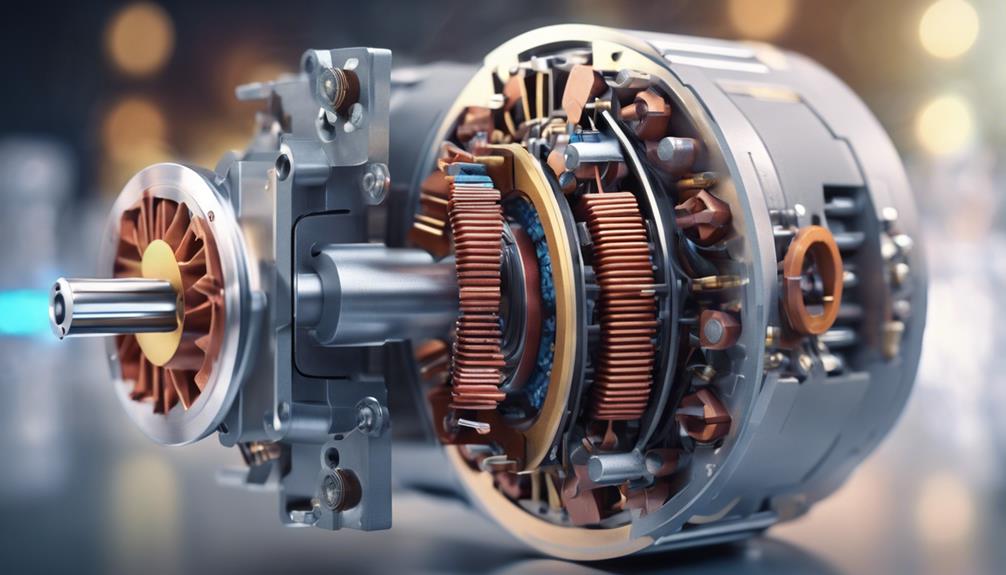
Synchronous motors are electric machines that run at a speed perfectly synchronized with the frequency of the AC power supply. Essentially, a synchronous motor’s rotor rotates in lockstep with the rotating magnetic field generated by the stator. This precise synchronization guarantees the motor’s speed remains constant and predictable, making it ideal for applications requiring precise speed control and continuous operation.
The stator in a synchronous motor is equipped with three-phase windings that create a rotating magnetic field when connected to an AC power supply. The rotor, which can contain magnets or field windings, aligns with this magnetic field. An external DC source is required to initialize the magnetic field in the rotor. This external DC source energizes the field windings or magnets on the rotor, allowing it to synchronize with the stator’s rotating magnetic field.
The beauty of synchronous motors lies in their ability to maintain a constant speed directly proportional to the AC power supply frequency. This characteristic is invaluable in industries where precise speed control is essential, such as robotics, conveyor systems, and clocks.
Components of a Synchronous Motor
Let’s break down the key components of a synchronous motor, starting with the stator and rotor construction.
You’ll also learn about the vital role of the excitation system components and the importance of cooling and ventilation mechanisms.
Understanding these elements will help you grasp how these motors operate efficiently.
Stator and Rotor Construction
Have you ever wondered how the intricate components of a synchronous motor‘s stator and rotor work together to achieve precise motor operation? Let’s break it down.
The stator of a synchronous motor houses the armature windings, which generate a rotating magnetic field. This is key to the motor’s ability to operate at synchronous speed. The stator includes a frame, keyboards, and ribs that support and align these windings.
Now, let’s talk about the rotor. In synchronous motors, the rotor design can be either a salient pole rotor or a cylindrical rotor. The rotor contains field windings that are excited by DC power (known as DC excitation). This excitation allows the rotor’s magnetic field to synchronize with the stator’s rotating magnetic field, ensuring the motor runs smoothly at synchronous speed.
The salient pole rotor features protruding poles and is typically used in applications requiring low-speed, high-torque operations. On the other hand, the cylindrical rotor is smooth and more suited for high-speed applications.
Synchronous motors are reliable and efficient because of the precise interaction between the stator’s rotating magnetic field and the rotor’s magnetic field.
Excitation System Components
The excitation system in a synchronous motor includes essential components like field windings, a DC power supply, slip rings, and brushes, all of which work together to maintain the motor’s operation. Each element is essential in generating and maintaining the magnetic field required for the motor’s functionality.
Field windings are integral to the excitation system, as they create the magnetic field in the rotor.
The DC power supply provides the necessary excitation current to these field windings, ensuring they generate the required magnetic field.
Slip rings transfer the DC power from the motor’s stationary part to the rotating field windings, allowing continuous excitation.
Brushes maintain electrical contact between the motor’s stationary and rotating parts, ensuring a steady flow of excitation current.
Here’s a quick breakdown of these components:
- Field windings: Create the magnetic field in the rotor.
- DC power supply: Provides the excitation current.
- Slip rings: Transfer DC power to the rotating field windings.
- Brushes: Maintain electrical contact for continuous excitation.
Cooling and Ventilation Mechanism
To maintain peak performance, synchronous motors rely on effective cooling and ventilation mechanisms to dissipate the heat generated during operation. To achieve this, several components work in tandem. Cooling fans are critical; they force air through the motor to ensure that heat is effectively removed. These fans are strategically placed to maximize airflow and efficiency.
Air ducts within the motor help channel the cooling air to the most needed parting airflow. These ducts play a significant role in motor ventilation, ensuring that every component remains within the best temperature ranges. This ventilation is essential not just for performance but also for the longevity of the motor.
Proper cooling and ventilation are indispensable for the efficient operation of synchronous motors. They prevent overheating, which can cause significant damage and reduce the motor’s lifespan. By effectively effectively dissipating heat, these mechanisms guarantee that the engine runs smoothly and reliably under various operating conditions.
Magnetic Field Interaction
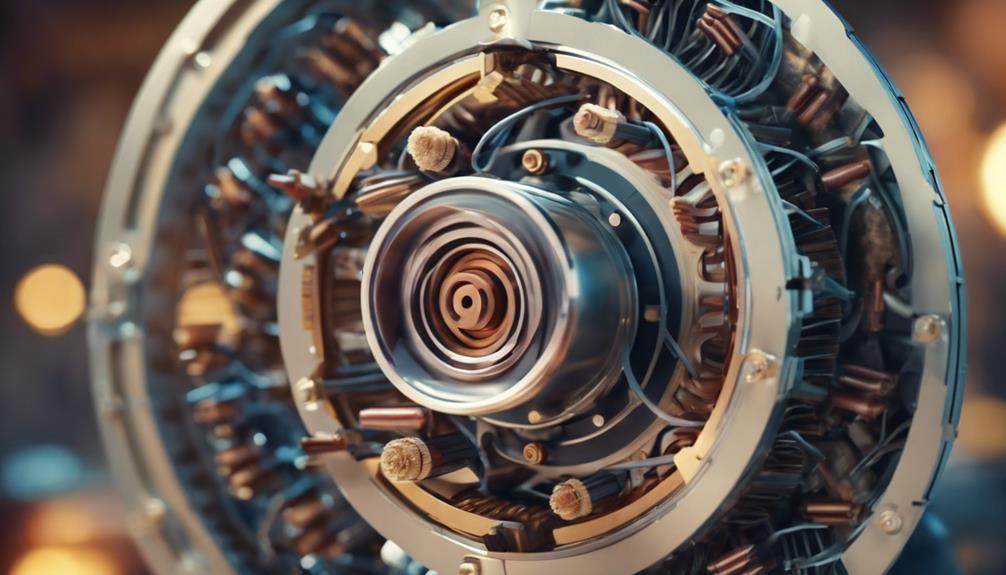
You’ll see how the rotor and stator magnetic fields must align perfectly for efficient operation.
The stator creates a rotating electromagnetic field, which the rotor synchronizes to produce torque.
This interaction guarantees the motor runs at a constant speed, matching the frequency of the AC power supply.
Rotor-Stator Magnetic Alignment
Understanding rotor-stator magnetic alignment is key to grasping how synchronous motors achieve precise and efficient energy conversion. The magnetic field alignment between the rotor and stator is at the heart of a synchronous motor’s functionality. This alignment guarantees the rotor-stator interaction is perfectly synchronized, allowing the rotor to maintain synchronous speed with the AC power supply frequency.
Here’s why this alignment is essential:
- Magnetic field torque: The precise alignment generates a consistent torque, enabling constant speed operation.
- Efficient operation: Synchronous rotation between the rotor and stator ensures minimal energy loss and ideal energy conversion.
- Reliable performance: Perfect magnetic alignment guarantees smooth and reliable motor operation.
- Constant speed: The motor maintains a steady speed regardless of load variations, enhancing its reliability.
When the rotor’s magnetic field aligns with the stator’s rotating magnetic field, synchronous rotation results; this precise alignment produces a magnetic field torque that drives the rotor at a constant speed. This mechanism is essential for efficient operation and reliable performance, ensuring the motor operates smoothly under various conditions.
Understanding this interaction helps you appreciate how synchronous motors can deliver consistent and precise mechanical power remarkably efficiently.
Electromagnetic Field Generation
A synchronous motor‘s core generates a rotating magnetic field through the stator windings. When you supply AC power to these windings, they create a magnetic field that rotates at a frequency determined by the power supply. This rotating magnetic field is vital because it interacts directly with the rotor’s magnetic field.
As these magnetic fields interact, they produce torque, which is essential for driving the motor. This interaction guarantees that the rotor locks in step with the stator’s rotating magnetic field, leading to constant-speed operation. In essence, the motor maintains a synchronous speed that matches the frequency of the AC supply, making frequency control a key aspect of managing the motor’s performance.
This precise magnetic field interaction efficiently converts electrical energy into mechanical energy. The stator’s rotating magnetic field induces movement in the rotor, aligning its magnetic field with the stator’s.
This synchronized motion converts the supplied electrical energy into usable mechanical energy, effectively driving the motor’s load. By understanding these principles, you can appreciate how synchronous motors achieve impressive efficiency and reliability in various applications.
Torque Production Mechanism
To grasp how synchronous motors work, it’s important to examine how torque is produced through the interaction of the stator and rotor magnetic fields. In synchronous motors, torque production occurs when the rotating magnetic field generated by the stator induces a magnetic field in the rotor. This interaction causes the rotor to align with the stator’s rotating magnetic field, resulting in synchronized rotation.
The key to this process is aligning the rotor’s magnetic field with the stator’s rotating magnetic field. This alignment is vital for producing torque, which is essential for the motor’s operation at a constant speed. The efficiency of synchronous motors relies heavily on this precise interaction.
Key points to consider:
- Rotating magnetic field: The stator generates a magnetic field that rotates constantly.
- Rotor alignment: The rotor’s magnetic field aligns with the stator’s rotating magnetic field.
- Torque production: The alignment produces torque, driving the rotor to rotate.
- Efficiency: Proper interaction ensures high efficiency and constant speed operation.
Principle of Synchronization
In a synchronous motor, the rotor’s magnetic field locks into step with the stator’s rotating magnetic field, guaranteeing precise synchronization. This synchronization principle is fundamental to how synchronous motors operate.
The rotor speed matches the synchronous speed, which is directly tied to the frequency of the AC power supply. The rotor’s magnetic field aligns perfectly with the stator’s rotating magnetic field, allowing the rotor to lock into a synchronized state.
Maintaining synchronization is vital for the motor’s efficient operation. The engine runs smoothly and effectively when the rotor locks in step with the stator’s magnetic field. This rotor synchronization is preserved as long as the load on the engine doesn’t exceed its capacity.
If the load increases too much, the rotor could lose alignment with the stator’s magnetic field, leading to a loss of synchronization.
Starting Methods
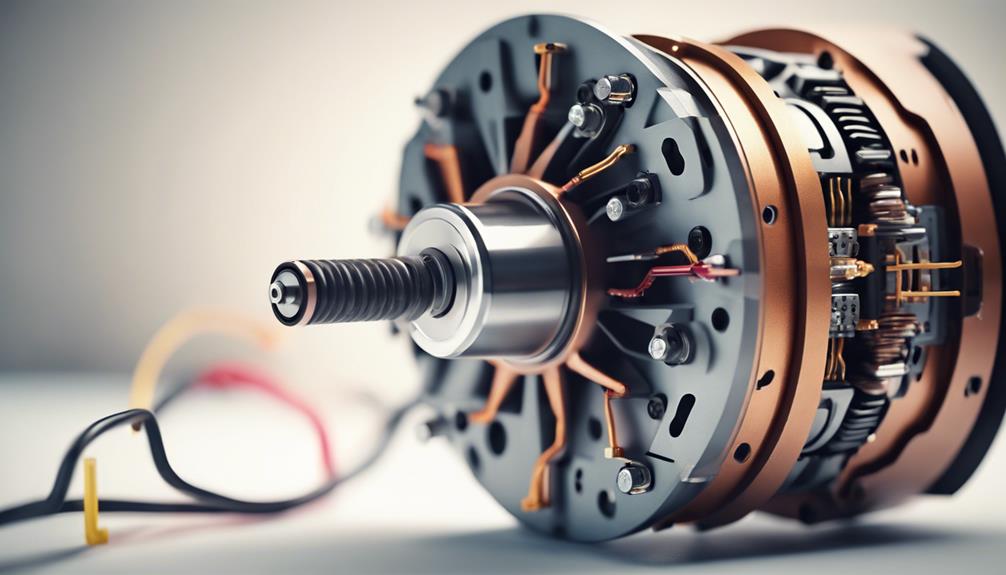
Starting a synchronous motor requires various methods, depending on the motor’s size and design. Factors like inertia, external mechanisms, and the torque required during the starting process must be considered.
Here’s how you can get a synchronous motor up and running:
- Inertia and External Mechanisms: You might use external mechanisms to help synchronize large synchronous motors. These mechanisms work by overcoming the motor’s inertia.
- Induction Winding: Some motors have induction windings to provide initial torque. This gets the rotor moving until it can synchronize with the stator’s magnetic field.
- Pony Motor: In cases where the motor is exceptionally large, a pony motor can provide the necessary starting assistance. The pony motor helps speed the main motor up before synchronization occurs.
- Electronic Acceleration: Electronic acceleration systems can be employed to unload synchronous machines. These systems gradually increase the speed, allowing the motor to start smoothly.
Small synchronous motors with low inertia often self-start without needing any external assistance.
Each method effectively ensures the motor reaches the required speed and synchronization state, depending on your motor’s specific requirements and design.
Advantages of Synchronous Motors
Symmetric motors offer unmatched benefits like constant operating speeds and high efficiency, making them ideal for various industrial applications. One of the primary advantages of a synchronous motor is its ability to maintain steady speeds regardless of load changes. This makes them perfect for tasks requiring precise speed control, guaranteeing that your operations run smoothly and consistently.
Another significant advantage is power factor control. Synchronous motors can operate at unity, leading, or lagging power factors, which helps improve your system’s overall power quality. This capability enhances the efficiency and reliability of electrical networks, especially in power generation.
Synchronous motors are also known for their high efficiency, typically achieving above 90%. This high efficiency reduces energy consumption and operational costs, making these motors highly cost-effective for long-term use.
Synchronous motors excel in applications requiring fixed speeds, such as industrial machinery. They provide the stability and reliability to ensure that machinery operates correctly and without interruption.
Applications in Industry

Synchronous motors excel in industrial settings where precision and consistent speed are essential. They are found in numerous industrial applications because they can maintain synchronous speed and provide reliable performance.
Here are some key areas where synchronous motors excel:
- Power generation: Synchronous motors play a critical role in driving generators. They help improve the power factor, which is essential for efficient operation.
- Pump systems: These motors are frequently used in industrial pump systems. Thanks to their constant speed operation, they ensure a consistent fluid flow rate.
- Clocks and timers: Synchronous motors are trusted for accurate timekeeping in clocks and timers due to their precise speed control.
- General industrial machinery: These motors’ consistent and reliable performance makes them ideal for steady-speed machinery.
Synchronous motors’ reliable performance and efficient operation make them indispensable in many industrial applications. Their ability to maintain constant speed operation ensures that processes run smoothly and efficiently.
Their role in power factor improvement adds to their value, making them a preferred choice in power generation and other critical applications.
Whether dealing with heavy machinery or delicate timing devices, synchronous motors deliver the necessary precision and consistency.
Conclusion
To conclude, you’ve learned how synchronous motors operate by aligning the rotor’s speed with the stator’s rotating magnetic field.
You’ve examined their main components, synchronization principles, and starting methods.
DSynchronousmotors offer numerous advantages and are widely used in industrial applications. Due to their precise speed control and reliability
You can better understand these motors’ crucial role in modern technology by grasping these principles.
FAQs
What is a synchronous motor, and how does it work?
A synchronous motor is an AC motor that runs at a constant speed, known as synchronous speed, which is directly proportional to the frequency of the AC supply and the number of poles in the motor. Unlike an induction motor, the rotor of a synchronous motor rotates at the same speed as the stator’s rotating magnetic field, meaning there is no slip between the rotor and the magnetic field.
The motor operates based on electromagnetic induction but with a key difference: the rotor in a synchronous motor is typically energized by a direct current (DC) supply, creating a magnetic field that locks in with the rotating magnetic field produced by the AC in the stator. This locking ensures that the rotor and the magnetic field rotate at the same speed.
Key Working Steps:
- AC Supply to Stator: The stator is connected to an AC supply, generating a rotating magnetic field.
- DC Supply to Rotor: A DC is supplied to the rotor, creating a magnetic field.
- Synchronous Speed: The rotor aligns with the stator’s rotating magnetic field and rotates at the same speed without slipping.
How It Works:
- Stator Field: Creates a rotating magnetic field using an AC supply.
- Rotor Field: DC excitation in the rotor locks it with the stator’s magnetic field.
- Constant Speed: The rotor rotates at synchronous speed with no slip.
What is synchronous speed, and how is it calculated?
Synchronous speed is the speed at which the magnetic field produced by the stator rotates. The speed is determined by the frequency of the AC supply and the number of poles in the motor. The formula gives it:
Ns=120×fPN_s = frac{120 times f}{P}
Where:
- NsN_s is the synchronous speed in revolutions per minute (RPM),
- ff is the frequency of the AC supply in hertz (Hz),
- PP is the number of poles in the motor.
For example, for a 4-pole motor with a 60 Hz supply frequency, the synchronous speed is:
Ns=120×604=1800 RPMN_s = frac{120 times 60}{4} = 1800 text{ RPM}
Synchronous Speed Formula:
- Formula: Ns=120×fPN_s = frac{120 times f}{P}
- Example: For a 4-pole motor at 60 Hz, synchronous speed = 1800 RPM.
How does a synchronous motor start?
Starting a synchronous motor can be challenging because it needs to reach synchronous speed to operate correctly. Unlike induction motors, synchronous motors require additional methods to start. Common starting methods include:
- Using an Induction Motor Start: Some synchronous motors are designed with squirrel-cage windings (like induction motors) that allow them to start as induction motors. Once they reach near-synchronous speed, DC excitation is applied to the rotor to synchronize it with the stator’s magnetic field.
- Damper Windings: These short-circuited windings on the rotor help the motor start by inducing currents that provide starting torque, allowing the motor to reach synchronous speed.
- External Motor or Clutch: In some cases, an external motor or a clutch system is used to bring the synchronous motor up to synchronous speed before DC excitation is applied.
Starting Methods:
- Induction Motor Start: Starts as an induction motor before synchronizing.
- Damper Windings: Provide starting torque by inducing currents.
- External Motor: Brings the motor up to synchronous speed.
What are the advantages of using a synchronous motor?
Synchronous motors offer several advantages in various industrial applications:
- Constant Speed: The motor operates at a steady speed, regardless of load variations, making it ideal for applications where precise speed is essential.
- High Efficiency: Synchronous motors are highly efficient, especially at high loads, as they experience minimal slip.
- Power Factor Correction: Synchronous motors can correct the power factor in power systems, operating at leading, lagging, or unity power factors.
- Durability: These motors are robust and can handle high loads without significant performance drops.
Advantages:
- Constant Speed: Maintains synchronous speed under varying loads.
- Efficiency: Highly efficient, especially at high loads.
- Power Factor Correction: This can improve the power factor in electrical systems.
- Durability: Strong and reliable for industrial applications.
What are the common applications of synchronous motors?
Synchronous motors are widely used in industries where precise speed control and high efficiency are required. Common applications include:
- Industrial Drives: Used in pumps, compressors, and conveyors where constant speed is critical.
- Power Generation: Employed in power plants for applications like driving generators or as synchronous condensers to correct power factors.
- Manufacturing Processes: Used in steel mills, paper mills, and other industries where large motors operate continuously at a fixed speed.
Applications:
- Industrial Drives: Pumps, compressors, and conveyors.
- Power Plants: For driving generators or correcting power factors.
- Manufacturing: In continuous-process industries, constant speed is needed is needed.