Permanent Magnet DC Generator – Working Principle and Uses
The Permanent Magnet DC Generator is an efficient and reliable option when you think about converting mechanical energy into direct current electricity. Rotating a coil within a magnetic field created by permanent magnets generates electricity without needing external power sources. This simplicity not only enhances efficiency but also lowers maintenance. Ideal for renewable energy applications like small wind turbines, it has a straightforward design and key components such as the stator, rotor, and brushes. What makes it particularly advantageous, and how do you guarantee it operates at peak performance?
Key Takeaways
- Permanent Magnet DC Generators use electromagnetic induction to generate DC energy without external power sources.
- They feature a stator with permanent magnets and a rotor with armature coils.
- It is ideal for renewable energy applications, including small wind turbines and remote power setups.
- They are made from neodymium, iron, and cobalt for optimal performance and durability.
- Requires minimal maintenance and provides reliable, efficient power conversion over long periods.
How It Works
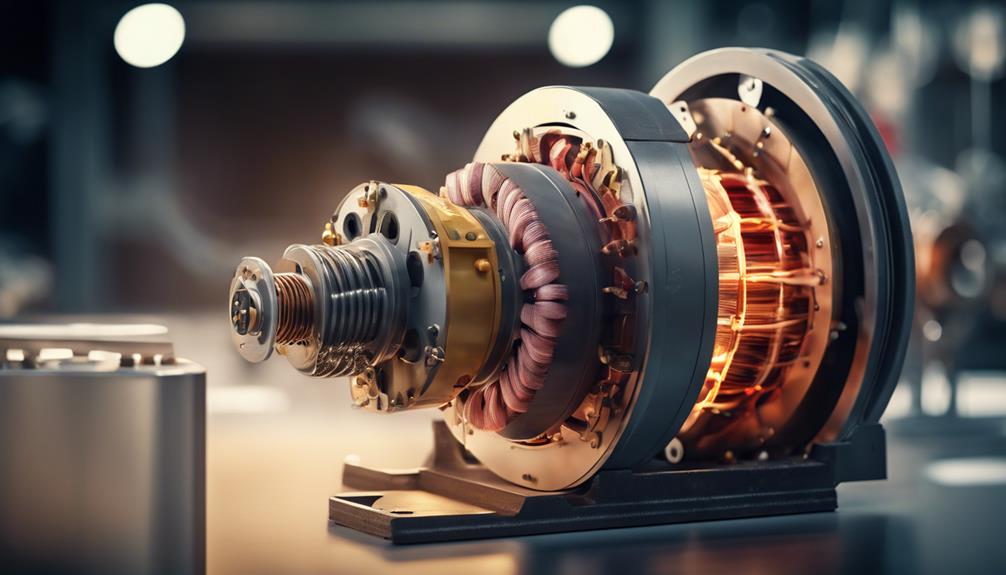
Understanding how a Permanent Magnet DC Generator works involves grasping the basics of electromagnetic induction. At the core, these generators harness the principles of Faraday’s Law, which states that a change in magnetic flux through a circuit induces an electromotive force (EMF).
In a Permanent Magnet DC Generator, this is achieved by rotating a coil within a magnetic field created by permanent magnets. When the coil rotates, it cuts through the magnetic field lines, causing a change in magnetic flux. This motion generates electrical energy through direct current (DC).
The permanent magnets guarantee a consistent magnetic field for generating steady DC output. This simplicity in design eliminates the need for field windings and external power sources for magnetization, enhancing the generator’s efficiency.
Due to their reliability and responsiveness to varying mechanical inputs, these generators are particularly effective in renewable energy applications, such as small wind turbines. They efficiently convert mechanical energy from the turbine into DC electrical energy, making them a critical component in sustainable energy systems.
Key Components
At the heart of a Permanent Magnet DC Generator are the stationary stator and the rotating rotor, both essential for generating electricity. The stator provides a constant magnetic field, while the rotor, containing the armature coils, spins within this field. As the rotor turns, the armature coils cut through the magnetic lines of force, producing an electrical current.
The key components of a Permanent Magnet DC Generator include:
- Stator: This stationary part houses the permanent magnets, creating a steady magnetic field.
- Rotor: The rotating part with armature coils generating electrical current when.
- Commutator Segments: These components reverse the connections of the armature coils, converting the generated AC into pulsating DC voltage.
- Brushes transfer the electrical power from the rotating armature to the output terminals, ensuring a stable current flow.
Resistive loads can be incorporated to protect the generator and connected systems. They help manage the electrical current and disconnect the generator if needed, preventing damage to sensitive components like batteries. Understanding these components is vital for grasping how a Permanent Magnet DC Generator functions effectively.
Advantages

When you choose a Permanent Magnet DC Generator, you benefit from efficient energy conversion, ensuring maximum power output even with variable wind speeds.
Thanks to its simple and robust construction, you’ll also appreciate the low maintenance requirements.
These advantages make it a practical and cost-effective solution for various applications.
Efficient Energy Conversion
Thanks to their quick response to wind speed changes, Permanent Magnet DC Generators guarantee efficient energy conversion. These generators are designed with a permanent magnet pole that ensures a strong and stable stator field, leading to consistent performance. This makes them reliable for various uses, especially in small-scale applications.
PMDC generators are highly efficient at converting mechanical energy into electrical energy. Their simple construction results in a compact and lightweight design, making them versatile and suitable for various power needs. Whether you’re looking at portable or off-grid power systems, these generators have you covered.
Here’s why PMDC Generators excel in energy conversion:
- Quick Response: They adapt rapidly to changes in wind speed, ensuring top-notch performance.
- High Efficiency: The permanent magnet pole provides a steady magnetic field, maximizing energy conversion.
- Versatile Applications: Ideal for small-scale wind turbines, off-grid systems, and portable power solutions.
- Lightweight Design: Their compactness makes them easy to install and transport.
Low Maintenance Requirements
Permanent Magnet DC Generators require minimal maintenance due to their straightforward design and lack of field winding losses. Unlike other types of DC generators, PMDC generators boast a compact design that makes them more efficient and reduces the need for frequent maintenance. This simplicity means you don’t have to worry about complex components or frequent servicing, making these generators ideal for applications with limited maintenance capabilities, fewer moving parts, and no field winding to maintain; PMDC generators offer reliable performance over an extended period. You can count on their durability and hassle-free operation, which translates to less downtime and consistent power generation. This reliability makes them cost-effective for various applications, ensuring you get the most out of your investment without constant upkeep.
PMDC generators’ low maintenance requirements also mean you’ll save on time and costs in the long run. Their efficient, compact design and dependable performance make them a smart solution for anyone looking for an easy-to-maintain power generation option.
Whether for industrial, commercial, or residential use, PMDC generators provide a streamlined, efficient, and reliable power source built to last.
Common Applications
Utilized in small-scale wind turbines, portable power systems, and remote off-grid setups, Permanent Magnet DC Generators offer versatile solutions for generating electrical power. These generators are particularly popular in small-scale wind turbine systems because they operate efficiently at low rotational speeds. This high efficiency in converting mechanical energy to electricity makes them ideal for environments where wind conditions vary.
You’ll find PMDC generators used in:
- Portable Power Generation: Their compact and lightweight design makes them perfect for portable applications, whether camping or working remotely.
- Remote Off-Grid Systems: These generators provide reliable power for off-grid homes and remote installations, ensuring constant performance regardless of location.
- Educational Projects: Their simplicity and efficiency make them excellent for educational settings where students can learn about renewable energy and electrical engineering.
- Small-scale wind Turbine Systems rarely respond to wind speed changes, ensuring a stable output even in fluctuating conditions.
Design Considerations
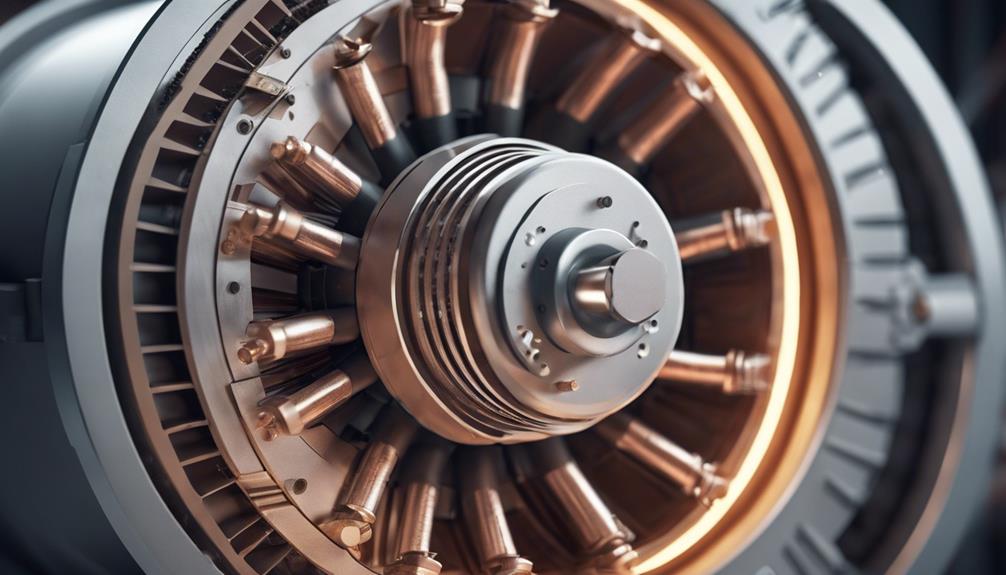
When designing a Permanent Magnet DC Generator, you must choose the magnetic materials to guarantee efficiency.
Please pay attention to the rotor and stator design, as they are pivotal in energy conversion.
Effective cooling and insulation methods are also essential to maintain performance and longevity.
Magnetic Material Selection
Choosing the right magnetic material is essential for optimizing the efficiency and performance of your permanent magnet DC generator. Your choice directly influences the generator’s magnetic flux density, power output, and reliability. Among the top contenders are neodymium magnets, iron, and cobalt. Each has unique properties that can greatly impact your generator’s performance.
Neodymium Magnets: These are popular due to their high magnetic flux density, which enhances your generator’s efficiency and power output. They’re ideal for applications requiring strong, compact magnetic fields.
Iron: While not as powerful as neodymium, iron is cost-effective and offers good magnetic properties. It’s often used with other materials to balance performance and cost.
Cobalt: Known for its excellent stability and high-temperature performance, it is perfect for generators operating in harsh conditions. It ensures consistent magnetic field strength and reliability.
Material Combination: Sometimes, combining different materials like neodymium, iron, and cobalt can achieve an ideal balance between efficiency, performance, and cost.
Proper selection of magnetic materials ensures that your permanent magnet DC generator runs efficiently and delivers reliable power output across various applications.
Rotor and Stator Design
Designing the rotor and stator in a permanent magnet DC generator is essential for achieving maximum efficiency and power output. The rotor design involves embedding permanent magnets that generate the magnetic field. This magnetic field interacts with the stator, which houses the stationary coil windings. The interaction between these two components is pivotal for electrical energy conversion.
To optimize power generation, you must focus on the arrangement of the permanent magnets in the rotor. Proper alignment guarantees an evenly distributed magnetic field.
In the stator design, the number and layout of coil windings play a critical role in determining the output voltage and current. Efficient operation hinges on the magnetic field interaction between the rotor and stator.
Pay close attention to the spacing between the rotor and stator. Accurate spacing minimizes losses and enhances the generator’s performance. Proper alignment and spacing are essential for maintaining an efficient interaction between the magnetic field and coil windings, leading to efficient energy conversion.
Cooling and Insulation Methods
Essential cooling and insulation methods are vital for maintaining the performance and longevity of your permanent magnet DC generator. Effective cooling methods, such as air, liquid, and finned heat sinks, are key to dissipating the heat generated during operation. Choosing the right cooling method depends on your generator’s power requirements and operational environment.
- Air Cooling: This important and simple method uses fans or natural airflow to reduce heat. It’s ideal for low—to medium-power generators.
- Liquid Cooling: Offers superior heat dissipation efficiency, making it perfect for high-power generators. It uses coolant circulation to absorb and transfer heat away from the generator.
- Finned Heat Sinks: These enhance the surface area for heat dissipation, boosting cooling effectiveness without adding much complexity to the design.
- Insulation Techniques: Methods like varnishing, epoxy coating, and insulating materials protect generator windings from electrical breakdown.
Proper cooling and insulation techniques are essential to prevent overheating and maintain the longevity and performance of your generator. These design considerations help sustain efficiency and reliability, safeguarding your investment in various applications. Always prioritize effective cooling and insulation to maximize your PMDC generator’s lifespan and operational effectiveness.
Maintenance Tips
Regular maintenance of your Permanent Magnet DC Generator is crucial to guarantee its efficient and long-lasting operation. Start by regularly checking and replacing the carbon brushes. Worn brushes can lead to poor performance and potential damage to the generator.
Inspect and clean the commutator segments to prevent arcing and ensure a solid electrical connection.
Next, monitor the bearing conditions. Proper lubrication reduces friction, essential for prolonging your generator’s lifespan.
Don’t forget to verify the tension in the drive belts or chains. Proper tension prevents slippage and ensures peak power transmission.
It’s also important to periodically test the output voltage and output current. This helps confirm that your magnet DC generator is running within the specified parameters. Any deviation could indicate an underlying issue that needs addressing.
Conclusion
You’ve now got a solid understanding of Permanent Magnet DC Generators. These generators convert mechanical energy into reliable direct current electricity by leveraging electromagnetic induction,which waa aan energy solution.
solution, efficient design, and minimal maintenance make them ideal for consistent power generation. Whether you’re exploring wind turbines or other green technologies, these generators offer significant advantages and flexibility.
So, why not consider integrating one into your next sustainable project?
FAQs
What Is a Permanent Magnet DC Generator?
You’re looking at a device that provides maintenance requirements to convert mechanical energy into electrical output. Its commutator design, rotor dynamics, and stator configuration manage magnetic flux, ensuring efficient energy conversion, voltage regulation, and current flow.
Are Permanent Magnets Used in Generators?
Yes, you use permanent magnets in generators. They improve efficiency, enhance magnetic flux, and optimize design. Material selection balances field intensity and heat dissipation. They excel in energy conversion, handle load variations well, and reduce maintenance requirements across applications.
What Are the Disadvantages of a Permanent Magnet Generator?
You’ll face magnetic degradation and temperature sensitivity, leading to efficiency loss. High costs and material scarcity are concerns. Demagnetization risk, weight, and mechanical wear impact lifespan. Environmental impact and limited scalability add to the disadvantages.
What Is the Purpose of a Permanent Magnet in a DC Motor?
In a DC motor, the permanent magnet provides a constant magnetic field that influences rotor dynamics and armature reaction. This boosts voltage output, minimizes brush wear, enhances mechanical efficiency, and helps manage electrical load and thermal management.