Potential Transformer
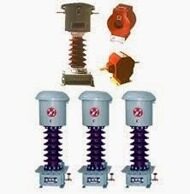
WORKING
The potential transformer is connected in parallel with the circuit to be monitored. The potential transformer works on an equivalent principle of different transformers. It converts voltages from high to low. It will take the thousands of volts behind power transmission systems and decrease the voltage to a measurable value. The primary could also be connected to the ground or phase to phase. The secondary is typically grounded on one terminal. These transformers work for single and 3-phase systems and are connected to some extent wherever it’s convenient to measure the voltage.
FAQs
What is a potential transformer?
A potential transformer (PT), also known as a voltage transformer (VT), is a type of instrument transformer used to step down high voltages to a lower, measurable value. This allows electrical systems to safely measure and monitor high voltage levels with standard measurement devices like voltmeters.
Key Function:
- Steps down high voltages for safe measurement.
- Used in electrical power systems.
How does a potential transformer work?
A potential transformer operates on the principle of electromagnetic induction. It has a primary winding connected to the high-voltage line and a secondary winding connected to the measuring instruments. The voltage is reduced in proportion to the turns ratio of the transformer, allowing the secondary side to provide a lower, measurable voltage that represents the high voltage on the primary side.
Working Principle:
- Uses electromagnetic induction.
- Primary winding connects to the high-voltage circuit.
- Secondary winding provides a reduced, measurable voltage.
Where are potential transformers used?
Potential transformers are commonly used in:
- Power Distribution Systems: To monitor high-voltage power lines and ensure safe voltage levels.
- Electric Meters: For accurate voltage measurements in commercial and industrial metering systems.
- Protective Relays: PTs provide input to relays that protect electrical systems from over-voltage conditions.
Applications:
- Power distribution and transmission systems.
- Voltage measurement in metering systems.
- Protective relays for voltage regulation.
What is the difference between a potential transformer and a current transformer?
A potential transformer (PT) steps down voltage for measurement, while a current transformer (CT) steps down current. PTs are used for voltage monitoring, whereas CTs are used to measure high currents. Both are essential for monitoring and protecting electrical systems, but they focus on different electrical parameters.
Difference:
- PT: Steps down voltage.
- CT: Steps down current.
How is the accuracy of a potential transformer ensured?
Potential transformers are designed to operate with high accuracy, ensuring that the voltage is reduced proportionally and precisely. Their accuracy is critical in metering and protection systems to avoid misreadings. Special care is taken in their construction, and regular testing and calibration are performed to maintain their precision.
Accuracy Factors:
- Precision design for accurate voltage reduction.
- Regular testing and calibration for reliable performance.