From Diversity to Unity: The Classification of DC Motors
Performance and Functioning
The classification of DC motors is based on various factors, including their construction, electrical configuration, and operational characteristics. Understanding the working principles behind these classifications is crucial for effectively utilizing DC motors in different applications. Let’s delve into the working of the main types of classified DC motors.
Similar to generators, DC motors are also classified into three types by the connections of field winding, and they are
-
Shunt Wound Motor
-
Series wound Motor
-
Compound Wound Motor
- Brushed DC motors
- Brushless DC motors
Shunt Wound Motor

Series Wound Motor

Compound Wound Motor


Brushed DC Motors
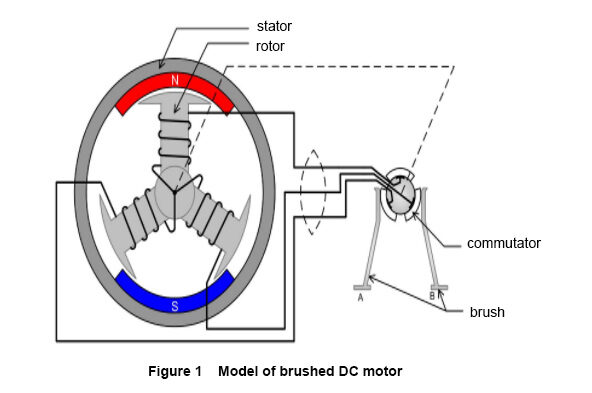
Brushed DC motors consist of a rotating armature (the rotor) and a stationary set of magnets (the stator). The rotor is connected to a commutator and brushes, which transfer electric current to the armature windings. As electric current flows through the armature windings, a magnetic field interacts with the stator’s magnetic field. This interaction generates a torque that rotates the rotor, producing mechanical power.
Brushless Motors
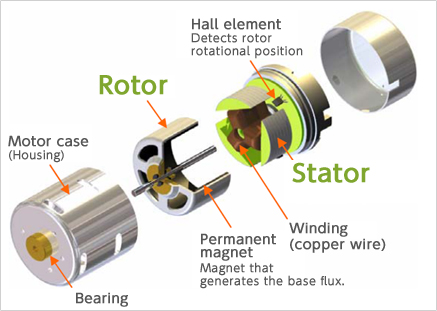
BLDC motors offer precise speed control, making them suitable for applications that require accurate and consistent rotational speeds. Speed control is achieved through sophisticated electronic commutation methods like sensor-based or sensorless control. Sensorless control utilizes the motor’s back electromotive force (EMF) to determine rotor position, while sensor-based management employs Hall effect sensors or encoders for precise feedback. BLDC motors exhibit excellent torque-to-weight ratios and power densities, allowing them to deliver high torque outputs despite their compact size. This characteristic makes them well-suited for applications with space constraints requiring a high power-to-size ratio.
Classification Criteria
- Speed Regulation: Some DC motors maintain a consistent speed, while others are designed for variable speed applications.
- Starting Torque: Motors with high starting torque are crucial for applications requiring heavy initial loads.
- Control Methods: DC motors can be controlled using various techniques such as armature voltage control, field flux control, or combined methods.
- Efficiency and Energy Consumption: Different motor types exhibit varying efficiency levels, impacting energy consumption and operational costs.
Applications
- Due to their simplicity and efficiency, PMDC motors are used in small appliances, tools, and toys.
- Series-wound motors are suitable for traction systems and cranes demanding high torque.
- Due to their consistent speed, shunt-wound motors are prevalent in conveyor belts, lathes, and fans.
- Compound-wound motors are adaptable for applications requiring both speed and torque.
- Separately excited motors, like robotic systems and machine tools, are common in industries needing precise control.
Conclusion
Each classification offers unique advantages and capabilities, from the timeless brushed DC motors to the innovative brushless DC motors. With their simplicity and reliability, Brushed DC motors continue to serve as workhorses in numerous applications. On the other hand, brushless DC motors, with their efficiency, precise speed control, and maintenance-free operation, have become increasingly popular in modern industries. We also delved into the characteristics of shunt, series, and compound DC motors, each with distinct features and applications. The shunt DC motors provide speed regulation and relatively constant speed-torque factors, while series DC motors offer high starting torque and find use in heavy-load applications. Compound DC motors combine the best of both worlds, offering improved speed regulation and torque characteristics.