Diesel vs. Gas Power Plants: Key Differences Explained
When deciding between diesel and gas power plants, you must weigh several factors that influence energy production. Diesel offers reliability and lower operational costs, while gas provides cleaner emissions and aligns with stringent environmental standards. Consider how diesel thrives in remote areas with stored fuel, but gas fits urban settings due to its efficiency. Each option has its unique advantages, but which one aligns best with your specific needs and future energy trends? Learn more about Diesel vs. Gas Power Plants.
Key Takeaways
- Diesel power plants have higher thermal efficiency compared to gas turbines, often exceeding 30% efficiency.
- Natural gas plants emit approximately 27% less greenhouse gases than diesel power plants.
- Diesel generators require simpler maintenance and offer higher reliability, especially in rural and critical applications.
- Natural gas power plants benefit from stable fuel prices and a continuous supply through the gas grid.
- Diesel engines produce higher NOx and particulate emissions, requiring advanced emission controls for regulatory compliance.
Fuel Types and Availability
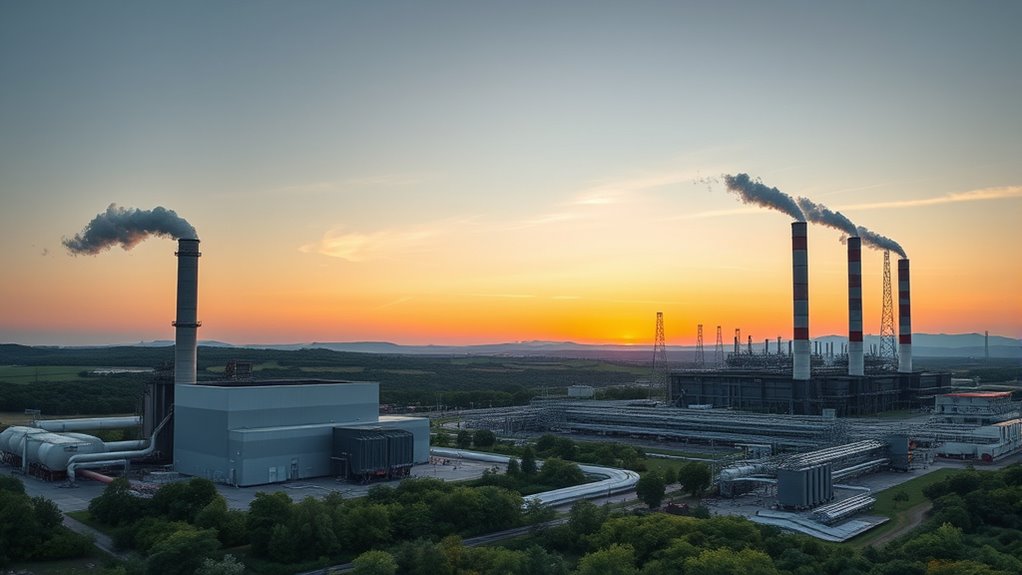
When comparing diesel and gas power plants, understanding fuel types and availability is vital. Diesel power plants rely on diesel fuel, a refined oil product, whereas gas power plants use natural gas, mainly methane.
Diesel fuel’s local storage in tanks offers flexibility, especially in rural areas, enhancing fuel availability without relying heavily on supply lines. Conversely, natural gas plants connect directly to the gas grid, which simplifies logistics in urban settings with extensive pipelines.
Diesel fuel boasts a higher energy density, providing more energy per volume than natural gas. However, natural gas prices are generally more stable and less volatile than diesel prices, which align with fluctuating oil markets.
Therefore, considering energy density and fuel prices is essential for efficient power plant operation.
Combustion Processes and Mechanisms
When you’re exploring combustion processes, you’ll notice diesel engines use compression ignition, relying on high temperatures and pressure to ignite fuel without a spark.
On the other hand, gas turbines operate on a continuous combustion process, where compressed air and natural gas mix and ignite at constant pressure.
Understanding these mechanisms helps you appreciate the efficiency and emission differences between diesel and gas power plants.
Diesel Compression Ignition
Despite the absence of spark plugs, diesel engines efficiently ignite fuel through a process called compression ignition, where compressed air reaches high temperatures and pressures. This method allows diesel engines to achieve impressive thermal efficiency, often over 30%, thanks to higher compression ratios compared to gasoline engines. However, compression ignition does produce nitrogen oxides, impacting the environment negatively. As a result, emissions control technologies are essential to reduce this environmental impact.
| Element | Benefit | Challenge |
|---|---|---|
| Compression Ignition | High thermal efficiency | Nitrogen oxides production |
| Diesel Engines | No spark plugs needed | Requires emissions control |
| Environmental Impact | Reduced fuel use | Emissions management |
| Thermal Efficiency | >30% | Balancing emissions |
Gas Turbine Combustion
While diesel engines rely on compression ignition, gas turbines use a different approach to power generation. They operate on an open Brayton cycle where air is compressed and mixed with natural gas. This mixture is ignited by a spark plug at constant pressure, resulting in a rapid expansion of gases.
This expansion drives the turbine blades, efficiently converting energy into electricity. Although gas turbines typically have lower thermal efficiency, ranging from 25% to 35%, ongoing technological advancements are improving their performance.
Importantly, the combustion process of natural gas in these turbines produces fewer nitrogen oxides (NOx) and particulate emissions compared to diesel engines. This makes gas turbines a cleaner option for power generation, contributing to reduced environmental impacts.
Efficiency and Performance Metrics

Considering the efficiency and performance metrics, diesel power plants often outshine their gas turbine counterparts. Diesel engines boast thermal efficiencies exceeding 30%, converting chemical energy to mechanical energy more effectively. This results in lower fuel consumption for the same power generation, making them a go-to for reliable, continuous power. Although gas turbines have seen efficiency gains due to technological advancements, they generally hover between 25% and 35% efficiency.
Here’s a comparison:
| Metric | Diesel Engines | Gas Turbines |
|---|---|---|
| Thermal Efficiency | >30% | 25%-35% |
| Fuel Consumption | Lower | Higher |
| Power Generation | Higher | Moderate |
| Load Performance | Consistent | Variable |
| Preferred Use | Continuous | Peaking |
Diesel engines deliver superior performance under varying loads compared to gas turbines.
Environmental Impact and Emissions
When considering the environmental impact of power plants, you’ll find that diesel plants produce notably higher emissions of NOx and particulate matter compared to gas plants.
Diesel engines often need advanced emission control technologies to comply with environmental regulations, while gas turbines naturally emit fewer pollutants.
This makes natural gas a more attractive option for those aiming to meet strict environmental standards and reduce harmful emissions.
Emission Control Technologies
One significant challenge diesel power plants face is controlling their emissions, particularly nitrogen oxides (NOx) and particulate matter. Advanced emission control technologies are vital in addressing these environmental concerns.
Diesel exhaust contains high NOx levels, necessitating technologies like selective catalytic reduction (SCR) and diesel particulate filters (DPF). These systems help meet strict regulations, reducing the harmful impact on air quality.
Gas turbines, however, utilize low-emission combustion technologies and often include dry low NOx (DLN) burners, resulting in a cleaner operational profile. They emit fewer pollutants than diesel engines, thereby mitigating environmental concerns.
Integrating exhaust gas aftertreatment systems in diesel power plants is essential, involving methods like urea injection for SCR to manage diesel exhaust and achieve compliance.
NOx and Particulate Levels
While emission control technologies play an essential role in diesel power plants, understanding the actual NOx and particulate levels they emit is imperative for evaluating their environmental impact.
Diesel plants emit considerably more NOx and particulate matter compared to natural gas plants, making them less environmentally friendly. Despite modern advancements, diesel engines often produce NOx emissions that may exceed regional limits, contributing to air pollution and health concerns.
In contrast, natural gas power plants are cleaner, emitting lower NOx levels due to the fuel’s properties. Particulate emissions from diesel plants pose serious health risks, especially in urban areas.
Environmental Regulations Compliance
As environmental regulations become increasingly stringent, diesel power plants often struggle to comply due to their higher emissions of nitrogen oxides (NOx) and particulate matter.
Despite incorporating emissions control technologies, diesel generators still fall short of meeting these tough standards. In contrast, natural gas plants are favored for their lower greenhouse gas emissions, with CO2 output around 27% less than diesel combustion. This makes gas power plants a more attractive option as emissions regulations tighten globally.
Moreover, the use of renewable natural gas (RNG) can further reduce emissions, potentially achieving sub-zero greenhouse gas levels by capturing methane from organic waste.
As you explore cleaner energy options, natural gas plants offer a promising alternative, aligning better with current and future environmental regulations.
Maintenance and Operational Costs
When comparing maintenance and operational costs between diesel and gas power plants, diesel generators typically come out ahead.
Diesel generators have lower maintenance needs, requiring basic upkeep like oil and filter changes. In contrast, natural gas turbines demand more complex care due to their intricate machinery.
Diesel generators also avoid the costly exhaust gas systems that natural gas units need to reduce emissions. Plus, diesel engines boast a longer lifespan, often exceeding 10,000 hours, while natural gas generators may require more frequent replacements, affecting operational costs.
Although natural gas fuel costs are generally more stable, diesel’s maintenance advantages can offset fluctuating fuel prices.
When you weigh these factors, diesel generators often offer a cost-effective solution for power generation.
Reliability and Durability Factors
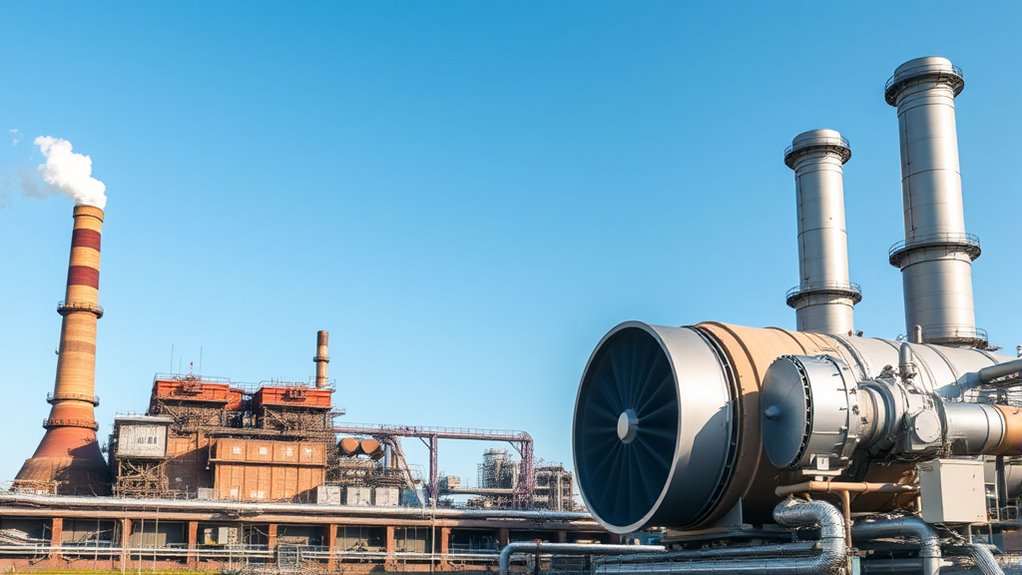
After considering maintenance and operational costs, it’s important to examine reliability and durability factors.
Diesel generators stand out for their durability due to simpler mechanical designs, often surpassing gas engines in lifespan. You’ll find that diesel generators require less frequent maintenance, making them highly reliable for essential applications like hospitals and emergency services. Their operational reliability shines, especially in remote areas where fuel supply can be inconsistent.
In contrast, gas engines, while efficient, demand strict maintenance schedules to avoid hazardous leaks and guarantee safety. Diesel engines also offer enhanced safety features due to their less flammable nature, vital for environments concerned with fuel storage and handling.
Ultimately, diesel’s durability and operational reliability make it a strong contender in power generation.
Infrastructure and Refueling Considerations
While evaluating infrastructure and refueling considerations, diesel and gas power plants present distinct challenges and advantages.
Diesel generators need on-site fuel storage tanks, requiring regular refueling and posing logistical challenges. You’re dependent on local diesel availability and transport to fuel stations, which can lead to operational downtime if fuel deliveries are delayed.
On the other hand, natural gas plants connect to the gas grid, eliminating storage needs and ensuring a continuous fuel supply. The established pipeline infrastructure, especially in urban areas, supports natural gas operations. However, this reliance makes fuel supply vulnerable during natural disasters.
Although diesel generators are more portable and suited for remote locations, natural gas plants demand significant infrastructure investment for pipeline connections.
Market Trends and Future Outlook

Shifting focus from infrastructure and refueling challenges, it’s clear that market dynamics are shaping the future of diesel and gas power plants. The global market for gas-fired power plants is booming as the push for cleaner energy intensifies.
Natural gas is gaining favor over diesel, primarily due to stricter emissions regulations and environmental concerns. Technological advancements in gas turbines and combined cycle plants make gas power more efficient and competitive.
Meanwhile, renewable energy integration and hybrid systems are increasingly popular, offering reliability and a smaller carbon footprint. Fuel flexibility is key, with industry players exploring hydrogen and biogas solutions.
This shift reflects a future where diesel plays a diminished role, and adaptable, sustainable power generation takes center stage.
Safety and Regulatory Compliance
When it comes to safety and regulatory compliance, diesel and gas power plants each present distinct challenges and advantages that operators must navigate.
Diesel generators, known for their safety, have lower flammability and easier leak detection due to diesel’s distinct odor. In contrast, natural gas is more combustible, making emissions control and preventing hazardous leaks a priority. You need to manage specific safety regulations for natural gas to avoid explosions, often requiring regular maintenance and inspections.
For diesel power plants, regulatory compliance focuses on stringent emissions control technologies to reduce nitrogen oxides and particulate matter.
Both plant types must adhere to local and federal environmental regulations, which can vary. Diesel generators‘ reliability in emergencies makes them vital for critical infrastructure, ensuring safety protocols are always in place.
Conclusion
You’ve explored the key differences between diesel and gas power plants. Diesel offers reliability and cost-effectiveness, making it ideal for remote areas, while gas plants shine with cleaner emissions and urban integration. Both have their place depending on environmental and infrastructural needs. As energy demands evolve, you’ll find that balancing efficiency, cost, and sustainability is essential. Stay informed on market trends and regulations to make the best choice for your power generation needs.
FAQs
1. What Is the Difference Between a Gas Power Plant and a Diesel Power Plant?
You need to understand that gas power plants use natural gas, which burns cleaner and meets environmental standards better than diesel. Diesel plants, while offering more energy per volume, have higher emissions and maintenance needs.
2. What Is the Downside of Using Diesel Generators?
You’ll face higher nitrogen oxide emissions and particulate matter with diesel generators, impacting air quality and health. Their initial cost and fluctuating fuel prices strain budgets, while noise pollution and maintenance for compliance add further challenges.
3. Is Diesel Better for the Environment Than Gas?
You might think diesel’s better for the environment, but it’s not. Gas emits fewer pollutants and has a smaller carbon footprint. Plus, renewable natural gas can achieve sub-zero emissions, making gas a much cleaner choice overall.
4. Does Diesel Make More Power Than Gas?
When considering power output, you’ll find diesel typically generates more energy per volume than gas. Diesel engines achieve higher efficiency and can produce greater power in compact sizes, making them effective for high-demand applications.