Exploring the Magnetic Effect of Electric Current
The magnetic effect of an electrical current is a fundamental concept in electromagnetism. When an electric current flows through a conductor, it produces a magnetic field around the conductor. This phenomenon is the basis for electromagnets, which can generate magnetic fields using electric current. The magnetic influence of electric currents is a captivating phenomenon that intertwines the realms of electricity and magnetism. It reveals the invisible forces that shape our world and underpins countless technological marvels. Understanding this intricate relationship is crucial for scientists, engineers, and anyone intrigued by the wonders of electromagnetism.
The creation of a magnetic field around current-carrying conductors is a striking manifestation of the magnetic influence of electric currents. Ampere’s right-hand rule becomes our guide as we explore the direction and magnitude of magnetic fields generated by different types of conductors.
Magnetic Effect of Current & Electromagnets
While a coil or conductor transmits a current, it creates magnetic flux everywhere it is. Then, it starts acting as a magnet. Such a current-carrying coil or conductor is called an electromagnet. This is often a result of the magnetic impact of an electrical current.

If such a coil is curled around a bit of magnetic material like iron or steel and transmits current, then a piece of cloth around the ring is curled and starts behaving as a magnet, an electromagnet.
The dominant magnitude of the current will control the flux and denseness.
The direction and form of the magnetic field around the coil or conductor hinge on the current order and state of the conductor through its passing. The magnetic field will be experienced with iron fillings or a compass needle.
Magnet and its Properties
There are two differing kinds of electromagnets,
- Electromagnet due to straight current carrying conductor
- Electromagnet due to circular current carrying coil
Principles of Magnetic Effect
The key principles behind the magnetic effect of an electrical current are summarized by Ampere’s Law and the right-hand rule:
Ampere’s Law
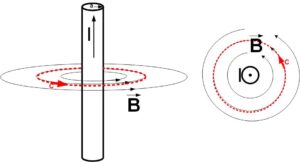
Ampere’s Law states that the magnetic field produced by a current-carrying conductor is directly proportional to the magnitude of the current and inversely proportional to the distance from the conductor. In other words, the magnetic field strength increases with an increase in current and decreases with an increase in length.
Right Hand Rule
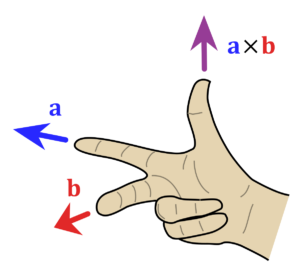
The right-hand rule determines the direction of the magnetic field produced by a current-carrying conductor. If you point your right thumb in the direction of the current, the fingers of your right hand will curl in the direction of the magnetic field lines around the conductor.
Electromagnets are created by coiling a conductor, typically a wire, around a core material, such as iron. When an electric current passes through the wire, a magnetic field is generated within the core material. The strength of the magnetic field can be increased by increasing the number of turns in the coil, increasing the current flowing through the wire, or using a core material with high magnetic permeability.
Practical Applications of Electromagnets
Electromagnets have a wide range of practical applications. Some of the common uses include:
Electric motors
Electromagnets play a crucial role in electric motors. When a current is passed through the electromagnets in the engine, it creates a magnetic field that interacts with permanent magnets, resulting in rotational motion.
Magnetic resonance imaging (MRI)
MRI machines use powerful electromagnets to produce a strong magnetic field that interacts with the body’s atoms. By measuring the atoms’ response to the magnetic field, detailed images of internal body structures can be obtained.
Maglev trains
Electromagnets are used in magnetic levitation (maglev) trains to create a repulsive magnetic force between the track and the train, allowing for frictionless movement and high-speed transportation.
Speakers and headphones
The speakers and headphones we use to listen to audio utilize electromagnets to convert electrical signals into sound waves. The varying current in the electromagnets interacts with a diaphragm, causing it to vibrate and produce sound.
Generators and transformers
Electromagnets are essential components of generators and transformers. In generators, the relative motion between the electromagnets and a rotating coil induces an electric current, while transformers use electromagnets to transfer electrical energy between different voltage levels.
These examples demonstrate the practical applications and importance of electromagnets in various fields. The ability to control and manipulate magnetic fields through electric currents has revolutionized technology and enabled numerous technological advancements.
Factors Affecting the Strength of an Electromagnet

The strength of an electromagnet depends on several factors. These include the number of turns in the coil (more bends increase the magnetic field), the current flowing through the loop (greater current leads to a stronger area), and the core material (ferromagnetic materials enhance the magnetic effect).
Magnetic Field Lines
Magnetic field lines visually represent the magnetic field around an electromagnet. They form closed loops, indicating the direction and strength of the magnetic field. The density of the field lines means the intensity of the magnetic field, with closely spaced lines indicating a stronger area.
Magnetic Field Inside and Outside an Electromagnet
Inside the core of an electromagnet, the magnetic field is strong and concentrated. Outside the body, the field weakens as you move away from the electromagnet. The core’s shape and configuration can influence the magnetic field’s distribution and pattern.
Right-Hand Rule
The right-hand rule is a useful tool to determine the direction of the magnetic field around a current-carrying wire or coil. When the thumb of your right hand points toward the current, the curled fingers represent the circular direction of the magnetic field lines.
Applications in Electric Motors and Generators: Electromagnets are integral to electric motors and generators. In electric motors, the interaction between the magnetic field produced by the electromagnet and a permanent magnet creates a rotating motion, converting electrical energy into mechanical energy. In generators, the movement of a conductor through a magnetic field induces an electric current.
Relays and Switching Applications
Relays are electromagnetic switches commonly used in electrical circuits. They consist of an electromagnet that controls the opening and closing of contacts, allowing the control of larger currents or the activation of different devices. This feature makes relays essential in various applications, including automation, robotics, and telecommunications.
Magnetic Field Strength Measurement
Devices such as magnetometers or Hall effect sensors can measure the strength of a magnetic field produced by an electromagnet. These instruments provide quantitative information about the intensity and distribution of the magnetic field, enabling precise control and optimization in electromagnet design.
Electromagnetic Induction
Electromagnetic induction is another significant phenomenon related to the magnetic effect of an electric current. It describes the generation of an electric current in a conductor when it experiences a changing magnetic field. This principle forms the basis for technologies like transformers and electric power generation.
Electromagnetic Compatibility (EMC)

Electromagnetic compatibility focuses on managing the interactions between electromagnetic fields and electronic systems. It ensures that electromagnetic emissions from electromagnets or other devices do not interfere with or disrupt nearby electronic equipment, such as computers, communication systems, or medical devices.
Superconducting Magnets
Superconducting electromagnets are advanced electromagnets that utilize materials with zero electrical resistance at low temperatures. These magnets can generate extremely strong magnetic fields and find applications in scientific research, particle accelerators, magnetic resonance imaging (MRI) machines, and fusion experiments.